The Jerusalem Post
Jpost search icon google-icon iphone
  Set as Homepage
Wed, May 22, 2013   13 Sivan, 5773
newspapers magazines
 
    • Breaking News
    • Diplomacy & Politics
    • Defense
    • National
    • Mideast
    • Syria
    • Iran
    • World
    • Business
    • Sports
    • Health & Science
    • Environment
  • Video
  • Opinion
    • Columnists
    • Editorials
    • Op-Eds
    • Letters
  • Jewish World
  • Lifestyle
    • Arts & Culture
    • Food & Wine
    • Travel
  • Features
    • Insights & Features
    • Week in review
    • On the Web
    • Shalva Superheroes
    • Obama in Israel
  • Blogs
    • In the news
    • Judaism
    • From the Middle East
    • Lifestyle
    • Aliya
    • Science and Technology
  • JPost Apps
    • iPhone app
    • iPad app
    • Android app
    • Twitter
    • Facebook
    • RSS feeds
    • JPost Toolbar
    • JPost Newsletter
    • JPost Alert
  • Premium Zone
    • The Jerusalem Report
    • The Experts
    • 20 Questions
    • e-paper
    • Ivrit
    • Christian Edition
    • Dash
    • Magazine
    • Metro
    • In Jerusalem
  • French
    • Politique & Social
    • Affaires Palestiniennes
    • Diplomatie & Monde
    • Art & Culture
    • Israel
  • Green Israel
JPost Learn Hebrew  
Advertise with us  
Nefesh Guided Aliyah  
Eldan  
AFMDA  
Africa Israel Group  
Isram Group  
Kupat Ha  
JPost Twitter  
JPost Facebook  
Classifieds  


Breaking News
 
 
  • JPost.com
  • Middle East
 

Hamas warns against buying cars imported from Israel

By DAVID E. MILLER / THE MEDIA LINE
LAST UPDATED: 10/31/2010 17:15
Tweet

Ministry says it fears bugs and bombs, but many Gazans assert the warning is a cynical business decision.

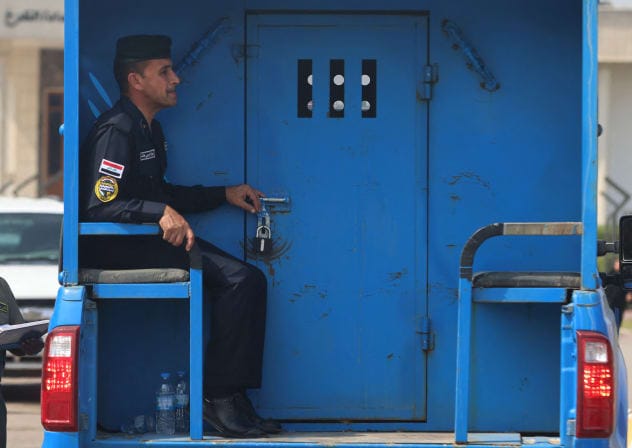
Gaza bound truck
Gaza bound truck Photo: Ariel Jerozolimski/The Jerusalem Post)
The Hamas government in the Gaza Strip is warning local politicians, government officials and faction leaders against buying cars imported from Israel for fear they may contain eavesdropping equipment or even remote-activated bombs planted by Israeli security agencies.

Ihab Ghossein, a spokesman for Hamas' Ministry of Interior, called in a statement for caution when dealing with the cars. But his warnings have fallen on deaf ears, where a four-year-old blockade has deprived Gazans of many consumer goods or put their prices out of range.

"People in Gaza haven't really responded to this warning," 'Ali Abu-Shahla, secretary-general of the Palestinian Businessmen Association in Gaza, told The Media Line. "I fear, though, that if people continue ignoring it, Hamas will resort to banning cars coming in from Israel altogether."

Israel has been under international pressure to ease its blockade of the Gaza Strip, especially after an attack by its commandos on an aid convoy to Gaza last May that left nine dead. Yet, even as Israel has begun to let cars and other once-prohibited goods into the Mediterranean enclave,  Hamas itself hasn’t always welcomed the increased flow of goods. 

Private vehicles joined the list of permitted goods last month. Since then, nine shipments have passed through the Kerem Shalom checkpoint, containing 180 new or slightly used cars. 

The problem for Hamas is that it doesn’t profit from the official car imports because the taxes on the vehicles are paid to the Palestinian Authority in Ramallah, Hamas’ rival for control of the Palestinian territories, said Abu-Shahla. The only reason Hamas allows cars in at all, he said, was to ease pent up demand on the street and mounting criticism of the government, he said

Where it can and does collect taxes is on the vehicles and other goods smuggled through tunnels from Egypt, but the price to the consumer for these vehicles is much higher and the supply is limited. During the years that Israel banned car imports, a new, smuggled automobile -- brought in disassembled through the narrow tunnels -- could cost up to $40,000. The same car brought through Kerem Shalom now costs about $25,000. 

"I sold my car when cars were expensive here, and got along with my son's car," Abu-Shahla said. "Now I'm planning to buy a new car."

Sa'id Abu-Khosa, a Gaza car salesman, estimated the sticker price on a new car in Gaza have fallen by 20% since Israel lifted the ban while used car prices have plunged as much as 50%. The pent-up demand for new cars is huge, he told the Palestinian daily Filastin, since their import was banned in Gaza for the past four years. 

But Samir Zaqout, a field-work coordinator for Al-Mezan Center for human rights in Gaza, said the falling price of cars had less to do with taxes and costs than with supply and demand.

"Before Israel allowed cars into the Gaza Strip, prices here were exorbitant," he told The Media Line. "There was so much demand and no supply, which made cars much more expensive than their real price."

Indeed, Gaza’s economy is rebounding after years of declining output under the pressure of the blockade. While the Gaza economy is smaller than it was a decade ago and unemployment is more than 35%, the International Monetary Fund forecasts Gaza’s gross domestic product will jump this year 16%.  While a car is beyond most Gazans’ means, for those who can afford one they have become a more affordable means of recreation.  

Hassan Asfour, a former Palestinian minister and aligned with the PA, said the Hamas warning was a cynical business move rather than a genuine security concern.

"What is happening in the Gaza Strip," he wrote in the Firas Press news site, "has nothing to do with security, but is merely a ploy to control the commercial market and monopolize the buying and selling; which is an obsession for big Hamas merchants, whose influence has become much stronger than that of their political leaders."

Car salesmen have testified that Hamas' security apparatus carefully examine all cars entering the Gaza Strip at the border crossing, Asfour wrote, adding that hundreds of cars are sold to security officials and members of the "resistance" in Gaza.

Restricted items include "dual use" materials which could be used for both civilian and military ends. Most of these are building materials such as cement, concrete, steel and gravel.

Four-wheel drive vehicles are also still banned from the Gaza Strip, since they are "liable to be used in terror activities," according to Israel's Ministry of Foreign Affairs.    
  • Send
  • Large
  • Small
  • Print
  • Share
Most Viewed in
1
Erekat throws his weight behind Kerry's peace bid
2
'Chaos caused by Libyan war delays action in Syria'
3
Activists: Hezbollah suffers big losses in Syria
4
UK: Iran, Hezbollah increasing support for Assad
JPost Community
Tweet
Hamas Gaza cars spying Palestinian Hamas Ministry of Interior
Share this article
Tweet
Share
Send
Your comment must be approved by a moderator before being published on JPost.com. Disqus users can post comments automatically.

Comments must adhere to our Talkback policy. If you believe that a comment has breached the Talkback policy, please press the flag icon to bring it to the attention of our moderation team.
JPost Services
conferenceConference
newsletterNewsletter
iphoneMobile Apps
kotelcamKotel Cam
kolboJPost Alert
premiumPremium
JPost TV News  
Mobile Apps  
Bank Hapoalim  
Meir Panim  
Yad Ezra  
Rambam Hospital  
TourLuxe  
Zev Goldstein PLLC  
Penrose Gallery  
JPost Premium Zone  
JPost kotel Camera  
         
 
Israel Focus
JPost TV News
Coming soon to a screen near you!  
Nefesh B'Nefesh Guided Aliyah
Already living in Israel? Enjoy the Benefits of Aliyah!  
Give "Freedom" this Passover
to needy Israeli families. Donate now  
War Threatens
Protect the People of Northern Israel  
China Suppliers
 
Intelligence Squared
The international debate forum, announces it is coming to Israel  
Bank Hapoalim
Israeli's number one bank  
Jerusalem Post Lite
Lite Edition of the Jerusalem Post for English improvement  
Learn Hebrew with us
Get 10 minutes free personal coaching in Hebrew through phone or Skype  
JPost newspapers
Sign up for the JPost newspapers and receive one month free subscription  
Kosher English Magazine
English language weekly magazine - especially for religious people  
JReport Kindle Edition
Now you can get the Jerusalem Report directly to your Kindle  
JPost Premium Edition
The very best articles are available only in our Premium edition  
Lifestyle Magazine
 
 
Real Estate
Don't Look For a House!
In Israel, our website will do it for you!  
 
Travel
Eldan Rent a Car
20% off all Car Rental Reservations in Israel  
Hertz Car Rental
Special Online Discounts!  
The King David Jerusalem Hotel
One of the world's truly iconic hotels, and a Jerusalem landmark  


Sites Of Interest:

Jerusalem Hotels
KKL-JNF
Poalim Online
BreitBart.com
Our Friends
Jerusalem Attractions
Jerusalem Tours
itraveljerusalem.com

JPost sites:

Learn Hebrew
The Jerusalem Report
Our Magazines
JPost Edition Francaise
Green Israel
Christian World
Jerusalem Post Lite

Services:

JPost Mobile Apps
JPost Premium
JPost Newsletter
JPost Toolbar
JPost News Ticker
JPost RSS feeds
JPost Archives
JPost Alert
JPost Kotel Cam

JPost Conferences:

NYC Conference
Diplomatic Conference

Information:

About Us
Feedback
Staff E-mails
Copyright
Sitemap
News Partners
Advertise with Us
Statistics
Ad Specs
Terms Of Service
Jpost.com, the online edition of the Jerusalem Post Newspaper - the most read and best-selling English-language newspaper in Israel. For analysis and opinion from Israel, the Jewish World and the Middle East. Jpost.com offers expert and in-depth reporting from Israel, the Jewish World and the Middle East, including diplomacy and defense, the Palestinian-Israeli conflict, the Arab Spring, the Mideast peace process, politics in Israel, life in Jerusalem, Israel's international affairs, Iran and its nuclear program, Syria and the Syrian civil war, Lebanon, the Palestinian Authority, the West Bank and Gaza Strip, Israel's world of business and finance, and Jewish life in Israel and the Diaspora.
 
About Us | Advertise with Us | Subscribe | Premium | Newsletter | RSS | Contact Us
 
All rights reserved © The Jerusalem Post 1995 - 2012