What really matters
10/18/2012 13:34
Israelis should be concerned about one thing only: What is each candidate’s foreign policy position with regard to the Middle East?
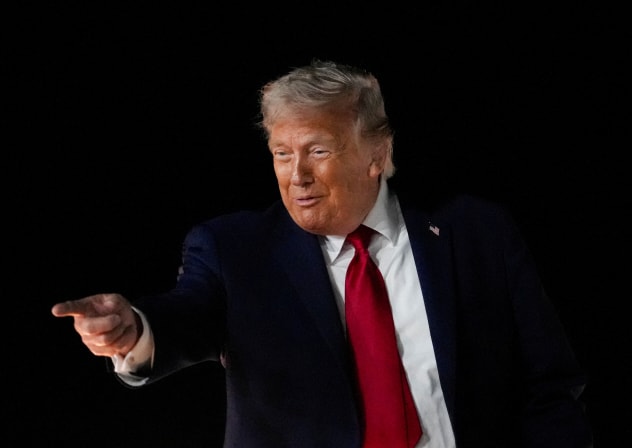
Romney, Obama point at each other during debate Photo: REUTERS/Mike Segar
The upcoming US presidential election has many Americans living in Israel
captivated as they watch the debates and analyze the polls to see who will
occupy the White House for the next four years. While most Jews in America have
long voted for the Democratic party based on its liberal domestic policies, Jews
everywhere should be more concerned with the party’s foreign policy.
The
question is, will a Romney-Ryan ticket be better for Israel than the current
administration with regard to Israel? It’s important to look at how foreign
policy works and the similarities and differences between Obama and
Romney.
Aside from the president’s ability to make decisions, such as
appointing ambassadors and deciding to go to war, there is no actual mention of
foreign policy in the Constitution. Congress plays a key role in shaping foreign
policy, as do think-tanks, former presidents and NGOs. Influential advisers also
have a strong impact on the president’s foreign policy positions and that
explains varying degrees of obvious or subtle differences between
administrations.
When trying to understand each candidate’s foreign
policy, it can also help to look at the candidates’ experience.
While
Obama now has four more years of foreign policy experience than Romney (who has
very little experience, if any), from the start he has taken a mistaken,
Carter-type approach by seeking appeasement over force.
A 2011 report
published by the White House, entitled “Empowering Local Partners to Prevent
Violent Extremism in the United States,” intentionally eliminates the use of
terms such as “jihad” and “radical Islam.”
Tiptoeing around Islamists has
become a hallmark of the Obama presidency, but he continues to defend his
actions and criticize Romney.
In the national security section of the
Obama campaign website, under the title “Restoring America’s standing around the
world” it says “President Obama has strengthened our alliances around the world
with friends like Israel, our NATO allies, and our partners in Asia and Latin
America. And he has brought together international coalitions to confront shared
challenges, such as Iran’s nuclear program... On a foreign trip, Mitt Romney
insulted one of our closest allies – the British – right before their Olympics.
And he’s spent months on the campaign trail criticizing our allies and partners
around the world.”
As Kiertisak Toh, a member of the economic faculty at
Radford University, Virginia, and a senior fellow at the Sanford School of
Public Policy, Duke University, North Carolina, writes in The Nation, “Obama has
a core belief in multilateralism – forming coalitions and partnerships – and
judiciously applying military (hard) power in combination with diplomacy and
development assistance (soft power) – what the administration likes to call
‘smart’ power. Multilateralism recognizes today’s increasingly interdependent
and multi-polar world...
Romney, on the other hand, would probably be
more comfortable with unilateralism, leading from the front and perhaps being
quicker to use hard power.”
In Tuesday’s townhall-style debate against
Obama in New York, Romney said, “The president’s policies throughout the Middle
East began with an apology tour and pursued a strategy of leading from behind,
and this strategy is unraveling before our very eyes.”
Romney believes
Obama has not been a strong enough ally of Israel.
In his speech on
foreign policy at the Virginia Military Institute last week, Romney referred to
Obama’s “passivity in the Middle East.”
Says Toh, “With respect to the
Middle East, Romney did offer alternative policies, which include arming the
opposition in Syria, halting Iran’s nuclear capability rather than merely
preventing it from building nuclear weapons, tougher conditions on support for
Egypt, and more explicit support for Israel.”
Yet, in terms of how to
deal with Arab upheaval in the Middle East to the war in Afghanistan to
relations with China, it is not obvious that Romney offers a solution wholly
different than Obama’s. While he advocates a closer relationship with Israel and
taking an even tougher stance against Iran, it is unclear how he differs with
Obama on the peace process or on whether he will support Israel if it decides to
attack Iran.
The Romney campaign emphasizes “A Romney foreign policy will
proceed with clarity and resolve. Our friends and allies will not have doubts
about where we stand and what we will do to safeguard our interests and theirs.
Neither will our rivals, competitors, and adversaries. The best ally world peace
has ever known is a strong America." On Israel, the campaign charges, “President
Obama and his administration have badly misunderstood the dynamics of the
region. Instead of fostering stability and security, they have diminished US
authority and painted both Israel and ourselves into a corner. President Obama
for too long has been in the grip of several illusions. One is that the
Israeli-Palestinian dispute is the central problem in the region. This has been
disproved repeatedly by events, most recently and most dramatically by the
eruption of the Arab Spring. But it nonetheless led the president to explicitly
state that his policy is to create ‘daylight’ between the United States and
Israel, believing that this would earn us credits in the Arab world and somehow
bring peace closer. The record proves otherwise.”
Strangely, the Obama
campaign does not seem to have a foreign policy section on its website other
than in its “Truth Team” section refuting Romney’s positions.
The
“national security” section says nothing about the Middle East or
Israel.
The campaign does highlight Obama’s assistance to Israel,
including preventing Palestinian efforts to circumvent direct negotiations with
Israel and unilaterally seek statehood recognition through the United Nations’
increased security assistance to Israel every year, including unprecedented
support for Israel’s Iron Dome rocket defense system and Obama’s directive to
the Pentagon to expand US-Israel security cooperation.
US FOREIGN policy
should not be about who is responsible for the US ambassador’s death in
Benghazi, Libya, or about Romney’s gaffe in London. Rather, foreign policy
should be about how to protect the American people and their allies. It should
be about the type of message the administration needs to send to other nations
to show that it is the leader of the free world. Much of foreign policy is about
signals, and the signals emanating from Washington today are lending power to
the Arab world and encouraging extremists.
Whether Romney would act
differently in Afghanistan, Libya or Syria is unclear. Perhaps next Monday’s
debate in Florida will clarify this. What is clear is that Romney would never
have reached out to the Arab world, naively, in a speech from Cairo. He never
would have bowed to the Saudis and he would not have shunned Israel’s prime
minister in public.