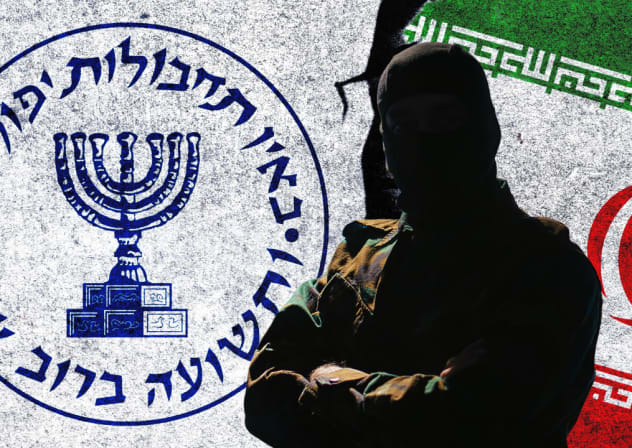
What are we to make of the fact that no one has taken credit for Wednesday’s
bombing in Jerusalem?
Wednesday’s bombing was not a stand-alone event. It was
part and parcel of the new Palestinian terror war that is just coming into view.
As Israel considers how to contend with the emerging onslaught, it is important
to notice how it differs from its predecessors.
On a military level, the
tactics the Palestinians have so far adopted are an interesting blend of
state-of-the-art missile attacks with old-fashioned knife and
bomb-in-the-briefcase attacks. The diverse tactics demonstrate that this war is
a combination of Iranian-proxy war and local terror pick-up cells. The attacks
are also notable for their geographic dispersion and for the absence thus far of
suicide attacks.
For the public, the new tactics are not interesting and
the message they send is nothing new. With or without suicide bombers,
Israelis understand that we are entering a new period of unremitting fear, where
we understand that we are in danger no matter where we are. Whether we’re in bed
asleep, or our way to work or school, or sitting down on a park bench or at a
restaurant, whether we’re in Rishon Lezion, Sderot, Jerusalem, Itamar or
Beersheba, we are in the Palestinians’ crosshairs. All of us are
“settlers.” All of us are in danger.
The military innovations are
important for IDF commanders who need to figure out how to answer the public’s
demand for security. They will have to draw operational conclusions about the
challenges this mix of tactics and strategic architecture poses.
While
the military rationales of the various Palestinian terrorists are important,
like its two predecessors, the new Palestinian terror war is first and foremost
a political war. Like its two predecessors, which began in 1987 and 2000, the
new terror war’s primary purpose is not to murder Jews. Killing is just an added
perk. The new war’s primary purpose is to weaken Israel politically in order to
bring about its eventual collapse.
And it is in this political context
that the various terror armies’ refusal to take responsibility for Wednesday’s
attack in Jerusalem, and their moves to shroud in ambiguity much of the
responsibility for their recent terror activity is noteworthy. In the past,
Fatah, Hamas and Islamic Jihad were quick to take credit for
massacres.
Initially it seemed as though that standard practice was being
continued in the newest round of murder. Fatah’s Aksa Martyrs Brigades, for
instance, were quick to take credit for the massacre of the Fogel family in
Itamar on March 12. Hamas seemed to be competing for credit when its forces held
a public celebration of the atrocity in Gaza City on March 13.
But then
Fatah withdrew its claim of responsibility, and Hamas never claimed
credit.
As for the rocket and missile barrages from Gaza, Hamas took
credit for the 58 projectiles shot off on southern Israel last Saturday. But
then it let Islamic Jihad take credit for the longer-range Katyusha attacks on
Rishon Lezion, Beersheba, Gedera and Ashdod this week.
And again, no one
took credit for the bombing in Jerusalem on Wednesday.
WHAT DOES this
sudden bout of modesty tell us about how the Palestinian terror masters view the
current onslaught against Israel? What does it teach us about their assessment
of their political challenges and goals?
In the two previous terror wars, the
terror groups had two motivations for taking credit for their attacks. The first
reason was to expand their popularity. In Palestinian society, the more Jews you
kill, the more popular you are.
The main reason Hamas won the 2006
Palestinian elections was that the Palestinians believed Hamas terror was
responsible for Israel’s withdrawal from Gaza in August 2005. Even though Fatah
actually killed more Jews than Hamas did between 2000 and 2005, Hamas reaped
greater rewards for its attacks because its record was unblemished by political
engagement with Israel.
The second reason the various groups have always
been quick to take credit for attacks is that they wanted to show their state
sponsors that they were putting their arms, training and financial support to
good use. Saddam Hussein and the Saudi royals paid handsome rewards to the
families of killed and captured terrorists. Over the past several decades, Iran,
Syria and Hezbollah have spent hundreds of millions of dollars arming, training
and financing Palestinian terror cells from Fatah, Hamas and Islamic Jihad
alike.
The fact that today neither Hamas nor Fatah is interested in
taking credit for Wednesday’s bombing in Jerusalem or for the massacre of the
Fogel family is a signal that something fundamental is changing in the political
dynamic between the two factions. Before considering what the change may be, a
word of explanation about Islamic Jihad is in order.
Islamic Jihad was
founded by Iran in 1988. Unlike Hamas and Fatah, Islamic Jihad has no
political aspirations. It has no political operatives, and it is content to
limit its operations to terrorism.
After the much larger and more
powerful Hamas subordinated its command and control to Iran in 2005, Islamic
Jihad has served as nothing more than a Hamas sub-contractor. It carries out and
takes credit for attacks when Hamas doesn’t wish to do so.
There are two
plausible internal Palestinian explanations for Fatah’s and Hamas’s newfound
reticence, and they are not mutually exclusive. The first explanation of
their silence is that the recent talk about Fatah and Hamas forming a unity
government is serious. Fatah’s announcement Thursday that it had arrested two
Islamic Jihad terrorists in connection with the Jerusalem bombing is notable in
this vein. It signals that after four years of fighting Hamas forces in Judea
and Samaria, Fatah is looking for a more politically convenient group of usual
suspects.
The second reason Hamas and Fatah may be keeping mum about who
is responsible is that they both know who did it and they are using the terror
to gain leverage against one another at the negotiating table. If Hamas is
carrying out the attacks, its leaders may simply be using them to strengthen
their bargaining position in the unity talks. Fatah knows that if Hamas takes
credit for the attacks, its mass popularity in Judea and Samaria will grow. And
if Fatah is carrying them out, its leaders may be using them to show Hamas that
they are serious about burying the hatchet with the Palestinian branch of the
Muslim Brotherhood.
WHILE THE internal political dynamics of the various
Palestinian terror groups is interesting, it is not the main game in town. For
both Fatah and Hamas, the most important target audience is Europe. But before
we discuss how the Palestinians’ assessment of Europe is connected to their move
to obfuscate organizational responsibility for terrorism, it is necessary to
consider the concrete political goal of their new terror war.
Fatah is in
the midst of a global campaign to build international support for a unilateral
Palestinian declaration of independence in September. From Israel’s
perspective, the campaign is threatening for two reasons. First, a unilaterally
declared Palestinian state will be in a de facto state of war with Israel.
Second, if the Palestinians secure international recognition for their “state”
in Jerusalem, Judea, Samaria and Gaza, the move will place 500,000 Jews who live
in these areas in the international crosshairs.
Much of the discussion
about this goal has centered on whether or not US President Barack Obama will
veto a UN Security Council resolution endorsing such a declaration. And based on
Obama’s behavior to date, the Palestinians have good reason to believe that he
may support their move. But in truth, the discussion about how the US will
respond to the planned Palestinian declaration is largely beside the point. The
point of the threatened declaration is not to get a UN Security Council
resolution supporting it. The point is to get the EU to enact further
sanctions against Israel.
And this brings us back to the new policy of
not taking credit for attacks on Israel, and to the decision to launch a new
terror war in general. On the face of it, at such a sensitive time for
the Palestinians diplomatically, it would seem that they would want to keep
their traditional good cop-Fatah, bad cop-Hamas routine going and have Hamas
take the credit for the recent attacks. Indeed, it would seem that the
Palestinians would want to hold off on attacks altogether until after they
declare independence.
The fact that Fatah and Hamas have neither waited
until after September to attack nor sought to differentiate themselves from one
another as the attacks coalesce into a new terror campaign indicates strongly
that the Palestinians no longer feel they need to pretend to oppose terror to
maintain European support for their war against Israel.
The Palestinians
assess that Europe is swiftly moving toward the point where it no longer needs
to pretend to be fair to Israel. The British, French and German votes in favor
of the Palestinians’ anti-Israel Security Council resolution last month were the
latest sign that the key European governments have adopted openly hostile
policies toward Israel.
More importantly, these policies are not the
consequence of Palestinian lobbying efforts, and so Israel cannot hope to change
them through counter-lobbying efforts. Europe’s abandonment of even the guise of
fairness toward Israel is the product of domestic political realities in Europe
itself. Between the rapidly expanding political power of Europe’s Muslim
communities and the virulently anti-Israel positions nearly universally adopted
by the European media, European governments are compelled to adopt ever more
hostile positions toward Israel to appease their Israel-hating publics and
Muslim communities.
Take British Prime Minister David Cameron, for
example. When Cameron called Gaza “an open air prison” last year, it wasn’t
because he had just spoken to Fatah leader Mahmoud Abbas. And he
certainly wasn’t acting out of conviction. Cameron surely knew that his
statement was an utter lie. And he also surely knew that Hamas is a jihadist
terror group that shares the ideology of its fellow Muslim Brotherhood spin-off
al- Qaida.
But for Cameron, far more important than Gaza’s relative
prosperity and Hamas’s genocidal goals was the fact that in the last British
elections, the UK’s Muslim Public Affairs Committee (MPAC-UK) successfully
ousted six members of parliament who expressed support for Israel.
The
Palestinians recognize that they don’t need to pretend to be good to get Europe
to support them. After the people of Europe have been brainwashed by their media
and intimidated by the Muslim communities, they have developed a Pavlovian
response regarding Israel whereby every mention of Israel makes them hate it
more. It doesn’t matter if the story is about the massacre of Israeli children
or the bombing of synagogues and nursery schools. They know that Israel
is the guilty party and expect the governments to punish it.
What the
Palestinian silence on who committed what atrocity tells us is that in this new
terror war, the Palestinians believe they cannot lose. With Europe in tow, Fatah
and Hamas feel free to join their forces and advance both militarily and
politically.
caroline@carolineglick.com