The Jerusalem Post
Jpost search icon google-icon iphone
  Set as Homepage
Tue, May 21, 2013   12 Sivan, 5773
newspapers magazines
 
    • Breaking News
    • Diplomacy & Politics
    • Defense
    • National
    • Mideast
    • Syria
    • Iran
    • World
    • Business
    • Sports
    • Health & Science
    • Environment
  • Video
  • Opinion
    • Columnists
    • Editorials
    • Op-Eds
    • Letters
  • Jewish World
  • Lifestyle
    • Arts & Culture
    • Food & Wine
    • Travel
  • Features
    • Insights & Features
    • Week in review
    • On the Web
    • Shalva Superheroes
    • Obama in Israel
  • Blogs
    • In the news
    • Judaism
    • From the Middle East
    • Lifestyle
    • Aliya
    • Science and Technology
  • JPost Apps
    • iPhone app
    • iPad app
    • Android app
    • Twitter
    • Facebook
    • RSS feeds
    • JPost Toolbar
    • JPost Newsletter
    • JPost Alert
  • Premium Zone
    • The Jerusalem Report
    • The Experts
    • 20 Questions
    • e-paper
    • Ivrit
    • Christian Edition
    • Dash
    • Magazine
    • Metro
    • In Jerusalem
  • French
    • Politique & Social
    • Affaires Palestiniennes
    • Diplomatie & Monde
    • Art & Culture
    • Israel
  • Green Israel
JPost Learn Hebrew  
Advertise with us  
Nefesh Guided Aliyah  
Eldan  
AFMDA  
Africa Israel Group  
Isram Group  
Kupat Ha  
JPost Twitter  
JPost Facebook  
Classifieds  


Breaking News
 
 
  • JPost.com
  • opinion
  • columnists
 

Encountering Peace: Let’s not talk?

By GERSHON BASKIN
LAST UPDATED: 11/07/2011 23:30
Tweet

President Abbas and PA Prime Minister Salaam Fayyad are the most determined Palestinian leaders against the use the violence in the Palestinian struggle.

Prime Minister Binyamin Netanyahu in the Knesset
Prime Minister Binyamin Netanyahu in the Knesset Photo: REUTERS/Ronen Zvulun
Shortly before Binyamin Netanyahu began his first term of office as prime minister in 1996, the government of Israel and the Palestinian Authority agreed to create an environmental experts’ committee to undertake the planning and implementation of much needed cooperation on environmental issues. Committee members from both sides were dedicated scientists and environmentalists and were anxious to advance projects that would protect the land, clean up polluted wadis, develop sewage treatment plants and much more. In the aftermath of the change of regimes in Israel, after the Rabin assassination and the failure of Shimon Peres to win the elections, the newly elected Netanyahu set out to freeze the peace process that he was not really committed to.

The immediate Palestinian response, like a knee-jerk reaction, was to freeze contact with Israelis at the official level. This was just fine with the Netanyahu government. The Oslo process had created some 26 joint committees crossing almost every avenue of government affairs. One by one, the joint committees ceased to function. Scheduling meetings became impossible as each side conveniently found good excuses not to meet.

One exception was the newly formed environment experts committee.

Together, the Israeli head of the committee, Dr. Shmuel Brenner, the associate deputy director-general of the Environment Ministry, and the Palestinian head, Dr. Mohammed Hmaidi, the director-general of the Palestinian Ministry of Environment, approached the Israel Palestine Center for Research and Information, with a request for our organization to facilitate “unofficial meetings of officials.” The officials could not meet officially, so with the environment in mind and the understanding that cooperation was essential, these two senior government employees found a way to “beat the system” in the interests of both parties, knowing that nothing good can be achieved by not talking.

Despite official decisions not to meet, unofficial contacts continued and mutually beneficial relationships developed that were in the interests of both sides.

I WAS reminded of these unofficial meetings this week as we are once again in the situation where Israeli and Palestinian officials will not talk to each other. With the exception of continued security cooperation at the field level, and perhaps some continued talk between those who have responsibility for day-to-day issues concerning commerce, Palestinian and Israeli officials have been instructed by their superiors not to meet.

Twice in the past week, we have experienced “scheduling problems” when trying to bring together a small group of Israeli and Palestinian officials for closed-room discussions on economic issues. Officials from the Israeli Ministry of Foreign Affairs were refused permission to attend a workshop on joint planning issues with Palestinian counterparts.

But they were in good company, because the Palestinian officials were also told not to participate by their superiors.

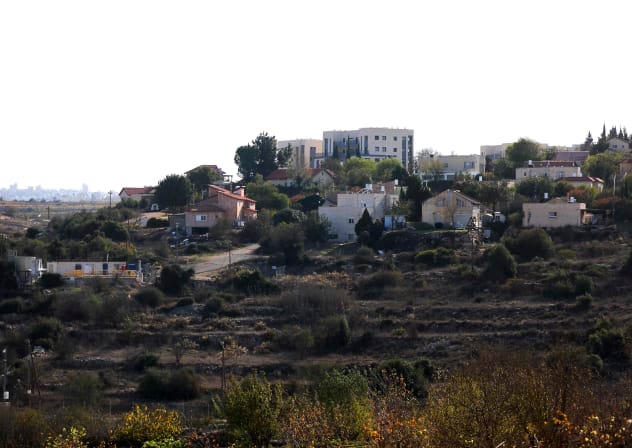
At the most senior levels, Palestinians have decided to refuse Israeli offers to resume negotiations. Their point of view is based on years of frustration of the failure of the peace talks as they witness on a daily basis parts of their homeland being developed under their watchful eyes as Israeli settlements. Palestinians had hoped that the international community, backed by the determined words of US President Barack Obama, would force Israel to stop settlement building. But this did not happen.

The Palestinians, having made the decision to go to the UN to bring the Palestinian issue back to the international community, now face the frustrating reality of failure with no chance of gaining membership in the UN at this time. The aim of going to the UN was to create a game changer – an act that would empower them and attempt to level the playing field to some extent. But Israel has maintained the stronger hand and with its influence and American support has managed to prevent Palestinian success in the international arena. With US funding to UNESCO now being cut, even the UN Secretary General is recommending the Palestinians drop their plans to achieve membership in additional UN bodies.

US aid to the Palestinians is now frozen and with no financial rescue coming from the Arab world, the Palestinians need to come up with a new plan. In essence, both sides do. The no-talks reality is not in the interest of either party. But before coming to the conclusion that talk they must, it seems we are still in for more tactical steps, perhaps threats that delay the inevitable and place some very dangerous possibilities in front of us.

The Palestinians are considering shutting down the Palestinian Authority. There is talk of immediate elections with Mahmoud Abbas stepping down. There is a possibility of financial collapse and with it the many achievements of state building and security consolidation going down the tubes.

Israeli actions influencing the US Congress to freeze support for the PA along with the illegal Israeli action of freezing the transfer of Palestinian funds collected by Israel, as part of the Oslo agreement, shake the very foundation of the Palestinian Authority and increase the risk of collapse and a return to violence.

President Abbas and PA Prime Minister Salaam Fayyad are the most determined Palestinian leaders against the use the violence in the Palestinian struggle. It is futile and wrong to seek to punish them. Likewise it is also clear that the strategy of not returning to the table is equally futile and wrong. Even if the chances of reaching a comprehensive negotiated agreement at this time with this Israeli government seem close to nil, there is no longer a legitimate reason to reject talking.

Come to the table, make your case, in private and in public, convince the world and the Israeli public of your peaceful intentions. No one has ever made peace by not talking.

The writer is the Co-CEO of IPCRI, the Israel Palestine Center for Research and Information, a columnist for The Jerusalem Post and a radio host on All for Peace Radio.
  • Send
  • Large
  • Small
  • Print
  • Share
This article is by :
Gershon Baskin

Follow @gershonbaskin
Recent stories:
  • Encountering Peace: Truth, lies and legi...
  • Encountering Peace: The Israeli economic...
  • Encountering Peace: Buy Palestinian
  • Encountering Peace: Our memories, their ...
Most Viewed in
1
The Region: Where does Israel’s greatest threat lie?
2
Israel, Turkey and gas
3
Syrian civil war: A military-strategic assessment
4
Jordan’s king trying to play on Israel’s fears
JPost Community
Tweet
Binyamin Netanyahu Netanyahu Palestinian Authority Peres Rabin Obama
Share this article
Tweet
Share
Send
Your comment must be approved by a moderator before being published on JPost.com. Disqus users can post comments automatically.

Comments must adhere to our Talkback policy. If you believe that a comment has breached the Talkback policy, please press the flag icon to bring it to the attention of our moderation team.
JPost Services
conferenceConference
newsletterNewsletter
iphoneMobile Apps
kotelcamKotel Cam
kolboJPost Alert
premiumPremium
JPost TV News  
Mobile Apps  
Bank Hapoalim  
Meir Panim  
Yad Ezra  
Rambam Hospital  
TourLuxe  
Zev Goldstein PLLC  
Penrose Gallery  
JPost Premium Zone  
JPost kotel Camera  
         
 
Israel Focus
JPost TV News
Coming soon to a screen near you!  
Nefesh B'Nefesh Guided Aliyah
Already living in Israel? Enjoy the Benefits of Aliyah!  
Give "Freedom" this Passover
to needy Israeli families. Donate now  
War Threatens
Protect the People of Northern Israel  
Intelligence Squared
The international debate forum, announces it is coming to Israel  
Bank Hapoalim
Israeli's number one bank  
Jerusalem Post Lite
Lite Edition of the Jerusalem Post for English improvement  
Learn Hebrew with us
Get 10 minutes free personal coaching in Hebrew through phone or Skype  
JPost newspapers
Sign up for the JPost newspapers and receive one month free subscription  
Kosher English Magazine
English language weekly magazine - especially for religious people  
JReport Kindle Edition
Now you can get the Jerusalem Report directly to your Kindle  
JPost Premium Edition
The very best articles are available only in our Premium edition  
Lifestyle Magazine
 
 
Real Estate
Don't Look For a House!
In Israel, our website will do it for you!  
 
Travel
Eldan Rent a Car
20% off all Car Rental Reservations in Israel  
Hertz Car Rental
Special Online Discounts!  
The King David Jerusalem Hotel
One of the world's truly iconic hotels, and a Jerusalem landmark  


Sites Of Interest:

Jerusalem Hotels
KKL-JNF
Poalim Online
BreitBart.com
Our Friends
Jerusalem Attractions
Jerusalem Tours
itraveljerusalem.com

JPost sites:

Learn Hebrew
The Jerusalem Report
Our Magazines
JPost Edition Francaise
Green Israel
Christian World
Jerusalem Post Lite

Services:

JPost Mobile Apps
JPost Premium
JPost Newsletter
JPost Toolbar
JPost News Ticker
JPost RSS feeds
JPost Archives
JPost Alert
JPost Kotel Cam

JPost Conferences:

NYC Conference
Diplomatic Conference

Information:

About Us
Feedback
Staff E-mails
Copyright
Sitemap
News Partners
Advertise with Us
Price List
Statistics
Ad Specs
Terms Of Service
Jpost.com, the online edition of the Jerusalem Post Newspaper - the most read and best-selling English-language newspaper in Israel. For analysis and opinion from Israel, the Jewish World and the Middle East. Jpost.com offers expert and in-depth reporting from Israel, the Jewish World and the Middle East, including diplomacy and defense, the Palestinian-Israeli conflict, the Arab Spring, the Mideast peace process, politics in Israel, life in Jerusalem, Israel's international affairs, Iran and its nuclear program, Syria and the Syrian civil war, Lebanon, the Palestinian Authority, the West Bank and Gaza Strip, Israel's world of business and finance, and Jewish life in Israel and the Diaspora.
 
About Us | Advertise with Us | Subscribe | Premium | Newsletter | RSS | Contact Us
 
All rights reserved © The Jerusalem Post 1995 - 2012