The Jerusalem Post
Jpost search icon google-icon iphone
  Set as Homepage
Fri, May 24, 2013   15 Sivan, 5773
newspapers magazines
 
    • Breaking News
    • Diplomacy & Politics
    • Defense
    • National
    • Mideast
    • Syria
    • Iran
    • World
    • Business
    • Sports
    • Health & Science
    • Environment
  • Video
  • Opinion
    • Columnists
    • Editorials
    • Op-Eds
    • Letters
  • Jewish World
  • Lifestyle
    • Arts & Culture
    • Food & Wine
    • Travel
  • Features
    • Insights & Features
    • Week in review
    • On the Web
    • Shalva Superheroes
    • Obama in Israel
  • Blogs
    • In the news
    • Judaism
    • From the Middle East
    • Lifestyle
    • Aliya
    • Science and Technology
  • JPost Apps
    • iPhone app
    • iPad app
    • Android app
    • Twitter
    • Facebook
    • RSS feeds
    • JPost Toolbar
    • JPost Newsletter
    • JPost Alert
  • Premium Zone
    • The Jerusalem Report
    • The Experts
    • 20 Questions
    • e-paper
    • Ivrit
    • Christian Edition
    • Dash
    • Magazine
    • Metro
    • In Jerusalem
  • French
    • Politique & Social
    • Affaires Palestiniennes
    • Diplomatie & Monde
    • Art & Culture
    • Israel
  • Green Israel
JPost Learn Hebrew  
Advertise with us  
Nefesh Guided Aliyah  
Eldan  
AFMDA  
Africa Israel Group  
Isram Group  
Kupat Ha  
JPost Twitter  
JPost Facebook  
Classifieds  


Breaking News
 
 
  • JPost.com
  • opinion
  • columnists
 

Savir's Corner: The ‘Hasbara’ Syndrome

By URI SAVIR
05/03/2012 21:41
Tweet

To say that Israel today is not popular internationally or that it suffers from a bad image is an understatement.

Beit Shemesh resident erects Israeli flag
Beit Shemesh resident erects Israeli flag Photo: picture credits - Menachem Lipkin
To say that Israel today is not popular internationally or that it suffers from a bad image is an understatement. In last year’s annual BBC poll on the international popularity of 16 countries and the EU, Israel ranked almost last, with only Iran, North Korea and Pakistan lagging behind us; it is hard to believe that countries such as Russia, South Korea, India and China are more liked than Israel.

In the United States, 43 percent express a positive view of Israel, 41% a negative one. In Britain, 66% have a negative view of Israel.

A country that came into being with tremendous world support for the dramatic homecoming of the Jewish people and its successful and unique nation-building process. The world was on the side of David, surviving against all odds, and rebuilding its ancient homeland, a modern, integrated country, bound to its historical and cultural roots, reviving its ancient language, creating a modern, democratic society, with a modern economy, culture and army.

The year 1967 was the historical watershed.

David became Goliath, the great moral cause of the new Israel was being questioned, as we became over night the rulers of almost 3 million Palestinians. This deteriorated, as we became enamored with the occupation and as the settlements, on a land not anymore ours, came to be perceived, by a post-colonial world, as colonial outposts.

Since then our image has deteriorated on a slippery slope: an image of an occupying power, not respecting basic human rights, a strong military power vis-à-vis the Palestinians and Lebanon and its civilian population.

The image of sovereign Israel also gradually deteriorated, from admiration of the social progress of the kibbutzim and of the vibrant democracy, to sharp criticism of a state where secularism gives in to religious political forces, with Middle Age doctrines about the role of women, a state where racism toward Arabs is rampart, etc.

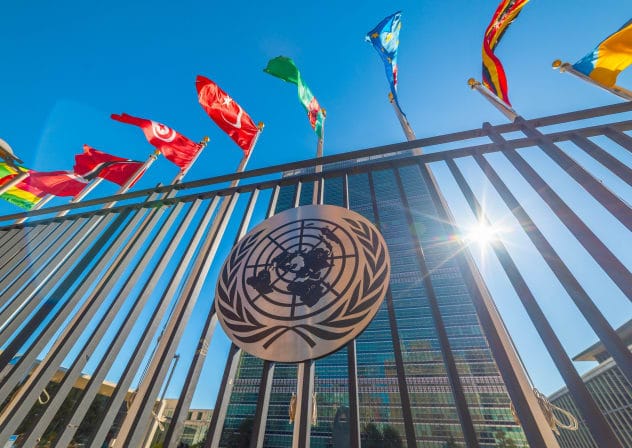
These images have led us to be totally isolated in the family of nations as expressed at the UN, with only the US, Germany and perhaps Micronesia supporting us; in many countries our generals are accused of war crimes, and our academia boycotted.

Some see it as if we are losing a beauty contest (“So what if we are unpopular!”) – a wrong and dangerous perception.

For a relatively small state like Israel, our international image and legitimacy is of great importance.

Our economy, our defense capacity, our room for maneuver are to a large degree a function of our international standing. If we want to be part of globalization and to reap its fruits, we must be a respected member of the family of nations; if we must act in self-defense, we need at least a degree of international legitimacy.

A bad image of a delegitimized Israel is therefore dangerous to our national security.

And what is the remedy for this predicament? According to official Israel, in past years as well as today, it is hasbara – a Hebrew word, often pronounced in Israel with an American accent as most of it is targeted at the United States. Furthermore, there is no exact English translation. It derives from “lehasbir,” to explain. No country in the world, except for us, has an explanation policy, let alone an explanation minister.

This notion lies deep in our mythology about ourselves – we have “to explain,” meaning that the truth is on our side, we just have to explain it and we will be understood. And if the audience does not “understand” then traditionally there are three possible explanations: the hasbara was not good enough because the messenger was not truly convinced of the gospel; the non-Jewish audience did not “get it” because of anti-Semitism; or the Jewish audience did not “get it” because of “Diaspora mentality.”

And yet we have had some brilliant PR agents and propagandists, starting and starring our current Prime Minister Binyamin Netanyahu – Mr.

Hasbara. Bibi truly believes that a good speech, emphasizing the right core messages, is a remedy for every predicament. His last “talks like a duck” speech at AIPAC was a propagandist masterpiece, that got the audience engaged in a virtual fitness program of endless standing ovations, but it did not stop Iran’s nuclear ambitions, or give us the political space to act on it ourselves. At most he succeeded in insulting the ducks.

Bibi is only a symptom of our Hasbara Syndrome – when a lieutenant-colonel brutally beats an unarmed Danish protester, the country laments the damage to hasbara and not the moral predicament; when we send rescue missions to international disaster areas, such as Haiti, the focus is on the hasbara dividend more than on the tragedy.

It is high time that we understand some basic facts of modern-day international relations and public relations in regards to three key areas: • Some things just cannot be “explained.” Take the settlements in the West Bank, to which the whole world, without a single exception, are opposed. If we enlisted the greatest hasbara, PR experts in the world, from Arthur Finkelstein to Coca- Cola’s PR agency, they would not be able to convince a single soul that 300,000 settlers in the West Bank strengthen Israel’s security.

With all of our efforts to convince the world otherwise, the settlements are universally perceived as a provocation against the Palestinian people, if not the Arab world as a whole.

They are, in the minds of all governments including that of the United States, an obstacle to peace, internationally illegal, a symptom of an occupation, and against the basic interests and values of a post-colonial world – not even one hundred Bibis and Finkelsteins can convince the world otherwise.

• The world is relatively wellinformed in this era of information and technology revolutions.

Through the various Internet news outlets, Wikipedia, worldwide traditional media and social networks, people generally are more informed than before – and they are skeptical of governmental messages, which in today’s information glut are, in any case, a drop in the ocean.

• What matters is not public relations or hasbara, but policy. When Israel had an active peace policy, be it under Begin, Rabin, Peres and in part Sharon, our actions spoke louder than any hasbara. We had far better international standing and it impacted our trade relations, brought about economic growth and strengthened our national security against external threats.

As to the future, it is imperative that we divorce ourselves of the notion that good hasbara is a remedy for bad policy. Good policy sells itself; not necessarily popular policy, but policy that can be rationally described as serving our interests of peace and security, as well as the values that we share with the Americans and the international community.

We can then engage not in hasbara, which is nearly synonymous with propaganda, but in what is known in the modern and the new media world as public diplomacy, engaging through traditional and new media about how great Israel is, which indeed it is, despite its leadership.

The writer is president of the Peres Center for Peace and served as Israel’s chief negotiator for the Oslo Accords.
  • Send
  • Large
  • Small
  • Print
  • Share
This article is by :
Uri Savir
Recent stories:
  • Savir's Corner: Syrian reconstruction
  • Savir's Corner: Humor in conflict
  • Savir's Corner: National priorities
  • Savir's Corner: Understanding through li...
Most Viewed in
1
A grand retreat from confronting Iran?
2
UK’s Islamist problem
3
Thanks to Kuperwasser al-Dura report, truth is on its way
4
Forget ‘Start-up Nation,’ please
JPost Community
Tweet
hasbara image support international United States perception
Share this article
Tweet
Share
Send
Your comment must be approved by a moderator before being published on JPost.com. Disqus users can post comments automatically.

Comments must adhere to our Talkback policy. If you believe that a comment has breached the Talkback policy, please press the flag icon to bring it to the attention of our moderation team.
JPost Services
conferenceConference
newsletterNewsletter
iphoneMobile Apps
kotelcamKotel Cam
kolboJPost Alert
premiumPremium
JPost TV News  
Mobile Apps  
Bank Hapoalim  
Meir Panim  
Yad Ezra  
Rambam Hospital  
TourLuxe  
Zev Goldstein PLLC  
Penrose Gallery  
JPost Premium Zone  
JPost kotel Camera  
         
 
Israel Focus
JPost TV News
Coming soon to a screen near you!  
Nefesh B'Nefesh Guided Aliyah
Already living in Israel? Enjoy the Benefits of Aliyah!  
Give "Freedom" this Passover
to needy Israeli families. Donate now  
War Threatens
Protect the People of Northern Israel  
China Suppliers
 
Intelligence Squared
The international debate forum, announces it is coming to Israel  
Bank Hapoalim
Israeli's number one bank  
Jerusalem Post Lite
Lite Edition of the Jerusalem Post for English improvement  
Learn Hebrew with us
Get 10 minutes free personal coaching in Hebrew through phone or Skype  
JPost newspapers
Sign up for the JPost newspapers and receive one month free subscription  
Kosher English Magazine
English language weekly magazine - especially for religious people  
JReport Kindle Edition
Now you can get the Jerusalem Report directly to your Kindle  
JPost Premium Edition
The very best articles are available only in our Premium edition  
Lifestyle Magazine
 
 
Real Estate
Don't Look For a House!
In Israel, our website will do it for you!  
 
Travel
Eldan Rent a Car
20% off all Car Rental Reservations in Israel  
Hertz Car Rental
Special Online Discounts!  
The King David Jerusalem Hotel
One of the world's truly iconic hotels, and a Jerusalem landmark  


Sites Of Interest:

Jerusalem Hotels
KKL-JNF
Poalim Online
BreitBart.com
Our Friends
Jerusalem Attractions
Jerusalem Tours
itraveljerusalem.com

JPost sites:

Learn Hebrew
The Jerusalem Report
Our Magazines
JPost Edition Francaise
Green Israel
Christian World
Jerusalem Post Lite

Services:

JPost Mobile Apps
JPost Premium
JPost Newsletter
JPost Toolbar
JPost News Ticker
JPost RSS feeds
JPost Archives
JPost Alert
JPost Kotel Cam

JPost Conferences:

NYC Conference
Diplomatic Conference

Information:

About Us
Feedback
Staff E-mails
Copyright
Sitemap
News Partners
Advertise with Us
Statistics
Ad Specs
Terms Of Service
Jpost.com, the online edition of the Jerusalem Post Newspaper - the most read and best-selling English-language newspaper in Israel. For analysis and opinion from Israel, the Jewish World and the Middle East. Jpost.com offers expert and in-depth reporting from Israel, the Jewish World and the Middle East, including diplomacy and defense, the Palestinian-Israeli conflict, the Arab Spring, the Mideast peace process, politics in Israel, life in Jerusalem, Israel's international affairs, Iran and its nuclear program, Syria and the Syrian civil war, Lebanon, the Palestinian Authority, the West Bank and Gaza Strip, Israel's world of business and finance, and Jewish life in Israel and the Diaspora.
 
About Us | Advertise with Us | Subscribe | Premium | Newsletter | RSS | Contact Us
 
All rights reserved © The Jerusalem Post 1995 - 2012