Reality Check: Afraid of the future
05/13/2012 21:18
We now have an easy score card on which to mark Netanyahu over the next 12 months or so.
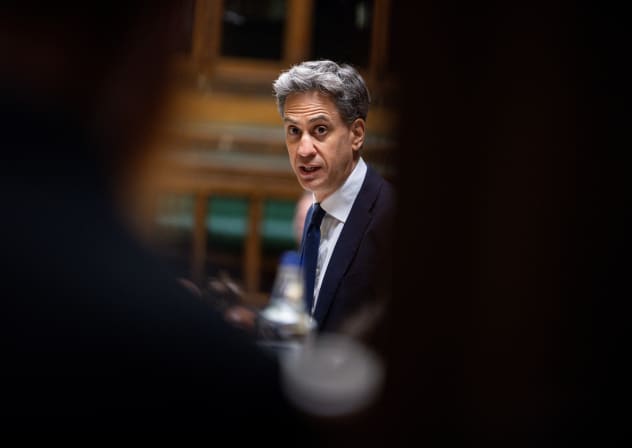
PM Netanyahu speaks at President's Residence Photo: Marc Israel Sellem
As someone who devoutly wishes to see the end of Binyamin Netanyahu as Israel’s
prime minister, I was nevertheless delighted with last week’s turn of events
which have all but guaranteed his remaining in power until the end of 2013 when
this government’s official term of office expires.
Had the country gone
to the polls in September, it was more or less a certainty that Netanyahu would
have been returned to the Prime Minister’s Office; now there is at least a
chance that his extra year in office will reveal to all why there has never been
a worse prime minister, save for Yitzhak Shamir, residing in Jerusalem’s Balfour
Street.
Back in Netanyahu’s first term as prime minister, which ended
with him being rightly dumped by the voters, he told an election rally that his
opponents were “afraid.” This time around, the despicable political shenanigans
of last week show that Netanyahu, and his new sidekick Shaul Mofaz, are the ones
running scared.
Unlike Kadima leader Mofaz, Netanyahu is not afraid of
the electorate. The Likud is doing well in the opinion polls and there is no one
on the immediate horizon who can challenge him as a potential
premier.
What frightens the prime minister are the members of his own
party, who heckled him last Sunday night at a meeting of the Likud’s convention,
and prevented him from summarily assuming the role of Likud convention
chairman.
The religious, right-wing extremists who shouted him down are
not representative of Likud voters, but they have successfully infiltrated the
Likud and wield disproportionate strength inside the party. Netanyahu did
not want to go to elections with these people influencing the composition of the
Likud’s next Knesset slate.
Last time around, through internal political
maneuverings, he managed to ensure that Moshe Feiglin, the religious right’s
leader inside the Likud, was shunted into an unrealistic slot. This time, unless
Netanyahu can regain control of the party’s machinery, there is a very good
chance that Feiglin and his ilk will feature prominently on the Likud list, at
the expense of moderates Netanyahu feels he needs, such as Dan
Meridor.
Mofaz, on the other hand, is terrified of the
voters. Since beating Tzipi Livni for the Kadima leadership, there has
been no bounce-back in the polls for the party, with last time’s Kadima voters
being tempted by Yair Lapid’s new party, a rejuvenated Labor Party under Shelly
Yacimovich’s new leadership or, for those who came to Kadima via the Likud, a
return to the Likud. Were the elections to have taken place in September, it’s
fair to assume they would have been the last time Kadima ever asked for the
voters’ trust.
NOW THE two men have given themselves time, Netanyahu to
wrest back control of the Likud and Mofaz to revitalize Kadima. But by entering
a government Mofaz swore he would never join, headed by a man he publicly called
a liar, the Kadima leader has shown to one and all he is a man whose word is not
his word and for whom expediency will always outweigh principle. Even the most
cynical of Israeli voters is going to be hard pushed to vote for a party headed
by such a person. Mofaz has gained a year at the cabinet table, but has lost any
opportunity of presenting Kadima as a viable opposition to the
Likud.
Netanyahu, meanwhile, is also in a dangerous position. For
the first time since taking office three years ago, the prime minister can no
longer avoid doing what he hates most: making a decision. Until now, Netanyahu
has always explained that he can’t do this, that or the other because of the
implications it would have on his coalition. Now, with a coalition of 94 Knesset
members, Netanyahu can do whatever he pleases because no one coalition partner
can pull the plug on the government.
The coalition agreement between
Netanyahu and Mofaz promises four measures: a replacement for the Tal Law to end
the system of IDF draft exemptions for haredim (ultra-Orthodox); changing the
electoral system so as to encourage more stable government; renewing
negotiations with the Palestinians, and passing an emergency budget for 2013 to
ward off an economic crisis due to an uncontrolled budgetary deficit.
US
Secretary of State Hilary Clinton has already been on the phone to Netanyahu to
find out what he intends to do about the peace process now that Kadima is in the
government, and the clock is ticking on the Tal Law, which expires on July 1.
Yisrael Beytenu can no longer threaten the coalition over peace moves; the
haredi parties no longer have the whip hand over yeshiva students’ exemption
from IDF duty or the need to change the country’s political system.
We
now have an easy score card on which to mark Netanyahu over the next 12 months
or so. With such a strong coalition, an F on any one of the goals he and Mofaz
set for themselves should make clear, once and for all, that Netanyahu is a
do-nothing prime minister, unworthy of occupying the country’s highest
office.
The writer is a former editor-in-chief of The Jerusalem Post.