The Jerusalem Post
Jpost search icon google-icon iphone
  Set as Homepage
Fri, May 24, 2013   15 Sivan, 5773
newspapers magazines
 
    • Breaking News
    • Diplomacy & Politics
    • Defense
    • National
    • Mideast
    • Syria
    • Iran
    • World
    • Business
    • Sports
    • Health & Science
    • Environment
  • Video
  • Opinion
    • Columnists
    • Editorials
    • Op-Eds
    • Letters
  • Jewish World
  • Lifestyle
    • Arts & Culture
    • Food & Wine
    • Travel
  • Features
    • Insights & Features
    • Week in review
    • On the Web
    • Shalva Superheroes
    • Obama in Israel
  • Blogs
    • In the news
    • Judaism
    • From the Middle East
    • Lifestyle
    • Aliya
    • Science and Technology
  • JPost Apps
    • iPhone app
    • iPad app
    • Android app
    • Twitter
    • Facebook
    • RSS feeds
    • JPost Toolbar
    • JPost Newsletter
    • JPost Alert
  • Premium Zone
    • The Jerusalem Report
    • The Experts
    • 20 Questions
    • e-paper
    • Ivrit
    • Christian Edition
    • Dash
    • Magazine
    • Metro
    • In Jerusalem
  • French
    • Politique & Social
    • Affaires Palestiniennes
    • Diplomatie & Monde
    • Art & Culture
    • Israel
  • Green Israel
JPost Learn Hebrew  
Advertise with us  
Nefesh Guided Aliyah  
Eldan  
AFMDA  
Africa Israel Group  
Isram Group  
Kupat Ha  
JPost Twitter  
JPost Facebook  
Classifieds  


Breaking News
 
 
  • JPost.com
  • opinion
  • columnists
 

Washington Watch: Palestinian irreconciliation

By DOUGLAS BLOOMFIELD
05/23/2012 22:10
Tweet

If Fatah and Hamas can’t make peace with each other, how can they be expected to make peace with Israel?

Azzam al-Ahmad (L) and Mousa Abu Marzook
Azzam al-Ahmad (L) and Mousa Abu Marzook Photo: REUTERS/Asmaa Waguih
Fatah and Hamas signed another power sharing agreement this weekend in Cairo, but if experience is any guide it is doubtful this one will be any more successful than the previous attempts at reconciliation between the rival Palestinian factions.

The new pact calls for voter registration in Gaza and consultations on formation of an interim government of technocrats to begin May 27. The new cabinet, to be agreed upon within 10 days, would operate for six months, during which time it would set a date for presidential and parliamentary elections, probably sometime next year.

The new cabinet is to replace one sworn in just last week by Palestinian Authority president Mahmoud Abbas and immediately branded illegitimate by Hamas. Abbas said the yet-unformed interim body will not include Hamas because “everybody in the government should recognize Israel, denounce terrorism.”

The last legislative election was in 2006, which Hamas won. Abbas’ term as president ended in 2009, but he has repeatedly postponed new elections, worried Hamas could sweep the presidential, legislative and long-postponed municipal votes.

Fearful of a popular uprising, Abbas has been tightening his grip on power, including jailing bloggers, social network users and journalists on charges of offending him or other PA officials.

The secular nationalist Fatah and the Islamist Hamas have dramatically opposing philosophies, particularly relations with Israel – one supports peaceful coexistence between two states and the other seeks the “liberation of occupied land via armed struggle.”

Abu Marzouk, Hamas’s No. 2, said his group doesn’t object to Abbas negotiating with Israel, but that any peace agreement will only be a temporary truce – a hudna – and “We will not recognize Israel as a state.”

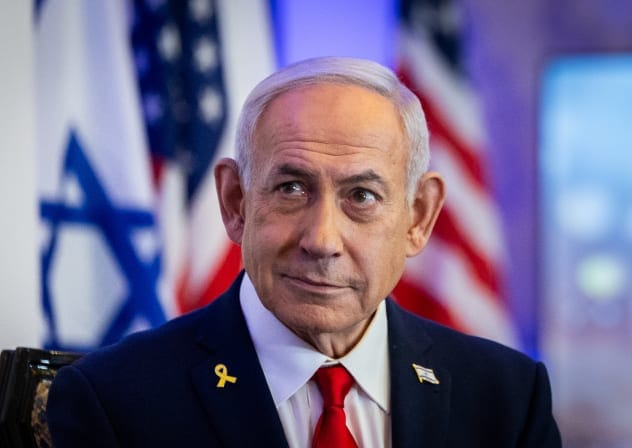
PRIME MINISTER Binyamin Netanyahu has said Israel will not negotiate with a Palestinian government that includes Hamas, which it considers a terrorist organization, as does the United States. Both countries won’t deal with Hamas, an Iranian ally that seized control of Gaza in a 2007 coup, until it recognizes Israel’s right to exist, accepts prior Palestinian- Israeli agreements and renounces terrorism – all of which it rejects.

Netanyahu uses these unity agreements to accuse Abbas of “turning his back on peace” and “join[ing] up with the Hamas terrorist organization.” The Palestinian leader, he added, must choose between the “path of Hamas or the path of peace.”

Abbas’s problem is that reconciliation between the two factions is more popular on the street than among the groups’ leaders, who are loath to share power. In fact, Hamas itself is split between the leadership in exile, headed by Khaled Mashaal, and the Gaza leadership, led by Ismail Haniyeh.

An analysis in Lebanon’s Daily Star said, “Palestinian frustration towards a leadership seen as inept, out of touch and repressive is rising to dangerous levels.”

A stumbling block in reconciliation has been Hamas’s objection to Salam Fayyad continuing as prime minister. It considers his appointment illegal because it was never approved by the Legislative Council, which it controls. He is a secular, political independent and internationally respected economist who has done much to bring order out of the chaos and corruption of the Palestinian government left by Yasser Arafat. His presence in government is considered essential to maintaining the confidence of donor nations that keep the PA financially afloat.

There is a great gap between signing reconciliation agreements and implementing them. Each side has good reason to fear the other wants to eliminate it.

Some in Fatah see power sharing giving Hamas freer hand to challenge it in the West Bank and replace it, while Hamas worries letting Fatah security forces into Gaza could lead to its overthrow.

The Jerusalem Post reported most Palestinians “reacted with skepticism” to the latest reconciliation attempt, particularly in light of an ongoing PA crackdown on Hamas supporters in the West Bank.

While the latest attempt at reconciliation limps ahead, the likelihood of resuming peace talks with Israel becomes even more remote.

In a personal letter to Abbas last week, Netanyahu – who is clearly pleased about the ongoing Palestinian political chaos – said his new unity government represents a new opportunity for peace talks and offered to resume negotiations without any preconditions, and for the first time he put in writing his commitment to a two-state approach.

Abbas quickly rejected it, according to aides who said he does not trust Netanyahu or consider his offer genuine. Abbas continues to refuse to meet the Israeli leader until Netanyahu agrees to a total construction freeze, including in Jerusalem, acceptance of the 1967 border with limited land swaps as a reference point to begin negotiations, and the release of prisoners.

If Abbas thinks Netanyahu is not serious, there’s an easy way to find out – unless the Palestinian leader is afraid to call Netanyahu’s bluff and expose his own.

The big mystery is whether either one is ready for serious negotiations.

But that is on hold while Palestinians negotiate among themselves. First the rival Hamas factions have to make salaam with each other before they can come to a power-sharing agreement with their rival Fatah. And if they ever achieve that, which one’s approach to peace with Israel will prevail?

If Fatah and Hamas can’t make peace with each other, how can they be expected to make peace with Israel?

The history of Palestinian reconciliation agreements is one of repeated failure to consummate a marriage of inconvenience.

bloomfieldcolumn@gmail.com
  • Send
  • Large
  • Small
  • Print
  • Share
This article is by :
Douglas Bloomfield
Recent stories:
  • Washington Watch: Is Hillary inevitable?
  • Washington Watch: Whose Israel is this?
  • Time for Arab League to take the plunge
  • Washington Watch: Arab League to take th...
Most Viewed in
1
A grand retreat from confronting Iran?
2
UK’s Islamist problem
3
Thanks to Kuperwasser al-Dura report, truth is on its way
4
Forget ‘Start-up Nation,’ please
JPost Community
Tweet
Fatah Hamas Palestinians Palestinian reconciliation Abbas Abu Marzouk peace talks
Share this article
Tweet
Share
Send
Your comment must be approved by a moderator before being published on JPost.com. Disqus users can post comments automatically.

Comments must adhere to our Talkback policy. If you believe that a comment has breached the Talkback policy, please press the flag icon to bring it to the attention of our moderation team.
JPost Services
conferenceConference
newsletterNewsletter
iphoneMobile Apps
kotelcamKotel Cam
kolboJPost Alert
premiumPremium
JPost TV News  
Mobile Apps  
Bank Hapoalim  
Meir Panim  
Yad Ezra  
Rambam Hospital  
TourLuxe  
Zev Goldstein PLLC  
Penrose Gallery  
JPost Premium Zone  
JPost kotel Camera  
         
 
Israel Focus
JPost TV News
Coming soon to a screen near you!  
Nefesh B'Nefesh Guided Aliyah
Already living in Israel? Enjoy the Benefits of Aliyah!  
Give "Freedom" this Passover
to needy Israeli families. Donate now  
War Threatens
Protect the People of Northern Israel  
China Suppliers
 
Intelligence Squared
The international debate forum, announces it is coming to Israel  
Bank Hapoalim
Israeli's number one bank  
Jerusalem Post Lite
Lite Edition of the Jerusalem Post for English improvement  
Learn Hebrew with us
Get 10 minutes free personal coaching in Hebrew through phone or Skype  
JPost newspapers
Sign up for the JPost newspapers and receive one month free subscription  
Kosher English Magazine
English language weekly magazine - especially for religious people  
JReport Kindle Edition
Now you can get the Jerusalem Report directly to your Kindle  
JPost Premium Edition
The very best articles are available only in our Premium edition  
Lifestyle Magazine
 
 
Real Estate
Don't Look For a House!
In Israel, our website will do it for you!  
 
Travel
Eldan Rent a Car
20% off all Car Rental Reservations in Israel  
Hertz Car Rental
Special Online Discounts!  
The King David Jerusalem Hotel
One of the world's truly iconic hotels, and a Jerusalem landmark  


Sites Of Interest:

Jerusalem Hotels
KKL-JNF
Poalim Online
BreitBart.com
Our Friends
Jerusalem Attractions
Jerusalem Tours
itraveljerusalem.com

JPost sites:

Learn Hebrew
The Jerusalem Report
Our Magazines
JPost Edition Francaise
Green Israel
Christian World
Jerusalem Post Lite

Services:

JPost Mobile Apps
JPost Premium
JPost Newsletter
JPost Toolbar
JPost News Ticker
JPost RSS feeds
JPost Archives
JPost Alert
JPost Kotel Cam

JPost Conferences:

NYC Conference
Diplomatic Conference

Information:

About Us
Feedback
Staff E-mails
Copyright
Sitemap
News Partners
Advertise with Us
Statistics
Ad Specs
Terms Of Service
Jpost.com, the online edition of the Jerusalem Post Newspaper - the most read and best-selling English-language newspaper in Israel. For analysis and opinion from Israel, the Jewish World and the Middle East. Jpost.com offers expert and in-depth reporting from Israel, the Jewish World and the Middle East, including diplomacy and defense, the Palestinian-Israeli conflict, the Arab Spring, the Mideast peace process, politics in Israel, life in Jerusalem, Israel's international affairs, Iran and its nuclear program, Syria and the Syrian civil war, Lebanon, the Palestinian Authority, the West Bank and Gaza Strip, Israel's world of business and finance, and Jewish life in Israel and the Diaspora.
 
About Us | Advertise with Us | Subscribe | Premium | Newsletter | RSS | Contact Us
 
All rights reserved © The Jerusalem Post 1995 - 2012