Into the Fray: Stupidity – on steroids
05/24/2012 22:56
The latest - and loopiest - ‘peace’ formula advanced by the former head of the security services is... submission in slow motion.
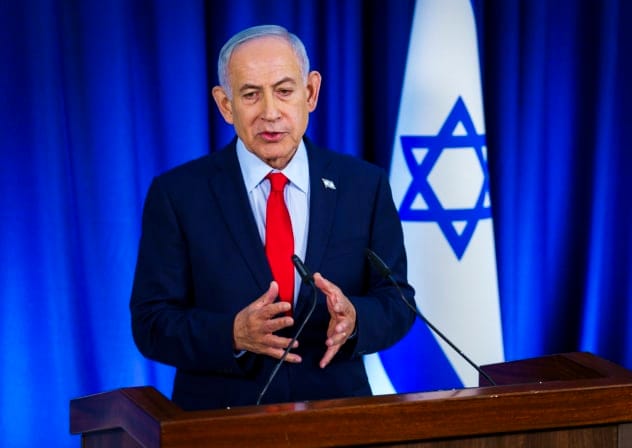
AMI Ayalon: We should have met them at sea during Photo: Ariel Jerozolimski
Fool me once, shame on you, fool me twice shame on me
– A proverb of disputed
origin
Stupid is as stupid does
– From the movie, Forest Gump
There is something
about the discourse on the Palestinian issue that seems to induce the total
evaporation of the mental faculties of otherwise ostensibly intelligent human
beings.
Perplexing questions
How else can we explain the occurrence of so
many perplexing – and vexing – phenomena? For example: Why is it that the
feasibility of Palestinian statehood has been repeatedly disproven, but somehow
never discredited – and certainly never discarded? How can it be that the
land-for-peace formula has been undermined neither by the accumulation of past
failures nor the accumulating evidence of its future implausibility? What makes
any professed Zionist advocate a policy whose prospects for success are so slim
and whose chances of ruinous failure so great?
Why do so many, who purportedly
endorse rationality in human behavior, embrace such irrationality in their
political credos?
But even more disturbing questions as to the conduct and
motives of adherents/advocates of Palestinian statehood and the landfor- peace
formula arise from their determined denial of the failure of their dogmatic
doctrine and the devastation that endeavors to implement it have
wrought.
Cavalier and contradictory claims
Prior to the Oslo process, the
land-for-peace/ two-staters explained sagaciously that Palestinian terror attacks
were the acts of extremists, driven by frustration at the lack of a
peace-process. However, once the peace process was implemented, and Palestinian
terror attacks not only continued but increased dramatic ally, they
explained that these were acts of the extremists trying to impede the peace
process – whose previous absence was invoked as the cause of their “frustration”
that allegedly precipitated the pre-process terror.
So, according to the
“enlightened” two-staters, terror is produced both by the lack of – and the
existence of – the peace process. Go figure!
One of the main arguments
put forward previously by two-staters was economic. Without peace, they
warned, there could be no economic prosperity.
But then the violence of
the 2000 intifada erupted, and the negotiations with the Palestinians ground to
a halt. Yet lo and behold, with nary a peace process on the horizon, Israel’s
economy strengthened, then surged, then soared – and another loony-left legend
bit the dust. But get this! Now Israel’s economic success is being blamed for
Israel’s apathy toward peace – or rather the lack thereof.
Thus in a
September 2010 article entitled “Why Israel Doesn’t Care About Peace” Time
magazine wrote: “The truth is, Israelis are no longer preoccupied with the
matter [peace]. They’re otherwise engaged; they’re making
money.”
So whereas previously peace was presented as necessary for
attaining economic prosperity, now economic prosperity is being blamed for not
attaining – or at least, not pursuing – peace. Confusing, isn’t it? They just
can’t seem to stick to the story line.
More contradictory claims
Of
course the whole raison d’etre – both moral and substantive – for initiating the
Oslowian peace process on the basis of landfor- peace was the claim that was
there was a credible peace partner (i.e. “someone to talk to”) with whom a
sustainable agreement could be struck. Thus, according to the twostaters,
territorial withdrawal could be achieved by a negotiated bilateral
agreement.
However, when it soon became clear that this was not the case,
rather than jettison the idea of territorial withdrawal, they jettisoned the
idea that it should be negotiated. So the notion of unilateral withdrawal was
born – which culminated in the disastrous “disengagement” from Gaza.
When
confronted with the debacle into which the Gaza abandonment rapidly
deteriorated, two-staters refused to admit error. Instead they now tried to
excuse/explain the failure by complaining that the withdrawal had not been the
product of a negotiation process – the acknowledged impossibility of which was
presented as the need for unilateral measures in the first place. You
couldn’t make this stuff up!
But wait, there’s more. Having apparently despaired
once again of resurrecting the negotiations anytime soon, two-staters have
rediscovered unilateralism, which now seems back in favor with them–big time, on
the pages of The New York Times no less.
Thus, in a recent op-ed –
endorsed this week by Tom Friedman (itself a reason for caution and concern) – a
trio of prominent two-staters announced: “We recognize that a comprehensive
peace agreement is unattainable right now… It now seems highly unlikely that the
two sides will return to negotiations – but that does not mean the status quo
must be frozen in place.” They then issued a call for – wait for it –
“constructive unilateralism.”
Plumbing new depths of absurdity
You’ve got
to hand it to The New York Times. When it comes to publishing delusional drivel
on the Israeli-Palestinian issue the “newspaper of record” is difficult to
match. But even by the Times’ standards, the April 23 opinion piece, “Peace
Without Partners” by Ami Ayalon, Orni Petruschka and Gilead Sher plumbed new
depths of absurdity – leaving one to puzzle over whether the only journalistic
criterion for publication in the paper’s opinion section is denigration of
Israeli settlements or support for Israeli withdrawal.
Indeed, the very
oxymoronic nature of the title, “Peace without Partners,” testifies to the
nonsensical nature of its content, which not only resurrects the failed formula
of unilateral retreat but suggests a new one – of “unilateral peace” whatever
that might mean.
For Israelis, the article should be a matter of grave
concern, especially in view of the prominent positions held by some of the
authors. Ayalon served as commander of Israel’s navy and Shin Bet (Israel
Security Agency), while Sher was chief of staff to prime minister Ehud
Barak.
It is thus difficult to know what is more disturbing: Whether
people who held such senior positions of responsibility actually believe in the
viability of their preposterous proposals, or whether they don’t, but found it
appropriate to publish them anyway.
The kernel of their “ingenious”
initiative is the notion of preemptive surrender by means of staged, slow-motion
submission to maximalist (at least in the interim) Palestinian
demands.
Get this: “Israel should first declare that it is willing to
return to negotiations anytime… that it has no claims of sovereignty on areas
east of the existing security barrier. It should then end all settlement
construction east of the security barrier and in Arab neighborhoods of
Jerusalem.”
Leaving aside for the moment the question of with whom such
negotiations should be conducted, an unelected president whose term expired more
than three years ago, or his likely Judeophobic Islamist successor, the question
is: What would be left to negotiate once Israel has rescinded any demands to
virtually the entire area of Judea and Samaria –apart from unconditional
evacuation of the IDF and the unconditional removal of all the settlements –
including the large settlement blocs?
‘Disputed’ territories become ‘occupied’
In a single stroke, Israel would have conceded that it no longer considers these
“disputed” territories but indeed “occupied.” The significance of this
distinction should not be underestimated.
For by voluntarily voiding its
claims to any affinity with the land, Israel will have deemed itself indelibly
an “occupier” and all settlements “illegal,” since it would have no power to
legalize their existence. Now, while this is an outcome that might not be overly
disagreeable to the authors, it does create some considerable difficulty for
their next proposal.
While ostensibly acknowledging that some lesson
might be learned from the disengagement experience, they sally forth with a
suggestion that reveals just how flat their learning curve really is. To read is
to be amazed.
“Under our proposal, the Israeli Army would remain in the
West Bank until the conflict was officially resolved with a final-status
agreement. And Israel would not physically force its citizens to leave until an
agreement was reached.”
But why should the Palestinians offer any quid
pro quo to negotiate the withdrawal of the IDF when Israel has apriori acceded
sovereignty to them and ceased all construction of the settlements, condemning
them to inevitable decay and eventual disintegration? Indeed, what would be the
justification for any further IDF deployment in the sovereign territory of
others – especially as that deployment itself is likely to be cited as the major
grievance precipitating the belligerency between the sides.
A giant ‘South Lebanon’
Thus, unless one ascribes copious quantities of altruism to the
Palestinians – hitherto a trait largely conspicuous by its absence – this is an
irresistibly tempting invitation for them to draw out the resolution of the
conflict endlessly. After all, in the situation created, time would be
unequivocally on their side – with zero incentive to make any
concession.
In effect, Judea and Samaria would be transformed into a
giant “South Lebanon” with the added burden of a resident Israeli civilian
population.
With prolonged Israeli military presence indefensible
internationally, and prolonged Israeli civilian presence untenable physically,
what possible reason would there be for the Palestinians to negotiate? In such
circumstances, the most compelling policy choice for them would be to do nothing
and wait for time to take its course, for inexorable international pressure on
the IDF to withdraw from their sovereign territory and for the strangled
settlements to be depopulated and fall apart.
True, the authors do
suggest that some preparatory measures should be undertaken. Thus they
propose that Israel “should create a plan to help 100,000 settlers who live east
of the barrier to relocate within Israel’s recognized
borders.”
Conveniently – but predictably – the authors offer no
information not only as to how this multi-billion-dollar plan – involving about
10 times more people than in the disengagement – is to be financed; nor as to
where this envisioned relocation is to be implemented, the impact it will
inevitably have on the cost of housing (and thus on “social justice”), on the
labor market, the environment, among a host of other factors that would be
significantly, and even dramatically influenced by relocating even this small
percentage of the “settlers who live east of the barrier” to areas west of
it.
Palestinian attitudes
The Ayalon et al. piece is riddled with
additional defects, non-sequiturs and fallacies – which constraints of time and
space compel me to refrain from responding to. Perhaps the best way to convey
just how detached from reality this harebrained scheme is, is to confront its
proposals and prognoses with the positions of senior Palestinian Authority
officials (i.e. from the allegedly “moderate” Fatah rather than the overtly
radical Hamas).
For example, the article claims that “Palestinian
statehood would undermine the Palestinians’ argument for implementing a right of
return for Palestinian refugees, since the refugees would have a state of their
own to return to.” Really? Compare this with the position articulated by
Abdullah Abdullah, Palestinian ambassador to Lebanon during last year’s debate
on the Palestinians’ unilateral bid for statehood – which Ayalon et
al. warmly endorse.
In a September 2010 interview with the
Lebanese Daily Star, Abdullah asserted that statehood “will never affect the
right of return for Palestinian refugees” and that even refugees in the
Palestinian territories “will not be considered citizens.”
He went on to
declare: “When we have a state accepted as a member of the United Nations, this
is not the end of the conflict. This is not a solution to the conflict.
This is only a new framework that will change the rules of the
game.”
Abdullah was not the only senior Palestinian official to express
this view. Take for example Saeb Erekat. While still functioning as the head of
the Palestinian Steering Committee, he wrote in the Guardian (December 10,
2010): “Today, Palestinian refugees constitute more than 7 million people
worldwide – 70 percent of the entire Palestinian population. Disregarding their
legitimate legal rights enshrined in international law… to return to their
homeland, would certainly make any peace deal signed with Israel completely
untenable.”
So if you were a betting man, who would you put your money on
for having a firmer grasp of Palestinian perspectives: senior Palestinian
officials or Ayalon et al.?
Palestinian attitudes (continued)
Many Palestinians
may well enthusiastically embrace the call made by “Peace Without Partners” (Did
they really call it that?). One of them might well be Abbas Zaki, a member of
Fatah’s central committee, who in a May 7, 2009 interview on ANB TV let the cat
out of the bag, when he declared: “With the two-state solution, in my opinion,
Israel will collapse, because if they get out of Jerusalem, what will become of
all the talk about the Promised Land and the Chosen People? What will become of
all the sacrifices they made – just to be told to leave? They consider Jerusalem
to have a spiritual status. The Jews consider Judea and Samaria to be their
historic dream. If the Jews leave those places, the Zionist idea will begin to
collapse. It will regress of its own accord. Then we will move
forward.”
Of course he is right. And everyone – deep in their gut – knows
it. Even the two-staters.
The only ray of light?
Perhaps the only ray of
light in the whole preposterous proposition of unilateral peace is that it does
in fact specify measures that should be implemented – only in reverse! Instead
of withdrawing claims of sovereignty over Judea and Samaria, Israel should
impose it.
Instead of giving financial inducements to Jews to leave Judea
and Samaria, they should give Palestinians them to do so, as I have argued on
previous occasions. Well, at least we have established the principle that
financing population movements is acceptable – and that could be a big step
forward. Now all we have to do now is decide which population and in
which direction.
www.martinsherman.net