Washington Watch: Now is the time for Obama to visit
By DOUGLAS M. BLOOMFIELD
11/14/2012 22:47
Barak should stop in another Asian country: Israel. It’s a trip he should have made early in his first term and is long overdue.
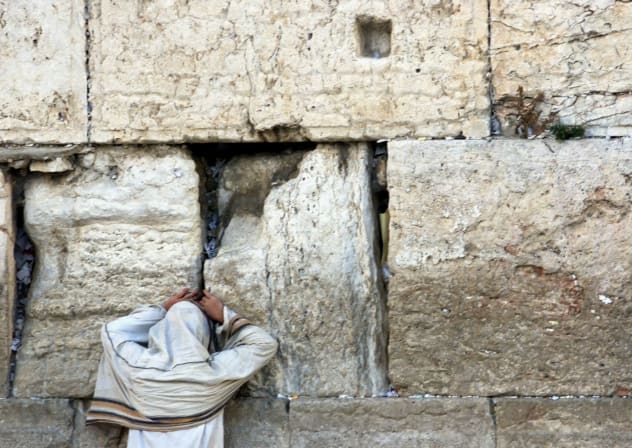
Obama at Kotel during 2008 visit to Jerusalem Photo: reuters
President Barack Obama leaves Saturday for a three-day trip to Burma, Thailand
and Cambodia.
On the way home he should stop in another Asian country:
Israel. It’s a trip he should have made early in his first term and is long
overdue.
The timing is good. He just won a decisive election victory that
the Israeli prime minister tried very hard to prevent, and this would be a good
time to have a heartto- heart with him and the Israeli people about his view of
where the bilateral relationship is headed over the next four years.
As
soon as Prime Minister Binyamin Netanyahu recovered from the shock of his
preferred candidate losing the election, he congratulated Barack Obama and told
US ambassador Dan Shapiro, “I look forward to working with him to advance our
goals of peace and security.”
Does he really believe that after four
years of sniping and trying to undermine this president and working for his
defeat that Obama believes him or trusts him now? Especially since on the day
before the American election Netanyahu announced he didn’t need American
permission to strike Iran (as if anyone said he did), and that he was going
ahead with the construction of 1,200 new homes in settlement neighborhoods of
east Jerusalem that he knew would upset Washington and only strengthen the
Palestinian case at the United Nations where he is depending on Obama to try to
block the Palestinian Authority’s bid for membership later this
month.
Netanyahu was one of the big losers in this election, and
elections have consequences.
He has a long history of not being able to
get along with Democratic presidents and collaborating with the Republican
opposition to undermine them. It will take more than the kind of platitudes he
delivered to ambassador Shapiro last week if Netanyahu is serious about
repairing the damage.
The Republicans ran a very vigorous anti-Obama
campaign in the Jewish community, largely fueled by Netanyahu’s friend and
financial backer Sheldon Adelson, accusing the president of not affording the
prime minister the deference and policy support they felt he
deserved.
They got it backwards. The relationship is a two-way street,
but one side of the street has wider lanes than the other. So much of Israel’s
security, financial, diplomatic and political well being depend on its
relationship with the United States, and when there is a prime minister in
Jerusalem with a reputation for undermining that relationship, meddling in the
American election and losing the trust and respect of the American president,
the question has to be asked: is he a fit steward for this important alliance?
It was no secret that Netanyahu preferred Mitt Romney, and the prime minister
did nothing to stop Republicans from using his image and speeches in their
anti-Obama ads.
One Likud leader in Knesset, Danny Danon, a longtime
bitter critic of Obama who came to the United States this year to encourage the
president’s opponents, greeted his reelection by admonishing Obama to cease
trying to “endanger” Israel and “return” to the policy of “zero daylight”
between the two allies.
He clearly does not understand that it is not the
duty of the American president to march in lock step with the Israeli government
regardless of its policies. America is more than Israel’s best (and often only)
friend; it is its arsenal, its financial backer, its political and diplomatic
bulwark. There are good reasons the Israeli people expect their leaders to
protect the American relationship and not undermine it.
The bad news for
Netanyahu in this election is not just that he and his billionaire buddy Adelson
backed the wrong horse.
There was a small uptick in Jewish votes for
Republicans, to a level not seen since the 1980s, but it had no impact on the
outcome of the election.
It showed once again, to the consternation of
the GOP, Jews are not one-issue voters. With Jews giving Obama some 70 percent
of their votes and telling pollsters Israel is not a top priority or a
determinative issue in casting their ballots, the president has some new room
for maneuver in the Middle East – if he plays it smart.
That starts with
an early trip to Israel to reassure voters in person of his continuing
“unshakeable commitment to Israel’s security,” his determination to thwart
Iran’s nuclear ambitions and his readiness to help Israelis and Palestinians
make peace when they are ready. It should be an opportunity for him also to
share his vision of the Middle East and America’s role in it over the next four
years. He shouldn’t tell Israelis how to vote or that he feels their prime
minister has mismanaged the American portfolio for the past four years. That is
a decision for the Israelis themselves.
On January 22, the day after
Obama is to be sworn in for his second term, Israelis will go to the polls to
elect a new government, hopefully it will be one that understands the value of
the American relationship, one that can work with the American administration
and not against it, regain the confidence and trust of the President of the
United States and work to repair the damage done to Israel’s international
stature over the past four years.
One of the reasons Obama did not visit
Israel during the past four years, aides said, is that he didn’t want to bolster
Netanyahu, who he felt was trying to undercut administration
policies.
That was a mistake. The reality was that Obama’s failure to
visit actually bolstered and emboldened Netanyahu, Adelson and the Republicans
to go after him.
There is no excuse for further delay. A presidential
trip to Israel is long overdue, and the sooner he goes the better.
©2012
Douglas M. Bloomfield http://www.thejewishweek.co m/blogs/douglas_bloomfield