The Jerusalem Post
Jpost search icon google-icon iphone
  Set as Homepage
Tue, May 21, 2013   12 Sivan, 5773
newspapers magazines
 
    • Breaking News
    • Diplomacy & Politics
    • Defense
    • National
    • Mideast
    • Syria
    • Iran
    • World
    • Business
    • Sports
    • Health & Science
    • Environment
  • Video
  • Opinion
    • Columnists
    • Editorials
    • Op-Eds
    • Letters
  • Jewish World
  • Lifestyle
    • Arts & Culture
    • Food & Wine
    • Travel
  • Features
    • Insights & Features
    • Week in review
    • On the Web
    • Shalva Superheroes
    • Obama in Israel
  • Blogs
    • In the news
    • Judaism
    • From the Middle East
    • Lifestyle
    • Aliya
    • Science and Technology
  • JPost Apps
    • iPhone app
    • iPad app
    • Android app
    • Twitter
    • Facebook
    • RSS feeds
    • JPost Toolbar
    • JPost Newsletter
    • JPost Alert
  • Premium Zone
    • The Jerusalem Report
    • The Experts
    • 20 Questions
    • e-paper
    • Ivrit
    • Christian Edition
    • Dash
    • Magazine
    • Metro
    • In Jerusalem
  • French
    • Politique & Social
    • Affaires Palestiniennes
    • Diplomatie & Monde
    • Art & Culture
    • Israel
  • Green Israel
JPost Learn Hebrew  
Advertise with us  
Nefesh Guided Aliyah  
Eldan  
AFMDA  
Africa Israel Group  
Isram Group  
Kupat Ha  
JPost Twitter  
JPost Facebook  
Classifieds  


Breaking News
 
 
  • JPost.com
  • opinion
  • columnists
 

Think About It: We elect them – but to do what?

By SUSAN HATTIS ROLEF
11/25/2012 21:52
Tweet

The more extreme the ideological positions held by an MK, the more likely he is to actively promote them in the Knesset.

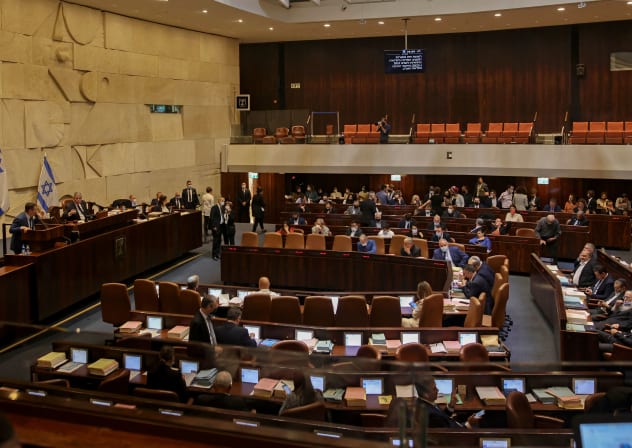
Voting in Israel.
Voting in Israel. Photo: REUTERS
Now that the campaign in Gaza is over (at least for the time being) we can return in earnest to the approaching Knesset elections.

Around half (possibly less) of the MKs in the 19th Knesset will have been elected on the basis of primaries in their respective parties. This week both the Likud and the Labor parties are holding primaries – the Likud on Sunday, and Labor on Thursday. The registered members of both parties have been bombarded in recent weeks by phone calls, mail and e-mail from the candidates.

This can become a nuisance – though certainly much less so than being bombarded by rockets from the Gaza Strip.

Even though the introduction in the early 1990s of primaries as a method of determining parties’ lists was intended to enhance democratization, the process involves many undemocratic phenomena. Especially in the Likud and Labor, there are many members who will not necessarily vote for the parties in which they are registered, and these will usually vote in the primaries for lists of candidates cooked up by party hacks on the basis of deals that are not always clean of interests that have nothing to do with ideology, or the wish to see an optimal team in the Knesset.

Nevertheless, there are members, in both parties, who really and truly slog over the lists of candidates, to try and select their dream team on the basis of the available names.

How does one choose? Some choose names that they recognize, others candidates who they feel a special ideological affinity with. Yet others are influenced by looks, charisma and rhetorical abilities.

Personally when I make my choices (in the Labor Party primaries) I try to create a balanced list that will include economic experts with social democratic inclinations; persons with a security background who are nevertheless not ashamed to strive for a peaceful solution to the Middle East conflict; social activists with a proven record; women of varied backgrounds; and representatives of minority groups. I also have a marked preference for people who do not regard themselves as the “cat’s whiskers.”

However, as a former Knesset employee I have another criterion: I want my representatives to be good parliamentarians. What is a good parliamentarian? A good parliamentarian is one who performs his job well, not just in terms of advocating ideological or sectarian positions that one happens to support. Someone who contributes to the well-ordered functioning of the system, is inclined to cooperate with MKs from rival parliamentary groups to advance causes that will benefit everyone, and who is unlikely to diverge from the rules of ethics and accepted norms or commit civil or criminal offenses.

One problem with this approach is that the job of the MK is not defined – neither by law nor in the Knesset Rules of Procedure. Israel isn’t unique in its avoidance of of a definition. In fact, no democracy has defined what it is that their parliamentarians are expected to do.

However, given the deterioration over the years in the public’s trust in parliament and parliamentarians, frequently based on ignorance as to what parliaments or parliamentarians are expected to do; difficulties in calculating the proper remuneration parliamentarians ought to receive; and lack of clarity as to what is included and what is excluded from the job – there are some second thoughts in various countries regarding this aversion to defining the job.

However, even in the absence of a definition there are several elements of the job that are selfevident.

For example, an MK is a legislator whose job is to amend government bills, and initiate bills of his own, or on behalf of non-government entities. Here it is not quantity that counts, but quality. One of the best parliamentarians in this respect is MK Dov Henin from Hadash, who deserves credit for excellent legislation on environmental issues.

Though Israel’s system of elections is proportional rather than regional, and consequently MKs do not have geographic constituencies, they nevertheless have constituents (people who voted for their parties) who may approach them for assistance in cutting through the bureaucracy.

Many MKs are willing to assist persons from the general public who did not necessarily vote for their parties. Though there are limits to what an MK may do to assist the public, a good MK is one who is accessible to the public, and willing to help.

Oversight of the government is another part of the MKs job, more so when he is a member of the opposition but even if he is a member of the coalition. Whether my party chooses to be a member of the next government or to remain in opposition, I should like “my” MKs to take their oversight task seriously.

Representation of certain ideological positions and values in the public discourse that takes place in the Knesset is another important part of the job. The more extreme the ideological positions held by an MK, the more likely he is to actively promote them in the Knesset (take MK Michael Ben-Ari at the one extreme and MK Haneen Zoabi at the other).

However, when I look at “my” MKs I would like to see them participate even in deliberations that deal with purely ideological issues. Thus I was greatly disappointed when in a whole series of such deliberations in the House Committee in the course of the 18th Knesset (MK Yariv Levin was the committee’s chairman), including a deliberation about the Altalena, there was no sign of Labor’s representative to this committee.

I shall certainly avoid voting for this individual next Thursday. In my opinion, he was not doing his job.

Of course, the final outcome of primaries never fulfills the full wishes of anyone. Nevertheless, let us all hope that the overall outcome of all the primaries and appointments will result in a better Knesset in terms of its human makeup and commitment to a healthy parliamentary life, and that the Knesset will include a minimal number of clowns and rogues, and a maximal number of serious, conscientious, hard-working parliamentarians.

The writer, a former Knesset employee, is currently engaged in research on the definition of the MK’s job.
  • Send
  • Large
  • Small
  • Print
  • Share
This article is by :
Susan Hattis Rolef
Recent stories:
  • Poverty in Israel – and the PM’s expense...
  • Think About It: Confronting sexual haras...
  • Ongoing crises in Knesset-government rel...
  • Think about it: Lapid and the haredim
Most Viewed in
1
The Region: Where does Israel’s greatest threat lie?
2
Israel, Turkey and gas
3
Syrian civil war: A military-strategic assessment
4
Jordan’s king trying to play on Israel’s fears
JPost Community
Tweet
government bureaucracy opposition party coalition MKs
Share this article
Tweet
Share
Send
Your comment must be approved by a moderator before being published on JPost.com. Disqus users can post comments automatically.

Comments must adhere to our Talkback policy. If you believe that a comment has breached the Talkback policy, please press the flag icon to bring it to the attention of our moderation team.
JPost Services
conferenceConference
newsletterNewsletter
iphoneMobile Apps
kotelcamKotel Cam
kolboJPost Alert
premiumPremium
JPost TV News  
Mobile Apps  
Bank Hapoalim  
Meir Panim  
Yad Ezra  
Rambam Hospital  
TourLuxe  
Zev Goldstein PLLC  
Penrose Gallery  
JPost Premium Zone  
JPost kotel Camera  
         
 
Israel Focus
JPost TV News
Coming soon to a screen near you!  
Nefesh B'Nefesh Guided Aliyah
Already living in Israel? Enjoy the Benefits of Aliyah!  
Give "Freedom" this Passover
to needy Israeli families. Donate now  
War Threatens
Protect the People of Northern Israel  
Intelligence Squared
The international debate forum, announces it is coming to Israel  
Bank Hapoalim
Israeli's number one bank  
Jerusalem Post Lite
Lite Edition of the Jerusalem Post for English improvement  
Learn Hebrew with us
Get 10 minutes free personal coaching in Hebrew through phone or Skype  
JPost newspapers
Sign up for the JPost newspapers and receive one month free subscription  
Kosher English Magazine
English language weekly magazine - especially for religious people  
JReport Kindle Edition
Now you can get the Jerusalem Report directly to your Kindle  
JPost Premium Edition
The very best articles are available only in our Premium edition  
Lifestyle Magazine
 
 
Real Estate
Don't Look For a House!
In Israel, our website will do it for you!  
 
Travel
Eldan Rent a Car
20% off all Car Rental Reservations in Israel  
Hertz Car Rental
Special Online Discounts!  
The King David Jerusalem Hotel
One of the world's truly iconic hotels, and a Jerusalem landmark  


Sites Of Interest:

Jerusalem Hotels
KKL-JNF
Poalim Online
BreitBart.com
Our Friends
Jerusalem Attractions
Jerusalem Tours
itraveljerusalem.com

JPost sites:

Learn Hebrew
The Jerusalem Report
Our Magazines
JPost Edition Francaise
Green Israel
Christian World
Jerusalem Post Lite

Services:

JPost Mobile Apps
JPost Premium
JPost Newsletter
JPost Toolbar
JPost News Ticker
JPost RSS feeds
JPost Archives
JPost Alert
JPost Kotel Cam

JPost Conferences:

NYC Conference
Diplomatic Conference

Information:

About Us
Feedback
Staff E-mails
Copyright
Sitemap
News Partners
Advertise with Us
Price List
Statistics
Ad Specs
Terms Of Service
Jpost.com, the online edition of the Jerusalem Post Newspaper - the most read and best-selling English-language newspaper in Israel. For analysis and opinion from Israel, the Jewish World and the Middle East. Jpost.com offers expert and in-depth reporting from Israel, the Jewish World and the Middle East, including diplomacy and defense, the Palestinian-Israeli conflict, the Arab Spring, the Mideast peace process, politics in Israel, life in Jerusalem, Israel's international affairs, Iran and its nuclear program, Syria and the Syrian civil war, Lebanon, the Palestinian Authority, the West Bank and Gaza Strip, Israel's world of business and finance, and Jewish life in Israel and the Diaspora.
 
About Us | Advertise with Us | Subscribe | Premium | Newsletter | RSS | Contact Us
 
All rights reserved © The Jerusalem Post 1995 - 2012