The Jerusalem Post
Jpost search icon google-icon iphone
  Set as Homepage
Sun, May 19, 2013   10 Sivan, 5773
newspapers magazines
 
    • Breaking News
    • Diplomacy & Politics
    • Defense
    • National
    • Mideast
    • Syria
    • Iran
    • World
    • Business
    • Sports
    • Health & Science
    • Environment
  • Video
  • Opinion
    • Columnists
    • Editorials
    • Op-Eds
    • Letters
  • Jewish World
  • Lifestyle
    • Arts & Culture
    • Food & Wine
    • Travel
  • Features
    • Insights & Features
    • Week in review
    • On the Web
    • Shalva Superheroes
    • Obama in Israel
  • Blogs
    • In the news
    • Judaism
    • From the Middle East
    • Lifestyle
    • Aliya
    • Science and Technology
  • JPost Apps
    • iPhone app
    • iPad app
    • Android app
    • Twitter
    • Facebook
    • RSS feeds
    • JPost Toolbar
    • JPost Newsletter
    • JPost Alert
  • Premium Zone
    • The Jerusalem Report
    • The Experts
    • 20 Questions
    • e-paper
    • Ivrit
    • Christian Edition
    • Dash
    • Magazine
    • Metro
    • In Jerusalem
  • French
    • Politique & Social
    • Affaires Palestiniennes
    • Diplomatie & Monde
    • Art & Culture
    • Israel
  • Green Israel
JPost Learn Hebrew  
Advertise with us  
Nefesh Guided Aliyah  
Eldan  
AFMDA  
Africa Israel Group  
Isram Group  
Kupat Ha  
JPost Twitter  
JPost Facebook  
Classifieds  


Breaking News
 
 
  • JPost.com
  • Opinion
  • Editorials
 

The Cyprus connection

By JPOST EDITORIAL
LAST UPDATED: 02/16/2012 23:44
Tweet

It is important that Israel continue to develop strong ties with both Cyprus and Greece

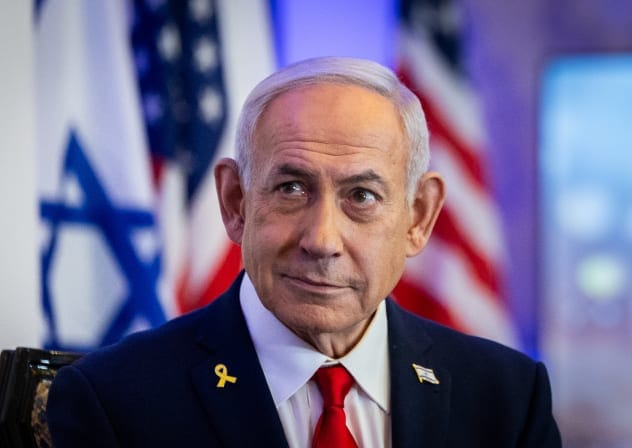
PM Netanyahu with Cyprus Pres Dimitris Christofias
PM Netanyahu with Cyprus Pres Dimitris Christofias Photo: Amos Ben Gershom / GPO
Prime Minister Binyamin Netanyahu’s historic trip Thursday to Cyprus – the first by an Israeli prime minister – is being presented by many as a direct result of Israel’s deteriorating relations with Turkey.

Seeking to avoid offending Turkey – which invaded the northern half of Cyprus in 1974 and is hostile to the Greek-allied south – Israel was traditionally wary of cultivating relations with Nicosia. However, Turkey under Recep Tayyip Erdogan’s Islamic AKP party has gradually but steadily moved away from Kemal Ataturk’s secularist policies and Western orientation toward an alignment with Arab neighbors and the terrorist organization Hamas, seemingly as part of an anachronistic obsession with reinstating the old Ottoman Empire.

Israel, in response, began to strengthen its relations with Cyprus and Greece and reconsider its position on the Armenian and Kurdish national movements. This explanation is only partially correct. While the deterioration of relations with Turkey was undoubtedly a catalyst, warming relations with Cyprus are part of a larger reorientation of Israeli foreign policy. Even before May 2010’s Mavi Marmara fiasco, Foreign Minister Avigdor Liberman had launched a concerted effort to reengage with numerous countries that had fallen out of close relations with Jerusalem.

If since the 1993 Oslo Accords inordinate diplomatic effort was concentrated on the Washington-Ramallah track, under Liberman the Foreign Ministry began to focus more energies on cultivating closer ties with Balkan countries such as Bulgaria, Bosnia and Greece – not principally as a counter-weight to the weakening ties with Ankara, but as a wider change in foreign policy strategy. More effort is also being made to strengthen ties with Latin America, sub-Saharan Africa, China and India.

Our fast-developing relations with Cyprus are also fostered by mutual fossil energy interests. The Cyprus Energy Regulatory Authority, the country’s national energy company and two Israeli firms – Delek Drilling and Avner Oil Exploration – hold shares in Texas-based Noble Energy, an oil and gas exploration firm. Noble has been leading exploration and exploitation of oil and gas reserves under the Mediterranean Sea in areas delineated in a December 2010 agreement between Jerusalem and Nicosia as part of the two countries’ Exclusive Economic Zones. Tamar, the world’s largest gas find in 2009, and Leviathan, an even bigger gas field, will supply all our domestic needs and provide significant export revenues as well.

Further consolidating the ties between Cyprus and Israel has been Turkish belligerence. Ankara, in the name of the Turkish-occupied northern half of Cyprus, and Lebanon, backed by the Shi’ite terrorist organization Hezbollah, have laid unjustified claims to the oil and gas findings. On November 23, for instance, Turkish Energy Minister Taner Yildiz claimed that Israeli and Cyprian gas and oil explorations in the eastern Mediterranean were illegal and questioned the Exclusive Economic Zones demarcated by the two countries. In September 2011, Erdogan said that Turkey “will take appropriate steps” and “prevent unilateral exploitation by Israel of natural resources of the eastern Mediterranean.”

In mid-September, Turkey sent three naval ships to “protect” a Norwegian boat hired by the Turkish government to conduct gas explorations in the territorial waters of the Republic of Cyprus. And on December 21, 2011, Turkish warships demonstratively shelled the strip of water dividing the Israeli Leviathan and Cyprian Bloc 12 gas fields.

Israel and Cyprus cannot simply cave in to Turkish bullying. Indeed, neither seems to be doing so. Cypriot President Demetris Christofias said Thursday during a press conference with Netanyahu: “I call upon the international community, and especially the European Union, to send a strong message to Turkey that it must stop violating and start respecting international law, especially if it looks forward to becoming a member of the European family.”

And while Netanyahu was silent on Turkish aggression during his Cyprus visit, Israel has deployed drones and unmanned marine vehicles, equipped with night vision devices, radars and multiple launch systems, to protect its drilling platforms. And the cancellation on December 22 of the $90 million sale to the Turkish Air Force of Elbit’s hi-tech surveillance system was interpreted by some as timed to send a signal to Ankara to stop its campaign of harassment in and around Israel’s gas fields.

Under the circumstances it is important that Israel continue to develop strong ties with both Cyprus and Greece. Netanyahu’s unprecedented visit to Cyprus is a integral part of that endeavor.
  • Send
  • Large
  • Small
  • Print
  • Share
Most Viewed in
1
Column One: Obama and the ‘official truth’
2
Into the Fray: Deciphering delegitimization
3
Israel, Turkey and gas
4
Syrian civil war: A military-strategic assessment
JPost Community
Tweet
Cyprus Greece peace process Hamas Turkey diplomacy
Share this article
Tweet
Share
Send
Your comment must be approved by a moderator before being published on JPost.com. Disqus users can post comments automatically.

Comments must adhere to our Talkback policy. If you believe that a comment has breached the Talkback policy, please press the flag icon to bring it to the attention of our moderation team.
JPost Services
conferenceConference
newsletterNewsletter
iphoneMobile Apps
kotelcamKotel Cam
kolboJPost Alert
premiumPremium
         
 
Israel Focus
 
Real Estate
 
Travel
Eldan Rent a Car
20% off all Car Rental Reservations in Israel  
Hertz Car Rental
Special Online Discounts!  
The King David Jerusalem Hotel
One of the world's truly iconic hotels, and a Jerusalem landmark  


Sites Of Interest:

Jerusalem Hotels
KKL-JNF
Poalim Online
BreitBart.com
Our Friends
Jerusalem Attractions
Jerusalem Tours
itraveljerusalem.com

JPost sites:

Learn Hebrew
The Jerusalem Report
Our Magazines
JPost Edition Francaise
Green Israel
Christian World
Jerusalem Post Lite

Services:

JPost Mobile Apps
JPost Premium
JPost Newsletter
JPost Toolbar
JPost News Ticker
JPost RSS feeds
JPost Archives
JPost Alert
JPost Kotel Cam

JPost Conferences:

NYC Conference
Diplomatic Conference

Information:

About Us
Feedback
Staff E-mails
Copyright
Sitemap
News Partners
Advertise with Us
Price List
Statistics
Ad Specs
Terms Of Service
Jpost.com, the online edition of the Jerusalem Post Newspaper - the most read and best-selling English-language newspaper in Israel. For analysis and opinion from Israel, the Jewish World and the Middle East. Jpost.com offers expert and in-depth reporting from Israel, the Jewish World and the Middle East, including diplomacy and defense, the Palestinian-Israeli conflict, the Arab Spring, the Mideast peace process, politics in Israel, life in Jerusalem, Israel's international affairs, Iran and its nuclear program, Syria and the Syrian civil war, Lebanon, the Palestinian Authority, the West Bank and Gaza Strip, Israel's world of business and finance, and Jewish life in Israel and the Diaspora.
 
About Us | Advertise with Us | Subscribe | Premium | Newsletter | RSS | Contact Us
 
All rights reserved © The Jerusalem Post 1995 - 2012