The Jerusalem Post
Jpost search icon google-icon iphone
  Set as Homepage
Wed, Jun 19, 2013   11 Tammuz, 5773
newspapers magazines
 
    • Breaking News
    • Diplomacy & Politics
    • Defense
    • National
    • Mideast
    • Syria
    • Iran
    • World
    • Business
    • Sports
    • Health & Science
    • Environment
  • Video
  • Opinion
    • Columnists
    • Editorials
    • Op-Eds
    • Letters
  • Jewish World
  • Lifestyle
    • Arts & Culture
    • Food & Wine
    • Travel
  • Features
    • Insights & Features
    • Week in review
    • On the Web
    • Shalva Superheroes
    • Obama in Israel
  • Blogs
    • In the news
    • Judaism
    • From the Middle East
    • Lifestyle
    • Aliya
    • Science and Technology
  • JPost Apps
    • iPhone app
    • iPad app
    • Android app
    • Twitter
    • Facebook
    • RSS feeds
    • JPost Toolbar
    • JPost Newsletter
    • JPost Alert
  • Premium Zone
    • The Jerusalem Report
    • Magazine
    • Metro
    • In Jerusalem
    • ePaper
    • Expert Opinion
    • Q&A
    • Dash
    • Christian Edition
    • Ivrit
  • French
    • Politique & Social
    • Affaires Palestiniennes
    • Diplomatie & Monde
    • Art & Culture
    • Israel
  • Green Israel
JPost Learn Hebrew  
Advertise with us  
Nefesh Guided Aliyah  
Eldan  
AFMDA  
YTA  
Isram Group  
JPost Twitter  
JPost Facebook  
Classifieds  


Breaking News
 
 
  • JPost.com
  • Opinion
  • Editorials
 

The Hartman era

By JPOST EDITORIAL
02/11/2013 21:30
Tweet

As much as Hartman was a catalyst for spiritual change in Israeli society, he and his thought process are a reflection of a post-modern era characterized by new, innovative and more egalitarian forms of religious expression.

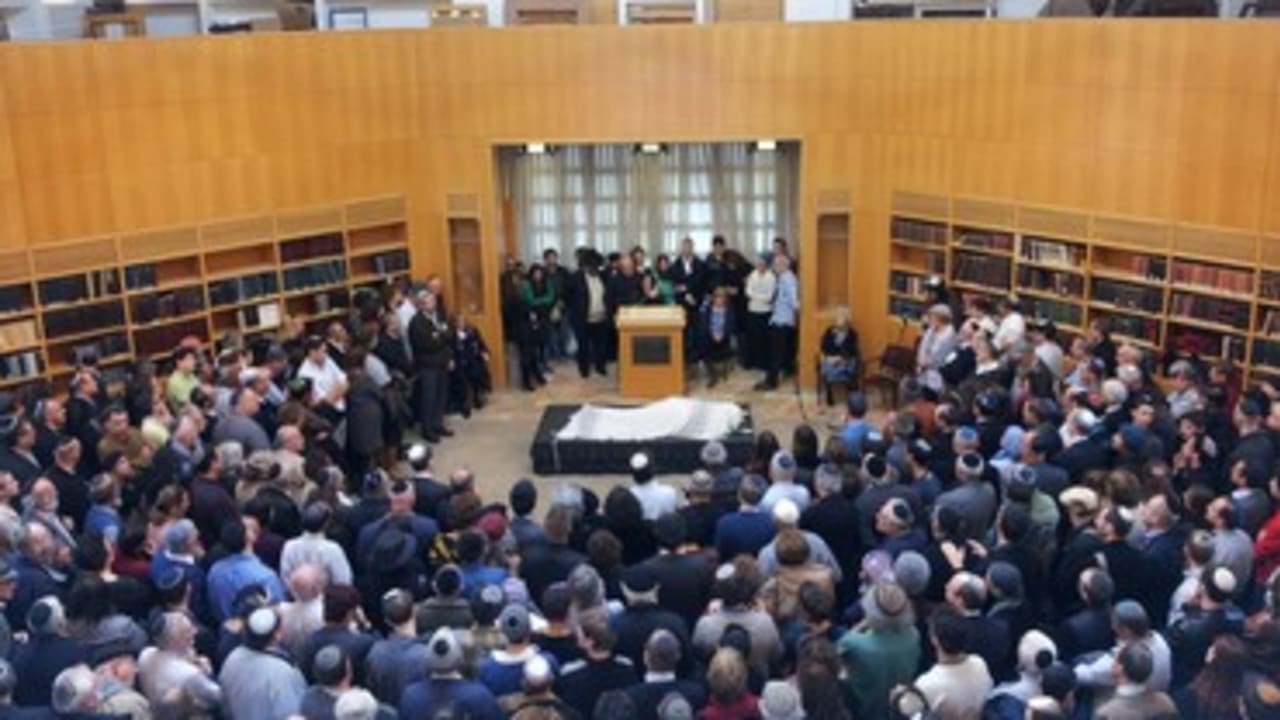
Rabbi Hartman funeral
Rabbi Hartman funeral Photo: Rachel Marder
Rabbi David Hartman, who passed away on Sunday at the age of 81, represented an approach to Judaism that in 1971 – the year he arrived in Israel – was on the cutting edge not just in Israeli society, but in Western culture in general. Emphasizing individuality and searching out personal paths to God, while rejecting the need for spiritual intermediaries, religious authorities or institutions, Hartman’s thought was very much a product of, and an influence on, the post-modern era.

In an interview with Yediot Aharonot to mark his 80th birthday, Hartman lamented the dichotomy between the religious and the secular that was a fixture of the State of Israel in its first decades under the leadership of David Ben-Gurion and which to a large extent continued to be the legacy of Israeli society for years after Ben-Gurion left politics.

Hartman dedicated most of his life to doing away with that dichotomy.

Under Mapai’s rule, the Jewish religion and its institutions were relegated to the strictly Orthodox while the real revolution unfolded in the political and social spheres, rather than the spiritual one. For the vast majority of secular Israelis, traditional Judaism was irrelevant to their lives. They came into contact with it as it was represented by reactionary and bureaucratic Orthodox institutions only when they married, divorced or were buried. Not much was expected of religion or of those who represented it. And due to its irrelevance, religious authority – carefully restricted to singular, albeit profound, events – was not questioned much.

This artificial compartmentalization of Judaism helped lead to a religious extremism completely detached from reality and made Judaism irrelevant for the vast majority of secular Israelis. But in recent decades, in part thanks to Hartman but also as a result of a larger sea change that has taken place in Western culture’s approach to spirituality, Israeli society was ready to hear Hartman’s message.

For it was only in recent decades that Israelis were receptive to the idea that they could express their religiosity outside formal institutional frameworks and were not obligated to accept a centralized authority or set rituals and rules. Today Jews – and members of other faiths as well – increasingly create sacredness and construct meaning in spontaneous, innovative and intensely personal ways. This message, which Hartman also advocated, would have been missed in Mapai-era Israel, which, like other Western societies, was still preoccupied with all-embracing ideologies and concepts such as communism, fascism and the melting pot. In the postmodern era, however, Hartman’s message was increasingly resonant with meaning for Israelis.

The Shalom Hartman Institute – where Orthodox, Conservative, Reform and Reconstructionist rabbis of both genders can collaborate and cross-fertilize – embodies the post-modernist, post-denominational era in which we live. It is reflected in phenomena such as Shira Hadasha, a synagogue that Hartman supported that defines itself as Orthodox while striving for gender equality, including women leading prayers and reading from the Torah.

Outside Hartman’s direct influence, we are witness to profound changes in religious practice, despite the haredi monopoly over state-funded religious services. Increasing numbers of secular and religious Israelis, refusing to defer to ultra-Orthodox authority, are insisting on “customizing” their own marriage ceremonies, from the use of TV personalities as officiators and the reciting of modern Israeli poetry under the huppa to the incorporating of symbolism from the destruction of Jewish settlements in Gaza and northern Samaria.

Not all of these reflections of our post-modern era were to Hartman’s liking. The increasing public support for the Women of the Wall, ten of whom were arrested yesterday for the “crime” of praying at the Kotel, most likely was.

However, judging from the same Yediot Aharonot interview mentioned above, the phenomenon of “hilltop youths,” who, not unlike the Shira Hadasha congregation, have broken away from institutionalized rabbinic authority and have adopted a more individualistic approach to religion without intermediaries, was definitely not.

Gauging Hartman’s influence on Israeli society is difficult.

Undoubtedly, he and the scholars who have found in the Shalom Hartman Institute an intellectual breeding ground have had a major impact in many ways.

It is safe to say, however, that as much as Hartman was a catalyst for spiritual change in Israeli society, he and his thought process are a reflection of a post-modern era characterized by new, innovative and more egalitarian forms of religious expression. Hartman was lucky to see his efforts bear fruit and witness this spiritual change unfold before his eyes. May his memory be a blessing.
  • Send
  • Large
  • Small
  • Print
  • Share
Most Viewed in
1
Iran's new fanatic-in-chief
2
Gezi Park protests: The AKP's battle with Turkish society
3
The Iranian election: Have the people really won?
4
Chief rabbi battle
JPost Community
Tweet
Rabbi David Hartman Hartman Ben Gurion Mapai Orthodox Judaism
Tweets by @Jerusalem_Post
Share this article
Tweet
Share
Send
Your comment must be approved by a moderator before being published on JPost.com. Disqus users can post comments automatically.

Comments must adhere to our Talkback policy. If you believe that a comment has breached the Talkback policy, please press the flag icon to bring it to the attention of our moderation team.
JPost Services
conferenceConference
newsletterNewsletter
iphoneMobile Apps
kotelcamKotel Cam
kolboJPost Alert
premiumPremium
JPost TV News  
Mobile Apps  
Bank Hapoalim  
Meir Panim  
Israel Law Center  
Inbal Hotel Jerusale  
Meier on Rothschild  
Weizmann Institute o  
JPost Premium Zone  
JPost kotel Camera  
         
 
Israel Focus
JPost TV News
Watch Now!  
Israel Law Center
The ultimate Mission to Israel, October 21 – 28, 2013 Register now!  
Nefesh B'Nefesh Guided Aliyah
Already living in Israel? Enjoy the Benefits of Aliyah!  
One year International MBA
in English, Bar-Ilan University, Israel – Open House July 9, 2013, 17:30  
Give "Freedom" this Passover
to needy Israeli families. Donate now  
YTA – A Yeshiva in Israel…
in English. Come Join Us  
War Threatens
Protect the People of Northern Israel  
Bank Hapoalim
Israeli's number one bank  
Jerusalem Post Lite
Lite Edition of the Jerusalem Post for English improvement  
Learn Hebrew with us
Get 10 minutes free personal coaching in Hebrew through phone or Skype  
JPost newspapers
Sign up for the JPost newspapers and receive one month free subscription  
Kosher English Magazine
English language weekly magazine - especially for religious people  
JReport Kindle Edition
Now you can get the Jerusalem Report directly to your Kindle  
JPost Premium Edition
The very best articles are available only in our Premium edition  
Lifestyle Magazine
 
 
Real Estate
Meier on Rothschild
Tel Aviv's Most Prestigious Address  
Don't Look For a House!
In Israel, our website will do it for you!  
 
Travel
Tourism Magazine
June 2013  
The Inbal Jerusalem Hotel
Hot summer deal, order now!  
Eldan Rent a Car
20% off all Car Rental Reservations in Israel  
Hertz Car Rental
Special Online Discounts!  
The King David Jerusalem Hotel
One of the world's truly iconic hotels, and a Jerusalem landmark  


Sites Of Interest:

Jerusalem Hotels
KKL-JNF
Poalim Online
BreitBart.com
Our Friends
Jerusalem Attractions
Jerusalem Tours
itraveljerusalem.com

JPost sites:

Learn Hebrew
The Jerusalem Report
Our Magazines
JPost Edition Francaise
Green Israel
Christian World
Jerusalem Post Lite

Services:

JPost Mobile Apps
JPost Premium
JPost Newsletter
JPost Toolbar
JPost News Ticker
JPost RSS feeds
JPost Archives
JPost Alert
JPost Kotel Cam

JPost Conferences:

NYC Conference
Diplomatic Conference

Information:

About Us
Feedback
Staff E-mails
Copyright
Sitemap
News Partners
Advertise with Us
Statistics
Ad Specs
Terms Of Service
Jpost.com, the online edition of the Jerusalem Post Newspaper - the most read and best-selling English-language newspaper in Israel. For analysis and opinion from Israel, the Jewish World and the Middle East. Jpost.com offers expert and in-depth reporting from Israel, the Jewish World and the Middle East, including diplomacy and defense, the Palestinian-Israeli conflict, the Arab Spring, the Mideast peace process, politics in Israel, life in Jerusalem, Israel's international affairs, Iran and its nuclear program, Syria and the Syrian civil war, Lebanon, the Palestinian Authority, the West Bank and Gaza Strip, Israel's world of business and finance, and Jewish life in Israel and the Diaspora.
 
About Us | Advertise with Us | Subscribe | Premium | Newsletter | RSS | Contact Us
 
All rights reserved © The Jerusalem Post 1995 - 2012