The Jerusalem Post
Jpost search icon google-icon iphone
  Set as Homepage
Wed, Jun 19, 2013   11 Tammuz, 5773
newspapers magazines
 
    • Breaking News
    • Diplomacy & Politics
    • Defense
    • National
    • Mideast
    • Syria
    • Iran
    • World
    • Business
    • Sports
    • Health & Science
    • Environment
  • Video
  • Opinion
    • Columnists
    • Editorials
    • Op-Eds
    • Letters
  • Jewish World
  • Lifestyle
    • Arts & Culture
    • Food & Wine
    • Travel
  • Features
    • Insights & Features
    • Week in review
    • On the Web
    • Shalva Superheroes
    • Obama in Israel
  • Blogs
    • In the news
    • Judaism
    • From the Middle East
    • Lifestyle
    • Aliya
    • Science and Technology
  • JPost Apps
    • iPhone app
    • iPad app
    • Android app
    • Twitter
    • Facebook
    • RSS feeds
    • JPost Toolbar
    • JPost Newsletter
    • JPost Alert
  • Premium Zone
    • The Jerusalem Report
    • Magazine
    • Metro
    • In Jerusalem
    • ePaper
    • Expert Opinion
    • Q&A
    • Dash
    • Christian Edition
    • Ivrit
  • French
    • Politique & Social
    • Affaires Palestiniennes
    • Diplomatie & Monde
    • Art & Culture
    • Israel
  • Green Israel
JPost Learn Hebrew  
Advertise with us  
Nefesh Guided Aliyah  
Eldan  
AFMDA  
YTA  
Isram Group  
JPost Twitter  
JPost Facebook  
Classifieds  


Breaking News
 
 
  • JPost.com
  • Opinion
  • Op- Ed Contributors
 

Fake privatization

By EMANUELE OTTOLENGHI , SAEED GHASSEMINEJAD
02/27/2013 22:42
Tweet

Iran’s regime has used its privatization laws to obfuscate its ongoing connection to designated Iranian entities in order to circumvent sanctions.

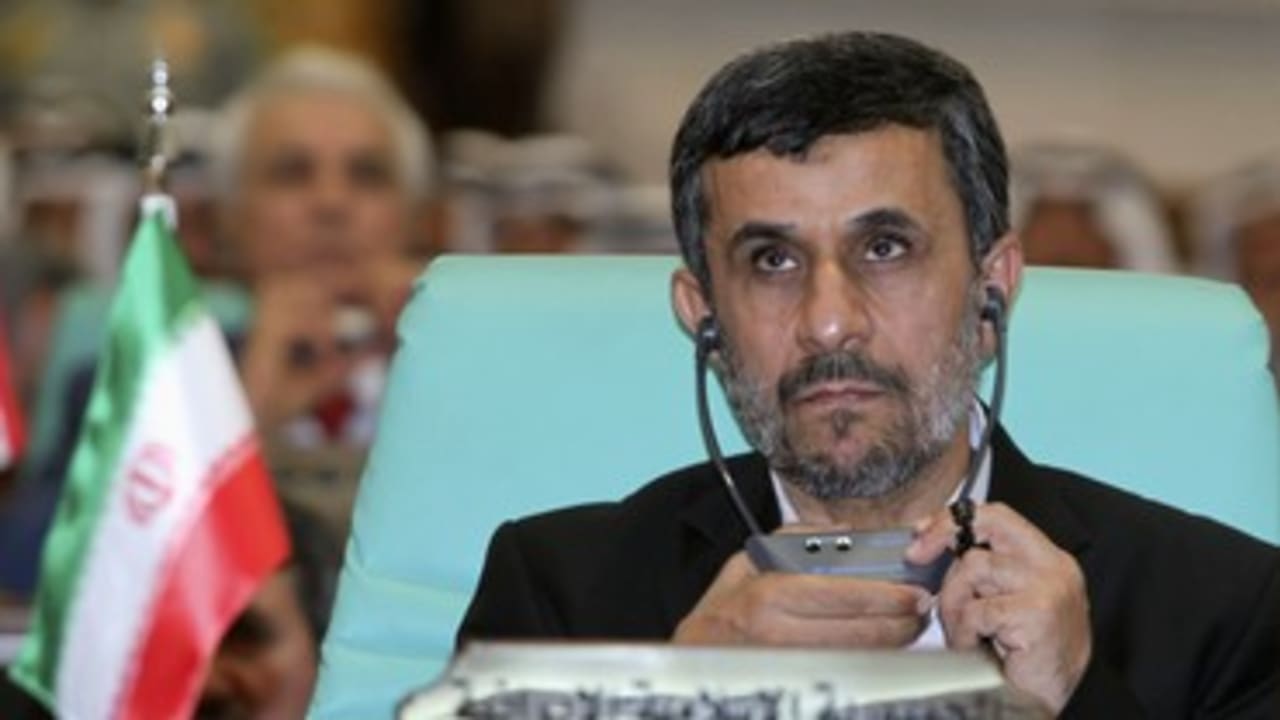
Iranian Presidnet Ahmadinejad at OIC in Mecca
Iranian Presidnet Ahmadinejad at OIC in Mecca Photo: Susan Baaghil / Reuters
When the European Court of Justice decided on January 29 to remove Iran’s Bank Mellat from the European Union’s sanctions list, its judges no doubt thought their judgment was a triumph of the rule of law over arbitrary state power. The EU had slapped sanctions on Bank Mellat because it claimed the government of Iran owned the financial institution and used it to facilitate proliferation activities. But the bank, opined the court, has now been privatized, and can no longer be considered an arm of the Iranian regime.

A week later, the court ruled again against the EU in a similar case brought by Bank Saderat – the bank’s ownership had shifted from public to private since the EU designated it, the court noted, and therefore the reasons for its designation were no longer valid.

The EU is adamant that these entities continue to aid and abet their government’s brazen and illicit efforts to procure nuclear and ballistic missile technology. So is the US government. The judges beg to differ. So, who’s right? The court overruled the EU because, claims the court, the EU failed to meet the desired burden of proof when it comes to Iran’s control over the banks.

Ironically, the court did so on the flimsiest of evidence – because Iran’s privatizations are phony.

Evidence shows that the Islamic Republic of Iran maintains significant control over the shareholding structure of these two banks – either through shareholders it controls, or through individuals who, while formally independent, are in fact close to the regime.

The government’s divestment of its assets then is in effect a controlled distribution of public-owned companies to government loyalists and government subsidiary companies.

According to Bank Mellat’s latest official report, published in July 2012, government ownership is down to 20 percent. Though technically speaking, this is not a controlling stake, it makes Iran’s government the largest shareholder – an influence reflected in the fact that the government’s representative on the board, Mr. Ali Khorsandian, is the bank’s vice-chairman.

Yet, beyond its direct 20% share, the Islamic Republic controls Bank Mellat indirectly through other shareholders.

The second largest shareholder is Iran’s Social Security Organization, which is directly controlled by the government.

The SSO owns 16.54%, either directly or through Saba Tamin Investment, which is an SSO subsidiary. The Social Security Organization also has significant connections to Iran’s Revolutionary Guards – the managing director of SSO, Rahmatollah Hafezi, the head of its board, Behrouz Barati and the deputy of Planning and Economy Nejat Amini all are Revolutionary Guards veterans.

3.96% is owned by Iran’s Privatization Organization, another government entity. 2.11% is owned by Atieh Saba Investment, a company owned by Iran’s Civil Servants’ Pension Fund, another entity directly controlled by Iran’s government through the Ministry of Welfare and Social Security. Finally, Iran’s Oil Pension Fund, also directly controlled by the government, owns another 1.53% of Mellat Bank.

Combined, these shares amount to 44.14% of the bank under the control of Iran’s government, either directly or indirectly through government subsidiaries. It falls short of the 50% plus one figure that defines a controlling stake – but then, another 30% of Mellat Bank belongs to provincial investment companies. In theory, these provincial companies are transit points in the privatization process. In practice they are still controlled by Iran’s government.

When one considers that the remaining 30% is owned by small investors who rarely come to annual assemblies, it is obvious why any notion of privatization is fictitious.

Bank Saderat’s privatization is no different. According to its most recent official report, published in December 2012, and the latest information available on the Tehran Stock Exchange website, the Islamic Republic of Iran owns 22.75% of Saderat’s shares. Iran’s Privatization Organization owns another 4.16%, and the Oil Pension Fund controls another 2.5%. All in all, 30% of Bank Saderat is controlled by Iran’s government or by entities controlled by the government. These in turn are the same entities owning Mellat.

Five percent of Saderat is in the property of Sina investment, a holding owned by the Foundation of the Oppressed, a tax exempt government controlled entity close to the Supreme Leader and chaired by a senior officer of Iran’s Revolutionary Guards.

Another 5% was purchased in October 2012 by a consortium composed of Kharazmi Investment, the IRGC-controlled Bahman Group and an unnamed private investor. Though Kharazmi is a private company traded on the Tehran Stock Exchange, its chairman, Mehdi Karbasian, has a longstanding direct involvement in government companies.

His resume reads like a sanctions list – at one point he was board member of UN sanctioned IRISL; a board member of US- and EU-sanctioned NITC; chairs the US sanctioned Parsian Bank; and, most importantly perhaps, vice-chairman on Kharazmi’s board as representative of Sepehr Energy Co., a recently formed private energy company controlled by...

Bank Saderat! Finally, provincial investment companies own another 40 percent.

In short, these privatizations were a scam – the government sold or transferred shares to government entities and public enterprises it owns or controls, and to government loyalists it can trust to serve its interests. Iran’s regime has used its privatization laws to obfuscate its ongoing connection to designated Iranian entities in order to circumvent sanctions – with the result of bamboozling European judges and, in the process, undermining the EU sanctions regime aimed at peacefully preventing Iran from going nuclear.

Emanuele Ottolenghi is a Senior Fellow at the Foundation for Defense of Democracies; Saeed Ghasseminejad is a PhD Candidate at Baruch College in New York.
  • Send
  • Large
  • Small
  • Print
  • Share
Most Viewed in
1
Iran's new fanatic-in-chief
2
Gezi Park protests: The AKP's battle with Turkish society
3
The Iranian election: Have the people really won?
4
Chief rabbi battle
JPost Community
Tweet
Israel news Iran Iran sanctions Iran nuclear revolutionary guards US Iran
Tweets by @Jerusalem_Post
Share this article
Tweet
Share
Send
Your comment must be approved by a moderator before being published on JPost.com. Disqus users can post comments automatically.

Comments must adhere to our Talkback policy. If you believe that a comment has breached the Talkback policy, please press the flag icon to bring it to the attention of our moderation team.
JPost Services
conferenceConference
newsletterNewsletter
iphoneMobile Apps
kotelcamKotel Cam
kolboJPost Alert
premiumPremium
JPost TV News  
Mobile Apps  
Bank Hapoalim  
Meir Panim  
Israel Law Center  
Inbal Hotel Jerusale  
Meier on Rothschild  
Weizmann Institute o  
JPost Premium Zone  
JPost kotel Camera  
         
 
Israel Focus
JPost TV News
Watch Now!  
Israel Law Center
The ultimate Mission to Israel, October 21 – 28, 2013 Register now!  
Nefesh B'Nefesh Guided Aliyah
Already living in Israel? Enjoy the Benefits of Aliyah!  
One year International MBA
in English, Bar-Ilan University, Israel – Open House July 9, 2013, 17:30  
Give "Freedom" this Passover
to needy Israeli families. Donate now  
YTA – A Yeshiva in Israel…
in English. Come Join Us  
War Threatens
Protect the People of Northern Israel  
Bank Hapoalim
Israeli's number one bank  
Jerusalem Post Lite
Lite Edition of the Jerusalem Post for English improvement  
Learn Hebrew with us
Get 10 minutes free personal coaching in Hebrew through phone or Skype  
JPost newspapers
Sign up for the JPost newspapers and receive one month free subscription  
Kosher English Magazine
English language weekly magazine - especially for religious people  
JReport Kindle Edition
Now you can get the Jerusalem Report directly to your Kindle  
JPost Premium Edition
The very best articles are available only in our Premium edition  
Lifestyle Magazine
 
 
Real Estate
Meier on Rothschild
Tel Aviv's Most Prestigious Address  
Don't Look For a House!
In Israel, our website will do it for you!  
 
Travel
Tourism Magazine
June 2013  
The Inbal Jerusalem Hotel
Hot summer deal, order now!  
Eldan Rent a Car
20% off all Car Rental Reservations in Israel  
Hertz Car Rental
Special Online Discounts!  
The King David Jerusalem Hotel
One of the world's truly iconic hotels, and a Jerusalem landmark  


Sites Of Interest:

Jerusalem Hotels
KKL-JNF
Poalim Online
BreitBart.com
Our Friends
Jerusalem Attractions
Jerusalem Tours
itraveljerusalem.com

JPost sites:

Learn Hebrew
The Jerusalem Report
Our Magazines
JPost Edition Francaise
Green Israel
Christian World
Jerusalem Post Lite

Services:

JPost Mobile Apps
JPost Premium
JPost Newsletter
JPost Toolbar
JPost News Ticker
JPost RSS feeds
JPost Archives
JPost Alert
JPost Kotel Cam

JPost Conferences:

NYC Conference
Diplomatic Conference

Information:

About Us
Feedback
Staff E-mails
Copyright
Sitemap
News Partners
Advertise with Us
Statistics
Ad Specs
Terms Of Service
Jpost.com, the online edition of the Jerusalem Post Newspaper - the most read and best-selling English-language newspaper in Israel. For analysis and opinion from Israel, the Jewish World and the Middle East. Jpost.com offers expert and in-depth reporting from Israel, the Jewish World and the Middle East, including diplomacy and defense, the Palestinian-Israeli conflict, the Arab Spring, the Mideast peace process, politics in Israel, life in Jerusalem, Israel's international affairs, Iran and its nuclear program, Syria and the Syrian civil war, Lebanon, the Palestinian Authority, the West Bank and Gaza Strip, Israel's world of business and finance, and Jewish life in Israel and the Diaspora.
 
About Us | Advertise with Us | Subscribe | Premium | Newsletter | RSS | Contact Us
 
All rights reserved © The Jerusalem Post 1995 - 2012