From the Islamic Revolution to the Islamic Devolution
By ALIREZA KHANDEROO
07/23/2012 22:21
Amid the Middle East unrest, many Iranians are worried that similar radical Islamic regimes could arise in other countries of the region.
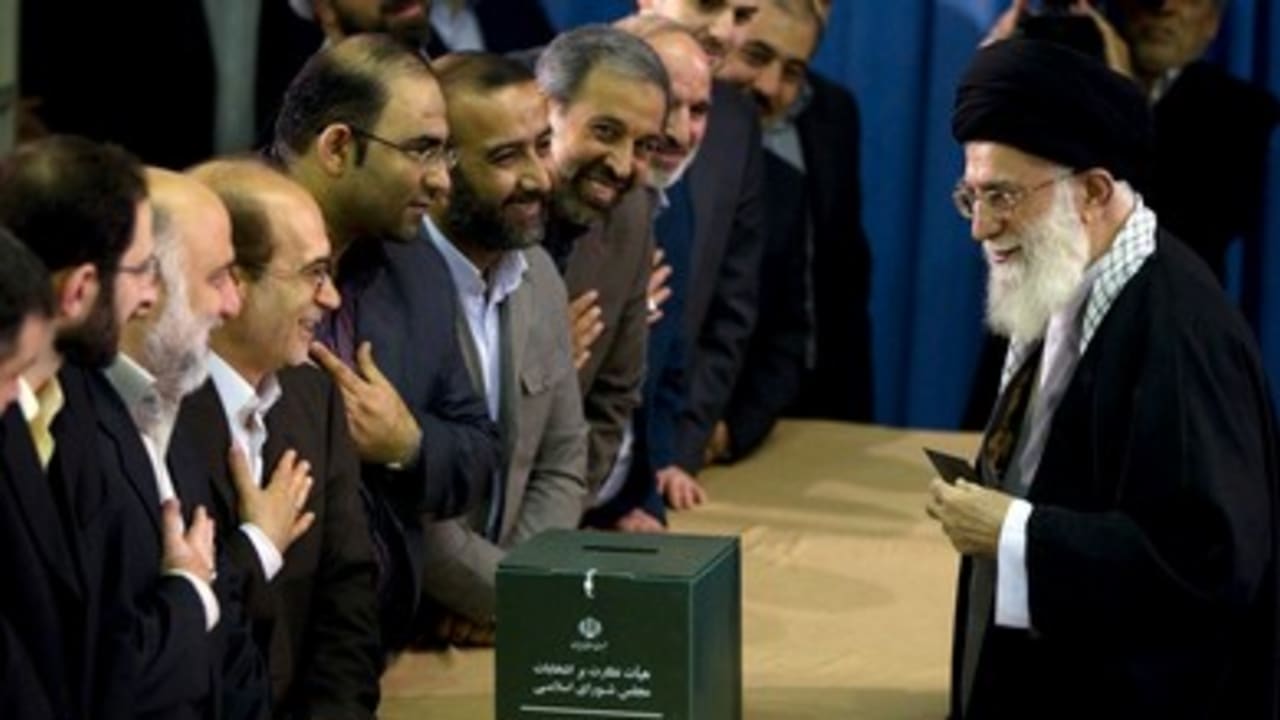
Iran's Supreme Leader Ayatollah Ali Khamenei Photo: REUTERS/Caren Firouz
Being one of the fastest-growing countries in terms of leaving Islam, hundreds
upon hundreds of Iranian Muslims are secretly converting to Christianity, or are
becoming atheists, due to the arrogance and brutality of the Islamic regime in
Iran.
A few months before the 1979 revolution, the promise of a
democratic government in Iran with which the clergy would not interfere and in
which all people from various classes of society would be free and equal was
kept alive by Ayatollah Khomeini in exile in France on October 25, 1978, while
surrounded by western journalists.
Like a snowfall that commences with a
few uncertain flakes, thickens gradually into flurries and then becomes a
blinding blizzard, Ayatollah Khomeini, who made a variety of promises including
social justice and freedom, gradually replaced the crown with a turban after the
Shah’s regime fell, and opened an unprecedented chapter of religious
dictatorship in Iran.
Speaking in God’s name, the ruling clergy in Iran
has misused religion at the expense of the fundamental human rights of women,
religious minorities and especially political dissidents. In a speech at Qom on
August 30, 1979, Khomeini threatened pro-democracy activists with harsh
punishment.
“Those who are trying to bring corruption and destruction to
our country in the name of democracy, they are worse than Banu-Qurayza Jews, and
they must be hanged.
We will oppress them by God’s order,” Khomeini told
the Hawza clerics, at the Feyzieh Seminary of Qom.
For most of the past
33 years, through mass executions and serial assassinations at home and abroad,
the ayatollahs have purged the political dissidents and ex- Muslim Iranians from
the sociopolitical arena, especially under the shadow of Iran-Iraq war during
1980-1988.
According to Amnesty International, over 4,482 political
prisoners were reportedly killed by the Islamic regime in 1988
alone.
Following 1979, 33 years of theocracy over Iran unmasked the
smoke-screen of the rule of clerics behind which the leaders pursue their
willful ambitions under the umbrella of religion. Since that time the
ayatollahs, who had managed nothing bigger than mosques, have taken control of
mass media and macroeconomic affairs of oil-rich Iran. They have been
prescribing the salve-Islamic Economy – to ease the world’s economic ills. While
domestically, the prescribed medicine has driven Iran’s economy head-long into a
coma.
WHILE THERE is no official survey of the number of ex-Muslim
Iranians and despite the Islamic Penalty Code of Iran, by which any male Iranian
who leaves his Islamic faith receives a death penalty and women life
imprisonment, many Iranian Muslims have converted to Christianity or atheism
over the past three decades since the Islamic Revolution.
As a result an
Islamic devolution is underway throughout Iran, especially following the
fraudulent 2009 re-election of Mahmoud Ahmadinejad and the post-election
unrest.
The current devolution in Iranian society is not a crisis, but
the way out of a crisis that has arisen due to a lack of trust in the ruling
regime.
Iran is no doubt pregnant with make-or-break change. Having had
its fill of the theocratic experience, more than at any time in its history Iran
is now longing for a secular democracy in which mullahs return to the
mosques.
As a consequence, a war against Iran over the nuclear issue
would not only have disastrous effects on the stability of the region but would
trigger systematic, bloody purges of political dissidents, ex- Muslim Christians
as well as Bahai believers by the regime.
Amid the Middle East unrest,
many Iranians are worried that similar radical Islamic regimes could arise in
other countries of the region. It looks as though the “Arab Spring” crazy train
is barrelling toward what the Iranian people have experienced under the Islamic
Republic since the 1979 Revolution. It seems that history repeats
itself.
The writer is an Iranian journalist based in Central Asia.