The resumption of direct Israeli-Palestinian negotiations that is projected for
September 2 in Washington serves a number of useful purposes. Sadly, none of
them is directly connected to the effort to “resolve all final status issues”
trumpeted in statements by the Quartet and US Secretary of State Hillary
Clinton.
One advantage of these talks for Israel is that their very
existence is good for Israeli- American relations. As Gen. David Petraeus
explained not too long ago, a peace process facilitates improved US-Arab
relations that in turn ease the task of American forces in the Middle East. And
that reduces the potential for US resentment against Israel. This explains
Defense Minister Ehud Barak’s insistent calls for a serious peace process in
recent months.
The talks are also good for Israeli-American relations
because hopefully they set the scene for some sort of negotiated
extension of a
full or partial settlement freeze – a key administration demand – prior
to the
September 26 expiration date.
Then too, the administration needs these
negotiations for its own political purposes.
By pointing to this
achievement, it hopes to shore up its support base as midterm elections
approach
in November.
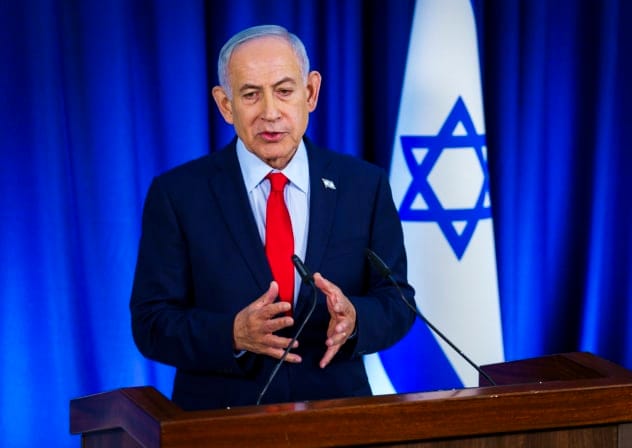
BUT WHEN it comes to the substance of Israeli-Palestinian
relations, these negotiations become much more problematic. Neither
Prime
Minister Binyamin Netanyahu nor Palestinian Authority President Mahmoud
Abbas is
ideologically inclined or politically positioned to resolve all final
status
issues. The two leaders are far apart on the core issues of refugees and
the
disposition of the Jerusalem Holy Basin; all claims to the effect that
“the
parameters of final status are well known” are completely misplaced when
it
comes to these two negotiating categories.
Further, Netanyahu has
deliberately surrounded himself with coalition partners who seriously
constrain
his freedom of diplomatic maneuver, while in Abbas’s case, both his
Fatah allies
and his Hamas enemies are a major problem.
These negotiations could even
breed violence.
On the Israeli side, we could encounter attempts by
extremist settlers (remember Baruch Goldstein in Hebron in February
1994) to
protest and provoke by attacking Palestinians. On the Palestinian side,
on a
much larger scale, Hamas is poised to launch rocket attacks from Gaza
with the
objective of disrupting negotiations. Moreover, as we saw in 2000, the
perception of failed negotiations can even generate a new intifada in
the West
Bank. In this sense, the near certainty that Abbas and Netanyahu will
not
resolve all final status issues renders these negotiations, as projected
by
Washington and the Quartet, dangerous.

Where the negotiations could
conceivably be useful (and safer) for all concerned is if the American
sponsors
steer them toward reinforcing and facilitating the one success story
they can
point to: the Palestinian state-building effort in the West Bank. But
this means
precisely not seeking to resolve all final status issues in this round
and,
instead, focusing on confidence-building measures and gestures that
narrow the
gap on borders and security.
Netanyahu’s apparent positions on these
issues may differ little from those of his predecessors, so there could
be a
better chance here for progress. This, in turn, would ease the political
endgame
of international recognition for a Palestinian state – which is
projected by
Prime Minister Salam Fayyad for next August when, coincidentally or not,
the
administration and the Quartet want the new negotiations to be
completed.
Abbas enters these negotiations having been forced by American
and Arab pressure to abandon his demand that the 2008 talks with Ehud
Olmert and
the 1967 lines serve as points of departure. He clearly miscalculated
his
negotiating position, thereby weakening his political position at home
and among
his neighbors. He would have been far better off abandoning
preconditions and
calling Netanyahu’s bluff months ago.
FINALLY, IN view of the growing
concern over Iran’s nuclear and regional ambitions in Washington,
Jerusalem and
many Arab capitals, one can only wonder at the administration’s failure
to place
greater emphasis on negotiations between Israel and Damascus as well.
This is
the only diplomatic way of weakening Iran’s penetration into the Levant.
It’s
also extremely important as the US draws down its forces from Iraq,
which
borders Syria.
While an Israel-Syria negotiating breakthrough is far from
certain, the chances are much better than between Israel and Ramallah,
and the
immediate regional payoff at least as great. President Bashar Assad is
an
extremely problematic partner (for both the US and Israel) and Netanyahu
is far
from enthusiastic. Washington’s silence on this issue is troublesome.
The
writer is coeditor of the bitterlemons family of Internet publications.
He is
former director of the Jaffee Center for Strategic Studies at Tel Aviv
University. This article originally appeared on www.bitterlemons.org and
is
reprinted with permission