For more than nine years – since the notorious NGO Forum of the 2001 Durban conference – I have been researching the biases, political campaigns and funding of groups that claim to promote human rights. Before NGO Monitor was founded, no one was examining these important centers of political influence, questioning their claims and agendas or revealing their donors. And while others have joined the debate, we are still the only research framework focusing on the credibility, biases and funding of political NGOs.
Based on this experience, I question whether the establishment of an inquiry by the Knesset into the funding of the most virulent political NGOs involved in delegitimization will help shed light or encourage informed criticism in this area.
The brief and stormy discussion in the Knesset last week demonstrated the intense political nature of this initiative, and the ease with which substantive research is pushed aside by simplistic slogans, from both ends of the ideological spectrum. For the Right, NGOs that use the language of human rights are all portrayed as enemies of Israel, without distinction, while the Left (including NGO officials) seeks to prevent all criticism and debate as “anti-democratic.”
When MK Faina Kirschenbaum (Israel Beiteinu) introduced the motion to establish the parliamentary inquiry, she claimed that Arab governments and terror groups are among the major funders of the NGOs responsible for “lawfare” campaigns that seek to label Israelis as “war criminals.”
NGO Monitor has not found documented evidence for either claim, although it is possible that such secret funding exists.
IN CONTRAST, we have shown the massive and often secret funding for
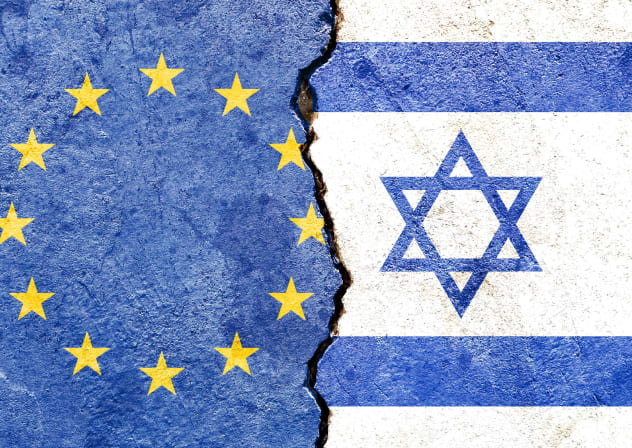
highly political NGOs from European governments, and the European Union
in particular. Europe, which preaches democracy and good government to
others, blatantly violates the basic rules of funding transparency and
open debate. An impenetrable shroud of secrecy hides all aspects of the
processes by which the EU funds groups such as Yesh Din, Adalah, PCATI
and many Palestinian groups.
And much of this European money is used to promote lawfare, as well as
boycotts, divestment and sanctions (BDS) – the two primary expressions
of the NGO Durban strategy of “complete international isolation of
Israel.”
The cost of European secrecy in funding for political NGOs was recently
revealed by NGO Monitor and The Jerusalem Post, when the Dutch
government was found to be supporting the intensely anti-Israel (and
often anti-Semitic) actions of Electronic Intifada via a church-based
humanitarian framework (ICCO). The Dutch foreign minister was surprised
by the revelation that his own government was fuelling the Arab-Israel
conflict, and there are many more such examples in Holland and
throughout Europe.
As a result, the European-funded, NGO-led assault on the legitimacy of
Israel, as well as the double standards and false allegations of “war
crimes,” is continuing. In addition, these actions undermine the
universality of human rights norms and convert these moral principles
into convenient political weapons. Universal jurisdiction statutes in
Europe, and mechanisms such as the International Criminal Court, which
were designed to bring genocidal dictators to justice, have been
stripped of any significance through the cynical attempts to label
Israeli leaders as “war criminals.”
A parliamentary inquiry into abuses of NGO funding would be most useful
in the European context, since this is the source of the money provided
for lawfare, BDS and other forms of anti- Israel incitement.
Unfortunately, the European officials responsible for these practices
have clung to the secrecy, and refuse to allow critical analyses of
their NGO funding policies.
The writer is president of NGO Monitor, a research institution that tracks NGOs.