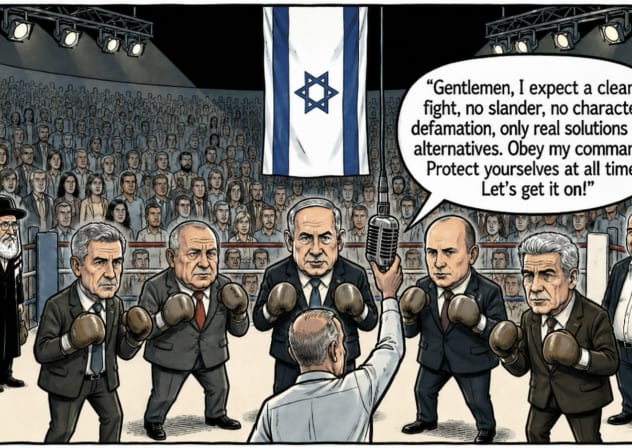
Strong talk, no plans
By YAEL WISSNER-LEVY
04/07/2012 22:47
A good speech and catchy slogans can be inspiring, emotional, and ambitious – but a good policy goes the extra mile.
AIPAC Photo: REUTERS
Much has been written about the Israel-related rhetoric circling around the
Washington, DC, Convention Center during March.
Speeches were given by
the most senior players in the puzzle that is called Israel in America. Analyses
swamped the news websites during both the AIPAC and J Street conferences.
Analogies, quotes and highlighted excerpts served as bases for many of the next
day’s op-eds. Bombastic language and grandiose expressions were utilized to
bring these lobbies’ voices to center stage.
For those who missed it,
keywords for the AIPAC conference would be “nuclear power,” “Iran,” “security,”
“military attack,” and, um, “ducks.” At the much smaller J Street conference,
keywords would focus on words like “imagine,” “ideally,” “peace,” “human rights”
and “settlements.”
Clearly the two conferences are on opposite ends of
the political spectrum. While AIPAC fidgeted with a military attack on Iran, the
other concentrated on the two-state solution and the Israeli-Palestinian
conflict, toying around with definitions of Zionism and Israeli
democracy.
To an alien from outer space, these two conferences would seem
so remote from one another that it would be hard to recognize that their goals,
at least on paper, are similar. Both maintain that their positions are
pro-Israel and pro-peace; both are dedicated to the state of Israel and its
prosperity. Both are unwaveringly committed to the Jewish State. Yet both
consisted of strong talk, and no plans.
AIPAC launched military rhetoric
from many of its speakers, gaining countless standing ovations and wild applause
from its 13,000 conference-goers.
Short of Obama signing off the order to
send military jets to Tehran, every orator – from AIPAC’s executives to GOP
candidates – spoke extensively about Iran and the viable option of a military
attack on its nuclear facilities.
Nonetheless, none actually prophesized
about the aftermath. What would be the plan for after such an attack be? How
would Israelis cope with counterattacks? How would it actually affect Israeli
domestically? From rock-star Netanyahu to celebrated Santorum, no real plan was
outlined for the future.
Strong talk, yes, but zero plans.
J
Street cornered their end of the Israel advocacy market with much talk as well.
Interesting speeches were given by a myriad of Israeli and American speakers,
with many slogans – including apartheid – launched in the plenary sessions.
Freeze settlements! Partition the land! The messages, although completely within
most of the Israeli consensus, were a bit of preaching to the choir. They were
lightweight and spineless. No backbone to support it. No actual plan as to how
to conceivably work toward a twostate solution, while maintaining a Jewish and
democratic state Strong talk, but no plans.
Ironically, it was former
prime minister Ehud Olmert’s speech at the closing J Street gala which did hint
at empirical planning, only it obviously was spoken in retrospect. Olmert,
awaiting his trial in Israel, outlined how “close” he was to striking a deal
with the Palestinians while he served as prime minister, but of course this has
little significance today. He too, had strong talk, but no workable
plan.
Don’t get me wrong. Idealist values and imagining a better future
wins hearts and minds much more than de facto declaring war on Iran with the GOP
candidates mindlessly egging the idea on. But American Jews, and indeed
universal supporters of Israel, must realize that talk is talk, and those who
ultimately live with the policies are the Israelis themselves. A good speech and
catchy slogans can be inspiring, emotional, and ambitious – but a good policy
goes the extra mile.
The writer is a speechwriter and a member of the
Atlantic Council’s Young Atlanticist NATO Working Group.