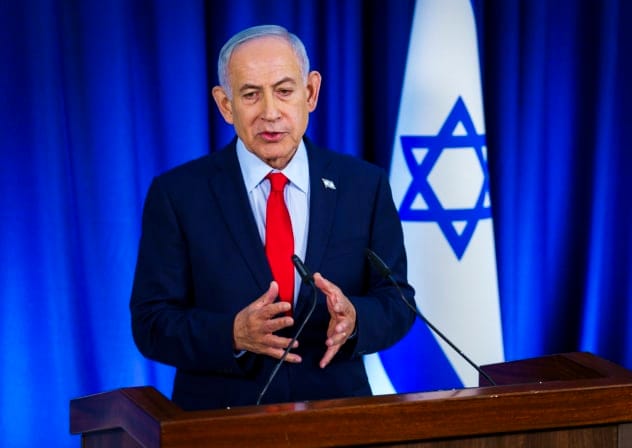
West Bank stalemate keeps the Right in power
By JAY BUSHINSKY
07/26/2012 21:40
the rash of suicides by Israelis unable to cope with their financial problems would be a powerful catalyst for change.
TA Social justice protest vigil for Moshe Silman Photo: Michael Omer-Man
Under normal circumstances, the rash of suicides and attempted suicides by
veteran Israelis unable to cope with their financial problems would be a
powerful catalyst for political change.
The tragic self-immolations,
mainly due to the incumbent government’s lack of a program for sweeping reforms
designed to prevent callousness and indifference on the part of its officials,
and to the mass demonstrations in favor of “social justice,” could have prompted
the electorate to replace the right-wing Likud and its ultra-Orthodox allies
with a more socially sensitive regime.
However, absurd as it may seem,
one unrelated but overriding issue is standing in the way: The future status of
Judea and Samaria, i.e. the West Bank.
Labor, which proudly carries the
banner of social democracy, evidently is perceived by most voters as being too
flexible with regard to the territorial dispute. It supports the
so-called two-state solution in accordance with which the Palestinians would be
given control of the areas conquered in the Six Day War 45 years ago. Therefore,
most Israelis do not consider a Labor-led government as a viable alternative to
the status quo.
Rank and file citizens of Israel are uneasy if not
unnerved by the prospect of a sovereign Palestinian state east of the 1949
armistice line, so much so that they are willing to cope with the incumbent
government’s lack of an enlightened and comprehensive social policy. The thought
of a sovereign Palestinian state on Israel’s eastern border from which rockets
and missiles could be fired at the heavily populated Coastal Plain deters the
electorate from taking a chance on Labor and the potentially allied parties
further to the Left.
Labor Party chairwoman Shelly Yecimovich is not
regarded as a hard-liner with regard to the Palestinians’ aspiration for
statehood.
She and her supporters are generally believed to be more
submissive to the Obama administration’s advocacy of the two-state solution than
is Prime Minister Binyamin Netanyahu and his nationalist Likud Party.
The
fact that Netanyahu endorsed it publicly in a watershed speech at Bar-Ilan
University three years ago is disregarded mainly on the assumption that he did
not really mean what he said and simply was trying to look good in American
eyes.
In terms of political reality rather than inter-party rivalry, the
biggest obstacle blocking the way to “two states for two peoples” is the
existence of the Gaza Strip’s Islamic fundamentalist Hamas regime. It refuses in
principle to recognize the legitimacy of Israel’s national independence because
of the Iranian-backed belief that Palestine is “an Islamic legacy” and that
therefore, as Hamas’s ideological founder, the late Sheikh Ahmed Yassin, told me
in a one-on-one interview in Gaza, “All of Palestine must be under Islamic
rule.”
Speaking in his declining years, Sheikh Yassin said it did not
matter which Islamic state or entity ruled Palestine.
The implication was
that Palestine could be governed by the Turks (as it was until 1917), Egyptians,
Jordanians, Syrians or any other Muslim nation, (if not by the Palestinian Arabs
themselves).
This attitude has far-reaching implications.
Hamas’s
control over the Gaza Strip is open-ended. The strategic value of this
situation is immeasurable insofar as Iranian aspirations for regional influence
and (if possible) domination are concerned. Therefore, the Hamas regime’s
longevity is likely to persist as long as the Islamic Republic of Iran continues
to exist. And as if this is not enough of a wet blanket for people who care
about Israel’s interests, Hamas now has the additional backing of Egypt’s Muslim
Brotherhood which is vying with the Egyptian military command for control of the
Land of the Nile.
Another unpleasant fact of regional life that should be
borne in mind is that Hamas has significant support in the West Bank as
well.
Its electoral success in the ill-advised and ill-timed election
that followed Israel’s unconditional and irresponsible withdrawal in 2005 was
not only evident in the Gaza Strip where it won a majority of the votes, but
also in the West Bank. One cannot rule out an eventual Hamas effort to vie with
and ultimately replace the Palestine Liberation Organization’s troubled regime
in Ramallah.
If this possibility materializes, the chances of a two-state
solution to the Israeli-Palestinian dispute will be nil.
The only
sensible alternative could be a one-state solution in which peace-oriented
Israelis and Palestinians establish a single political entity based on genuine
democracy, equal rights and individual liberty. To achieve this seemingly
utopian goal the most essential human quality necessary would be mutual
sincerity and goodwill.
Honest politicians from both nationalities should
be encouraged to explore the prospects if indeed they do exist and to try to
make them materialize. There is ample evidence that the Jews and Arabs of
Palestine can live and work together harmoniously.
For example, it can be
found in Israel’s hospitals where the professional staffs consist of Jewish and
Arab doctors as well as Jewish and Arab nurses who are indistinguishable. It
also exists in Israel’s universities, although the proportions consist of a
substantially higher percentage of Jews and a much lower percentage of Arabs.
Israel’s Supreme Court and the various lower courts also have a bi-national
aspect which has proved itself commendable and efficient.
One of the
essential components of this form of inter-ethnic cooperation would have to
include an objective reassessment of the Arab refugee problem as well as a fair
consideration of the Jewish interest in establishing settlements in the biblical
Land of Israel.
This cannot be a one-sided process in which the
repatriation of even a single refugee or descendant of refugees is unthinkable
while Jewish settlers freely lay claim to tracts of land in Judea and Samaria
(the West Bank). This occurs regardless of the local Arabs’ legal claims to
partial or total ownership of the sites in question.
The bottom line is
that 45 years of controversy over the area evacuated by Jordan’s armed forces is
excessive and dangerous. It sets the stage for the renewal of armed conflict as
well as concurrent or subsequent foreign intervention. In the short run, normal
economic development and improvement of the living standards of the Arabs and
Jews involved are undermined. What is needed is political and social
flexibility, an end to ideological rigidity and a priority for peaceful
coexistence. There is no country in the world in which these qualities are more
appropriate and essential than the Land of Israel, i.e. the Holy
Land.
The writer is a veteran foreign correspondent.