Archaeology
Evidence of human sacrifice, inbreeding found at ancient Korean burial complex - study
Additionally, researchers found genetic confirmation that entire families had been sacrificed together as part of sunjang, the ritualistic sacrifice of servants to be buried alongside their superiors


Neanderthal children in central Europe may have hunted turtles for materials, not for food - study
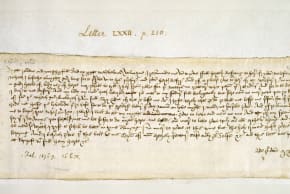
MyHeritage's Scribe AI decodes world's oldest love letter, reveals 15th century familial tensions

Early humans may have begun eating elephants, large animals 1.8 million years ago - study
Stone stele depicting Roman emperor, Egyptian gods found near Karnak temple site in Luxor
The stele was discovered during the three-year-long restoration efforts of a gateway from the time of Ramesses III in Karnak.

Persian-era mass grave of children found during excavations in Israel’s Tel Azekah - study
Simply made pottery jars, beads, copper jewelry, and stone and mortar hammers were discovered within the cistern alongside the remains.
Collection of 7,000-year-old ostrich eggs discovered under sand dunes in southern Israel
The eggs were discovered near the remains of a campfire believed to have been connected to prehistoric desert nomads who collected, cooked, and ate the eggs at the site.

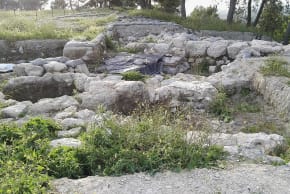
Israel’s 'Stonehenge’ not alone with near 30 similar sites, satellite imagery reveals - study
The newly discovered sites all share a similar design: large circular structures, between approximately 50 to 250 meters in diameter, built with stones taken from local basalt fields.

Roman fort found north of Hadrian’s Wall may have been used to defend against unconquered Scotland
According to GUARD, the fort was constructed on high ground along the Antonine Wall, granting it an unobstructed view of the surrounding area, and intervisible with a much larger fort to the west.

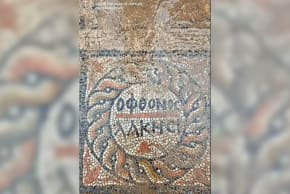
Ancient mosaic bearing Greek inscription for ‘haters gonna hate’ found in southern Turkey
In addition to the two inscriptions, the mosaic consists of geometric patterns and several floral motifs.
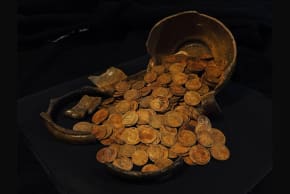
Revolutionary find: Hoard of century old gold coins discovered under a house in western Russia
Based on the melt value of one pre-revolution 10 ruble coin, which is about 90% gold, the entire hoard may be valued at an estimated half a million dollars.
Archaeologists may have found lost remains of French musketeer d'Artagnan in Dutch church
The church had previously been identified as a possible resting place of the 17th-century soldier.

LiDAR reveals network of ancient Maya markets hidden under jungle canopy
The newly mapped complexes display “nested” arrangements of low platforms.

Stone handaxes found in Galilee show early humans valued aesthetics of their tools - study
The axes were dated to the Pleistocene, likely made by Homo erectus, the first human species to evolve to have a humanlike body shape and gait, who had lived in the region thousands of years ago.
