Poll: A third of Israelis call settler rioters ‘terrorists’
A new survey finds one-third of Israelis describe Jewish rioters involved in recent West Bank violence as “Israeli terrorists,” while another 18% call them “nationalist criminals.”

A new survey finds one-third of Israelis describe Jewish rioters involved in recent West Bank violence as “Israeli terrorists,” while another 18% call them “nationalist criminals.”


The target of the strike was Nael Abu Obeid, the commander of Hamas’s Rafah Brigade, who replaced his predecessor, Mohammad Shabanah, who was killed by the IDF in May 2025.

Amir Ganah pulled a goal back to cut the lead to 2-1 at halftime. Sokler found the back of the net again off a Varela cross, while Peretz added a marker as well to take the 4-1 win.

The Red management decided: "To the extent that warning letters or other proceedings exist, they are canceled. The goal is to meet Hapoel fans in the stands, not in court."

“You have ended your career,” he allegedly wrote in one message. “I am going to be cruel at a level you never imagined.”

Winter went on to note that it is “unpleasant” to have to “endure attacks from within the [right-wing] camp,” including Prime Minister Benjamin Netanyahu and the Likud.

Malaysian Prime Minister Anwar Ibrahim shared the report on his X/Twitter account and made clear that his country intends to continue inspecting shipments suspected of being linked to Israel.

The wounded man was evacuated in serious condition to Wolfson Medical Center, where medical teams were forced to pronounce his death.

"How is it possible that the greatest disaster in the State of Israel has not been investigated?" Shelly Mashal Yogev, mother of Libby Cohen Meguri, who was killed at the Nova music festival, said.

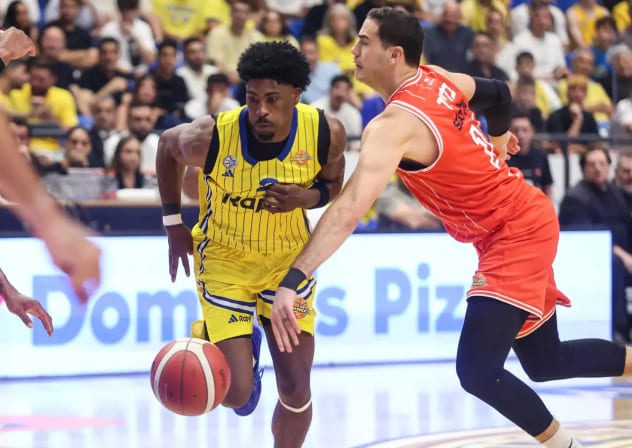
The court overturned the Reds' conviction and sentence following incidents in which a team fan clashed with Jaylen Hoard, but did not criticize the referees who chose to eject him.
Herzog hosted the ceremony alongside Supreme Court President Isaac Amit and Justice Minister Yariv Levin, placing the two officials at the center of the same event after repeated court battles.
