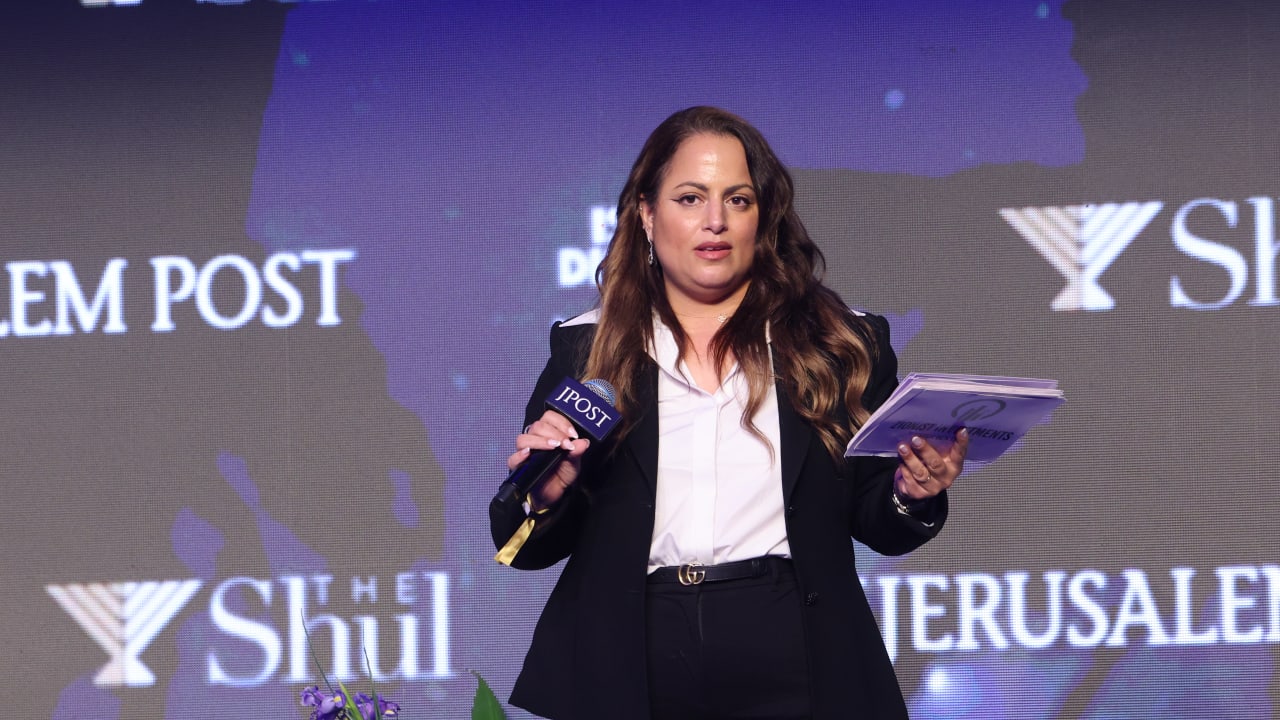
In a conference hall filled with Jewish business leaders from across the Diaspora, the term “Zionism” kept coming up, but not in its usual, nostalgic sense. There were no speeches about longing or vague references to history. Instead, the talks focused on planning committees, building rights, tax benefits, and feasibility studies.
At the heart of this new perspective was Ester Ben David, CEO of Zionist Investments, who introduced a concept she calls “the new Zionism”: shifting from emotional ties to Israel toward active economic involvement in its future. “Today’s question isn’t just how you feel about Israel,” Ben David states, “but whether you’re willing to help shape what it becomes.”

As a real estate entrepreneur working mainly with Jewish investors abroad, she believes real estate has become a key area where Israel’s next chapter will be written, not only as an investment, but as a national instrument connecting capital, ideology, and reconstruction after conflict.
“I see the same thing again and again through my work with Jews abroad – the emotional connection to Israel exists, but it lack the framework that translates it into sustainable actions.” Ben David explained. “I connect Jews in the Diaspora to Israel through real estate,” she adds, “but that real estate must satisfy two conditions: it has to be economically viable and reflect Zionist values. Otherwise, it’s either charity or gambling. Neither appeals to me.”
Ben David’s argument starts with a straightforward premise: Israel’s real estate landscape has shifted significantly even over the past decade. Factors like rising housing costs, a critical land shortage, demographic growth, and the aftermath of October 7 have combined into what she terms a “once-in-a-generation moment.”

“The map changes,” she said. “Literally. Areas once considered peripheral are now central to the country’s future.” She explains that Israel’s south is the most prominent – yet not the only – example, and that much of this transformation is driven by policy changes.
Confronted with a growing population and a housing crisis, the government has had to adapt its planning strategies. Building permissions have increased substantially, even in core urban areas, with four-story buildings now approved for twelve floors.
Simultaneously, the government has intensified development efforts in the south and north by offering tax incentives, fast-track approvals, infrastructure projects, and targeted benefits. Some responses are directly tied to the damage caused by the Gaza envelope and border communities, while others stem from long-term demographic and economic trends.
“When the government alters planning policies," Ben David states, "it doesn’t just change maps; it reshapes communities, influences people's movements, and if recognized early, presents remarkable opportunities. We see the same principle working in northern Israel as well” she notes.
To illustrate, Ben David points to Kiryat Gat, a city that, until recently, struggled with image and demand. “People used to ask, ‘Who would ever live in there?’” she recalls, but the arrival of major employers like Intel, the development of new neighborhoods, and targeted government investment transformed the city into a magnet for young families priced out of Israel’s center, with property values following suit.
“The city became an anchor,” she says. “And everything around an anchor strengthens.” For Ben David, this is the essence of economic Zionism: identifying national needs – housing, employment, infrastructure – and aligning them with investment logic. “In Israel, young couples don’t wait,” she adds. “They don’t rent for life. They want to buy. That mentality, combined with land scarcity and policy shifts, creates movement, and where there is movement, there is opportunity.
From devastation to development
The convergence is especially evident in the Gaza envelope. Ben David discusses her work with a moshav near Gaza – a community which, until recently, had little growth or demand. After October 7, many believed these places would empty out, but she notes, "What actually happened was the opposite."
People stayed, and the government responded with unprecedented incentives. Tax benefits, lower land fees, grants, and faster planning approvals became part of a strategy to turn crisis into renewal. One incentive helped establish a rural hospitality complex – a 120-room vacation village with plans to expand.
“Before the war, no one would have imagined a hotel there,” Ben David says. “Today, demand exists." The project aims far beyond tourism. During the week, when leisure travel slows, the site will serve as an educational and memorial hub, offering guided tours from the Nova festival site through nearby communities to tell stories of destruction and rebuilding.
“They’re planning to host Birthright groups, Diaspora youth, and Israeli youth movements,” Ben David explains, "not as spectators, but as active participants in a living narrative.” A conference center is also planned, with a focus on prioritizing locals for jobs, with training programs in English, finance, and hospitality are part of this approach. “This isn’t just about building infrastructure," she says, "it’s about rebuilding people.”
To prevent vision from becoming sentimental, Ben David collaborates closely with Ziv Cohen, a certified real estate appraiser and her professional partner. Cohen’s task, she explains, is to convert ideology into measurable data and to reject ideas when the numbers don’t support them, and she and Cohen do so as part of a multifaceted team, which includes appraising, planning, development, and legal and financial counseling.
“I don’t rely on gut feelings,” Ben David states. “Ziv assesses this with an objective perspective, considering planning policy, statistics, infrastructure, and risk.” Cohen adds that the post-October 7 situation has disrupted usual assumptions.
“Everyone expected people to leave the area,” he said, “and when they didn’t, investors took notice.” From an appraisal view, Cohen notes that national rehabilitation zones present a rare convergence: regulatory backing, lower land costs, faster development timelines, and strong demand factors.
“When regulations favor you, risk decreases,” he says. “With infrastructure and employment anchors in place, value increases.” He points to the rise of what he calls “rehabilitative tourism,” with places like Nova becoming hubs for education, and remembrance.
Still, Ben David is careful to draw a line between vision and illusion. “Hope is not a business model,” she asserts, and that is precisely why, from the earliest stages of her work, she brought Cohen into the process – not as an afterthought, but as a counterweight. “I’m not a broker,” she repeats. “I don’t sell deals. I build frameworks. And those frameworks must survive professional scrutiny.”
Where Ben David speaks in terms of identity, community, and national renewal, Cohen speaks in planning codes, timelines, and risk exposure. “My job,” Cohen says, “is to look at the map without emotion.” From an appraisal perspective, he argues, the post-October 7 reality has produced something rare: a convergence of state interest, regulatory flexibility, and long-term demand.
“When the government wants something to happen,” he says, “it happens faster. That changes the entire risk profile.” Ben David does not shy away from addressing the challenges. “Of course, there’s tension,” she acknowledges.
“Transforming trauma-marked areas into growth locations isn’t easy. But Zionism has never been straightforward.” She objects most to being viewed as a philanthropist. “Philanthropy means giving and leaving,” she states. “This is about staying involved, being responsible for what you help create.”
As Israel undergoes a phase of rebuilding in every sense of the word, Ben David believes this alignment of capital and ideology is temporary. “We’re at a very specific moment,” she notes. “The planning, incentives, and urgency won’t last forever.”
For Diaspora investors, her message isn’t sentimental or theoretical. “This isn’t about distant loyalty to Israel,” she emphasizes. “It’s about contributing something concrete.” Ultimately, her model prompts a subtle but significant question: not if money will influence Israel’s future, but if investors recognize the importance of what they are helping to create.