Italian Paradise
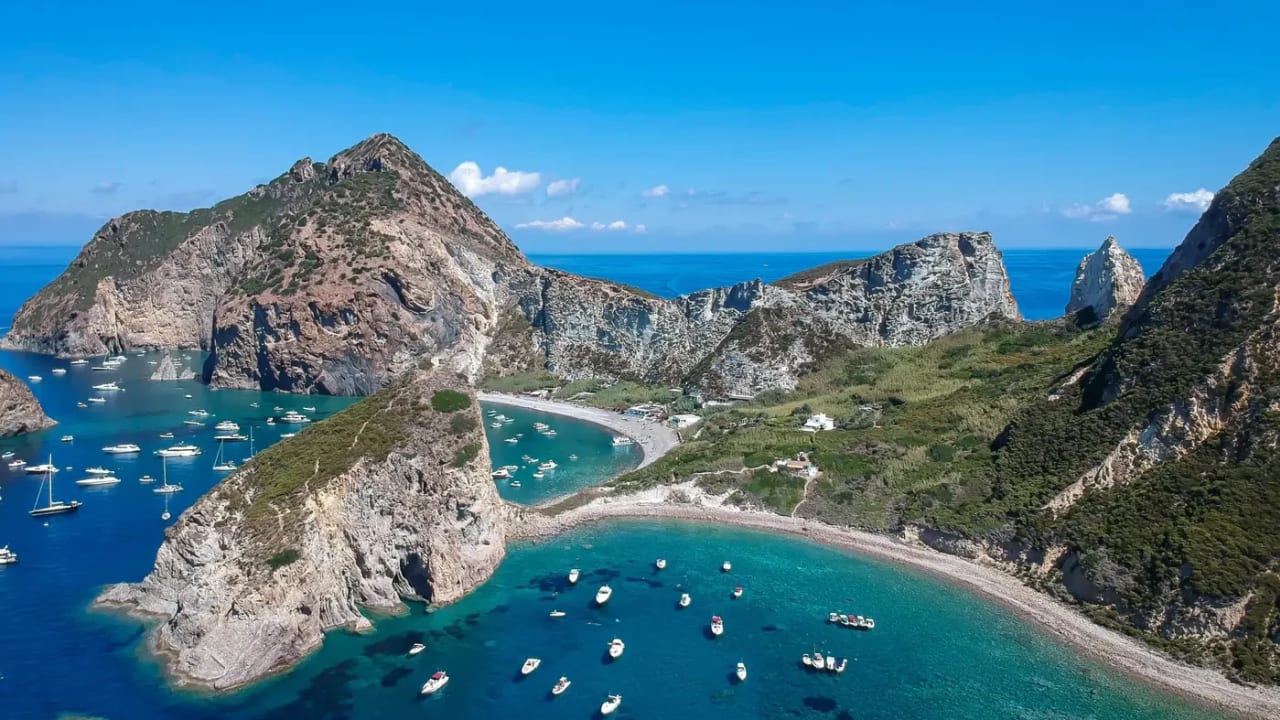
On Palmarola, an Italian island in the Tyrrhenian Sea off Italy’s western coast, there is almost no construction and no roads. There is no electricity, no cell reception, and no maritime dock. On most days, the only way to reach the island is by a small boat from Ponza, located about eight kilometers away.
The island lies west of Rome – close enough for a day trip, but far enough that the noise, bustle, and large number of tourists characteristic of the Italian capital feel like another world. While the ancient buildings, fountains, and squares of Rome attract millions of visitors, Palmarola barely appears on travel itineraries. Many tourists have never heard of it. Many Romans have never visited.
What draws those who do cross the sea is not infrastructure or comfort – but the absence of it. Palmarola is characterized by impressive volcanic cliffs rising from the water, dotted with caves and narrow coves. It has only one beach, a network of walking paths leading inland, and very few signs of modern development.
Reaching the island from Rome involves a train ride to the port of Anzio, a ferry to Ponza, and then coordination with a fisherman or private boat owner for a round-trip to Palmarola. Since there are no permanent residents or organized infrastructure, Palmarola is a destination highly dependent on weather and the seasons.
The island has only one restaurant, Q'France, which serves fresh fish and rents a limited number of basic rooms carved into old fishermen’s caves along the cliffs. Guests are required to book months in advance and stay on a full-board basis, at a starting price of NIS 550 per night.
The main attractions on the island are snorkeling, lounging along the beautiful coastline, stargazing at night, eating fresh fish at the local restaurant, and taking a sunrise hike to the summit of one of the mountains. A traveler who visits the island every summer with her family says: “For a whole week, we feel as if we are living a primitive and isolated experience, a bit like a family of cavemen on vacation.”

Ancient Ruins and Impressive Cliffs
The isolated island has a rich and fascinating history. Walking paths that start from the coast climb toward the ruins of a medieval monastery and prehistoric settlement remains. In addition, beyond the main beach, the island’s coastline is best explored by sailing along it in a rubber boat. Visitors can observe the impressive cliffs forming rock pillars, tunnels, and caves, and the surrounding waters attract snorkelers, kayakers, and many divers.
According to a local historian, cave dwellers came to the island in search of black obsidian stone, which was valuable and used to make weapons and tools. The stone can still be seen in the black streaks on the cliffs. Later, the ancient Romans used the island as a strategic maritime observation post in the Tyrrhenian Sea for the imperial fleet, but they never settled it. He states that the island remained uninhabited for generations and changed very little.
So who does live permanently on the island? The only animals likely to be encountered on land are wild goats, hiding among the low palms that gave the island its name (Palma in Italian).

The Island’s Heritage
Ownership of the island dates back to the 18th century, when families from Naples sent to settle Ponza were allowed to divide Palmarola among themselves. Today, the island is privately owned, divided into many plots belonging to families still residing in Ponza.
On the cliffs, small caves have been converted into simple summer residences, some painted white and blue. Fishermen used them as shelters during storms, and many still store equipment there in case the weather prevents a return to Ponza.
A small white chapel dedicated to San Silverio stands atop a rock pillar in the sea. Silverio, a sixth-century pope, was exiled to Palmarola, and it is believed he died there.
Every June, fishermen sail from Ponza to Palmarola for the feast of San Silverio, carrying flowers to the chapel and leading a wooden statue of the saint in a maritime procession. Participants then climb steep rock stairs to the highest niche, where the main altar is located, to pray and reflect. Local legends tell of sailors caught in storms who prayed to San Silverio and were saved.