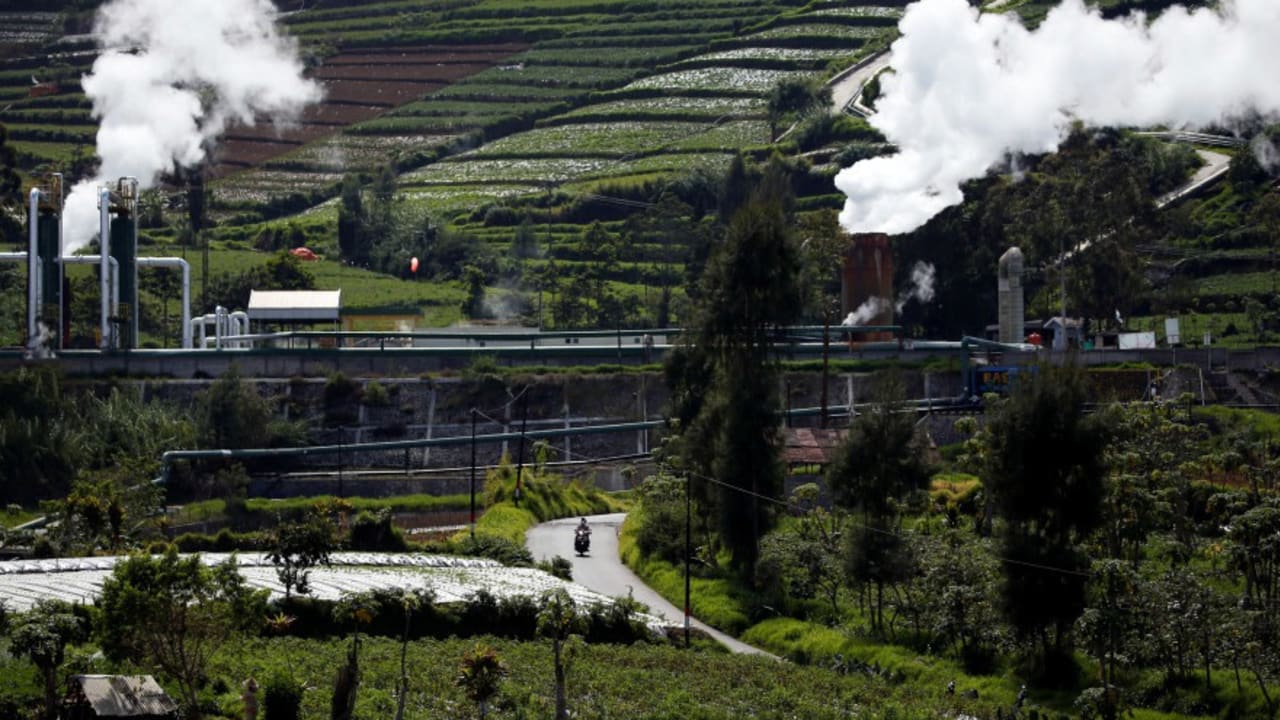
The promise of underground wealth is nothing new in the county of Cornwall, but the region is now drilling deeper than ever in an effort to harness the kingdom’s natural resources. The deep geothermal power station at United Downs is set to begin generating electricity around the clock. According to a report in the British newspaper The Telegraph, with an output of approximately three megawatts - enough to power around 10,000 homes - the station may not be a game changer on its own, but experts believe it will pave the way for similar projects across the country.
The project, developed by Geothermal Engineering Ltd, draws water at temperatures of around 190 degrees Celsius from underground reservoirs located at a depth of about five kilometers. The hot water is used to create steam that drives a turbine, enabling continuous electricity generation. Unlike solar or wind energy, which are available only 20 to 40 percent of the time, the geothermal plant is expected to operate 96 percent of the year.
However, the promising technology also has troubling side effects. Similar to hydraulic fracturing methods used for oil and gas extraction, deep drilling can cause minor earthquakes. During 2020, the company’s drilling activities triggered 15 tiny earthquakes with magnitudes of up to 1.5 on the Richter scale, shaking residents’ windows in the area.
While the British government has effectively banned hydraulic fracturing that causes earthquakes above a magnitude of 0.5, the geothermal energy industry is not subject to the same restrictions and is regulated solely on the basis of surface tremors. In an effort to calm concerned residents, the company distributed small seismographs to local schools.

Beyond electricity generation, experts point to enormous potential for district heating using geothermal energy throughout Britain. But at United Downs, another treasure lies underground: Lithium, the metal known as “white gold” and a key component in batteries. Groundwater at the site contains one of the highest lithium concentrations in Europe. This combination of power generation and mineral extraction without open mining makes the project particularly attractive from an economic standpoint.
In addition, as noted by The Telegraph, the green project relies heavily on equipment and expertise from Britain’s long-established oil and gas industry. The shift to geothermal energy could, ironically, provide an employment lifeline for specialists and workers from the polluting North Sea industry, just as it approaches closure.