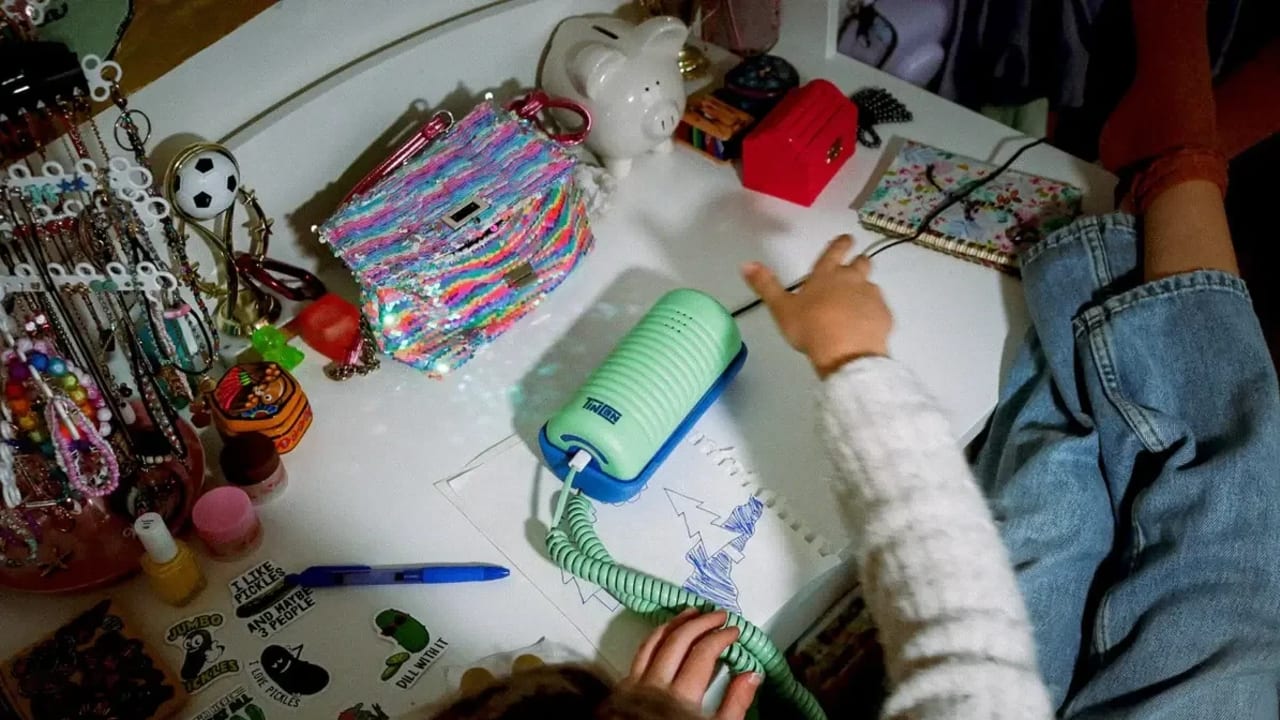
The children’s technology market is undergoing a surprising shift: Tin Can, a device designed as a nostalgic landline phone and priced at $100, has become over the past year one of the most sought-after products in the United States and Canada. The device, launched in April 2025, is based on a Wi-Fi connection and allows voice calls only, without access to apps, browsers or social networks.
According to company data published by the Bloomberg news agency, hundreds of thousands of units have been sold so far, with the main growth engine being bulk purchases by schools. Many educational institutions see the device as an operational tool to curb screen addiction among elementary and middle school students. At St. James School in Los Angeles, for example, they have already announced their intention to distribute the device to all 220 families in the school, in order to prevent a shift to WhatsApp groups and text messages during the summer vacation.

The device plugs into a power outlet and includes basic functions such as a speaker, speed dial and an answering machine. While calls between similar Tin Can devices and emergency calls are free of charge, the company offers a subscription of $10 per month that allows dialing and receiving calls from external numbers, provided they have been pre-approved by the parents.
The rapid success also led to a seed funding round of $12 million last December, led by Greylock Partners, following a previous fundraising of $3.5 million in the summer. The capital is intended to support the server infrastructure, which collapsed under the load during the last Christmas holiday due to a sharp increase in the number of new users.

A response to regulatory pressure
The product entered a vacuum created following the legal and regulatory struggle against the technology giants. In Australia, a ban on the use of social networks under the age of 16 has already come into effect, and in the United States public pressure is increasing following lawsuits against Meta and Google over mental harm caused to minors.
Chat Kittelson, the company’s founder and CEO, explains that the goal was to create a device that evokes nostalgia among parents and simplicity among children. "I wanted something that would remind parents of their simple childhood, because that is what everyone aspires to right now," Kittelson noted. According to him, parents report that the device improves children’s communication skills and their self-confidence in managing a voice conversation, a skill that has eroded in the era of text messages.
Despite the rapid growth, the company emphasizes that the main challenge now is maintaining service stability and recruiting professional manpower at a pace that will meet the high demand from education systems across North America.