
Price (base/test vehicle): NIS 240,000 / NIS 260,000
Direct competitors: None – all rivals are larger, more cumbersome, and more expensive. The Ford Maverick is not officially imported.
What we liked: A unique combination for those who need an urban pickup, crossover-like comfort and handling, cargo-bed practicality, battery warranty.
What we didn’t like: Driving range and charging speed, annoying safety alerts, ergonomics, spare-wheel location.
Score: 8.5/10
Many sayings have been coined about the ultimate compromise: “You can’t have it all,” “You can’t hold a stick from both ends,” or “You can’t make an omelet and keep the eggs intact.” Conventional wisdom says there are no shortcuts, yet Korean manufacturer KGM (formerly SsangYong) is attempting to combine three highly desirable qualities in a single vehicle: The ability to bring home an IKEA wardrobe, head out on a trip with four bicycles mounted in the back, and enjoy economical electric propulsion - while also offering a disruptive price tag.
The idea is that not everyone who needs cargo capacity wants to drive a pickup truck such as a Chevrolet Silverado, Toyota Hilux, or even a Maxus eTerron 9. Has KGM found a solution that successfully balances all sides of the equation, or is this another compromise that misses all three targets?
The concept of the “urban pickup” is not new. Subaru brought it to Israel as early as the 1970s. The company identified a niche crying out for a solution and in 1978 introduced the two-seat BRAT pickup, based on the Subaru Leone. Over the years, the BRAT became a global cult vehicle, and I had the pleasure of spending several years with a 4x4 1.8-liter version that sold well in Israel. I hauled my DR600 to countless trails across the Negev, and it was always reliable, durable, and full of character.
In 2002, Subaru introduced the Baja, a charming pickup version of the second-generation Outback. The Baja offered a spacious family cabin with modest off-road capability, and it was followed by other urban pickup concepts such as the Hyundai Santa Cruz and Ford Maverick. None of these models arrived in Israel through official channels, but now the KGM Musso EV has arrived via Talcar, the importer of Kia and several other brands.
The electric Musso is priced at NIS 240,000 for the 2WD version and NIS 260,000 for the tested 4WD version. This places it tens of thousands of shekels below the dominant pickups in the market (Toyota Hilux and Isuzu D-Max), while putting it in the same price bracket as electric crossovers such as the Hyundai Ioniq 5 and Tesla Model Y. Those vehicles offer superior electric drivetrains and stronger reputations, but they lack a cargo bed, making the Musso a unique proposition in Israel.
The question is: Who exactly is KGM’s urban pickup for? Washing machine technicians? Electricians? Urban professionals with mountain bikes? Surfers and anglers? Perhaps even fleet operators? We already drove it during its launch event in Germany. Now it’s time for a more detailed local test.
Design
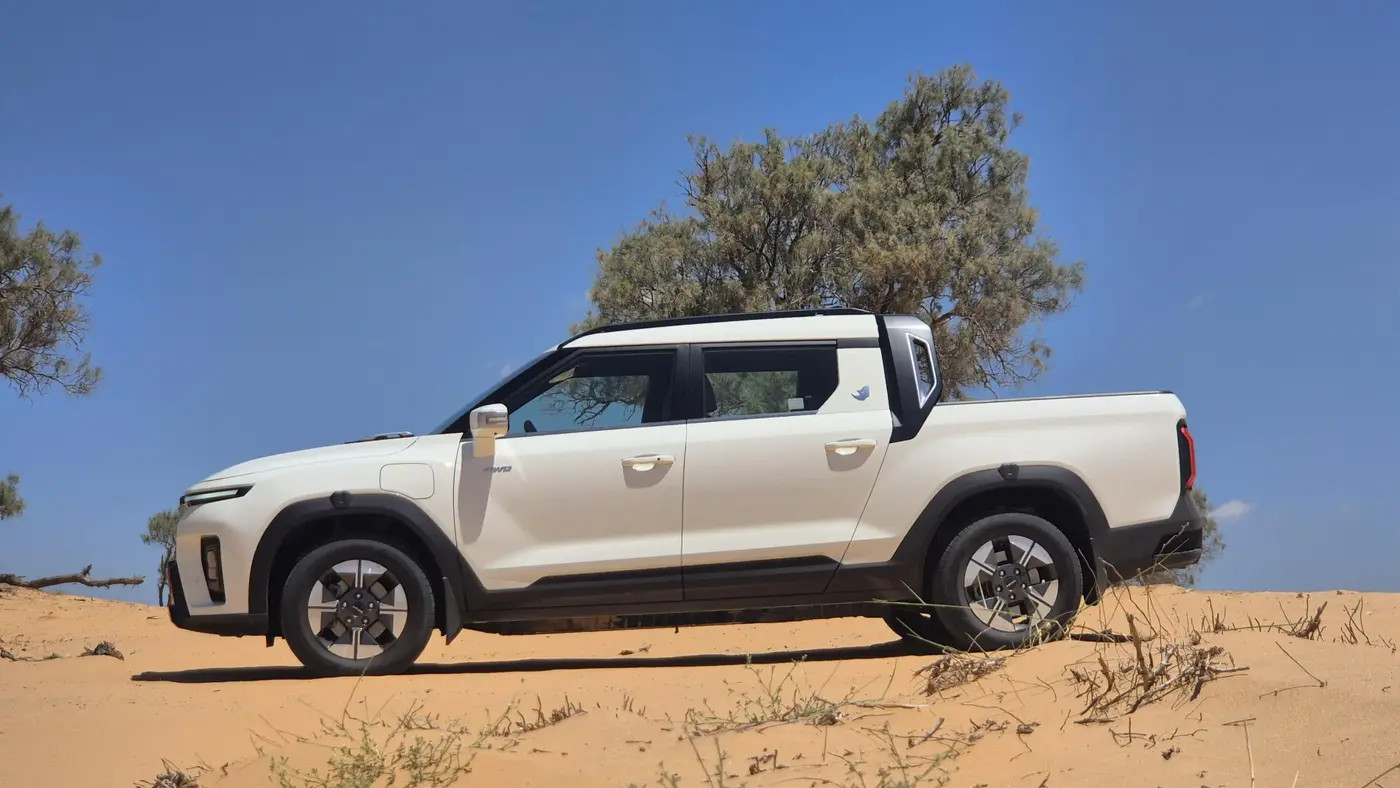
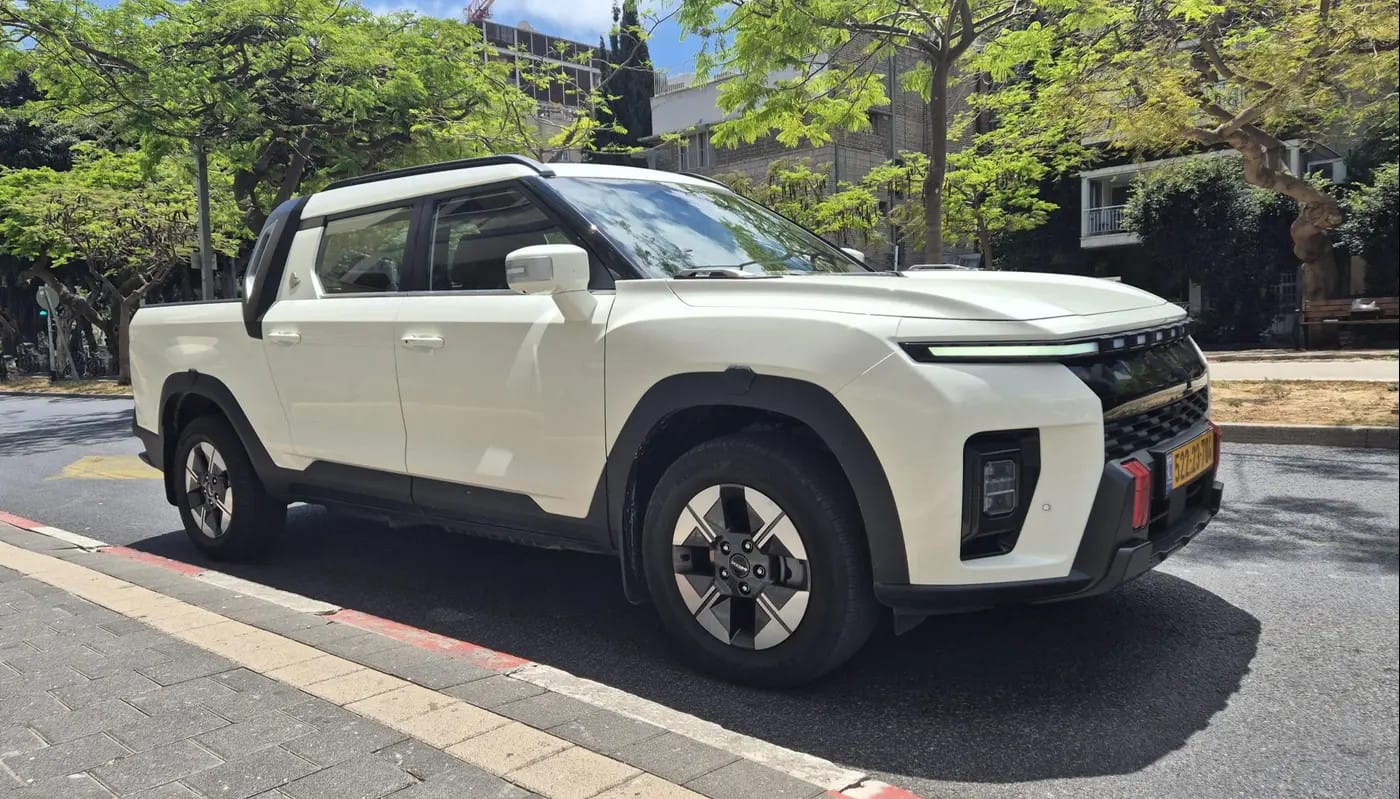
The Musso is based on the familiar Torres crossover, which naturally makes us think of it as a “small pickup.” In reality, that is not accurate at all. At 5.16 meters long, it is only 10–16 centimeters shorter than the Isuzu and Toyota rivals - a fairly insignificant difference.
The front end and passenger cabin were taken directly from the Torres, while a square open cargo bed was attached at the rear. The bed is only a few centimeters shorter than those of the Toyota and Isuzu, yet it remains spacious and practical. The front section and cabin are relatively large, while the bed is slightly shorter, but overall the conversion was executed successfully.
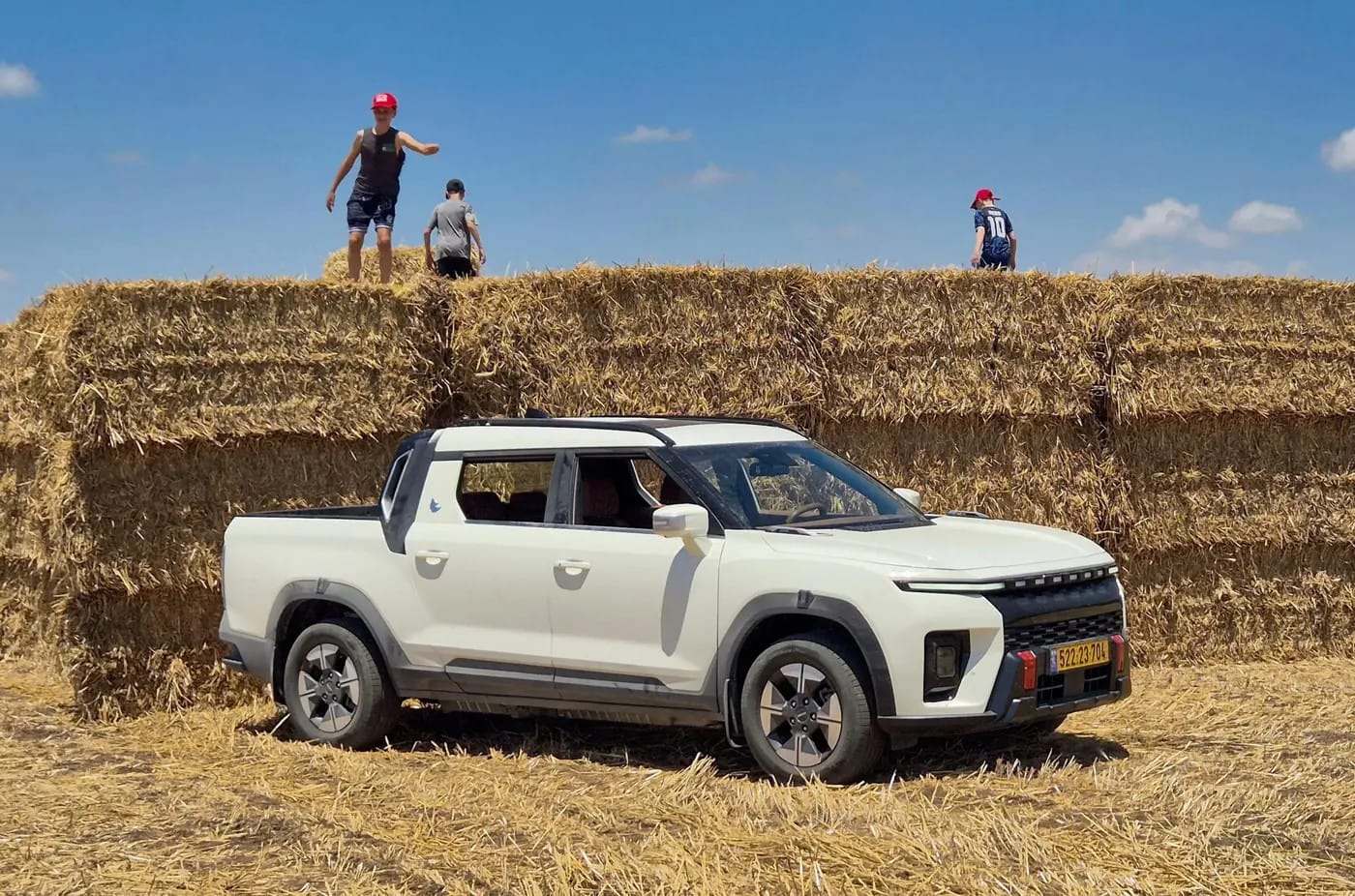
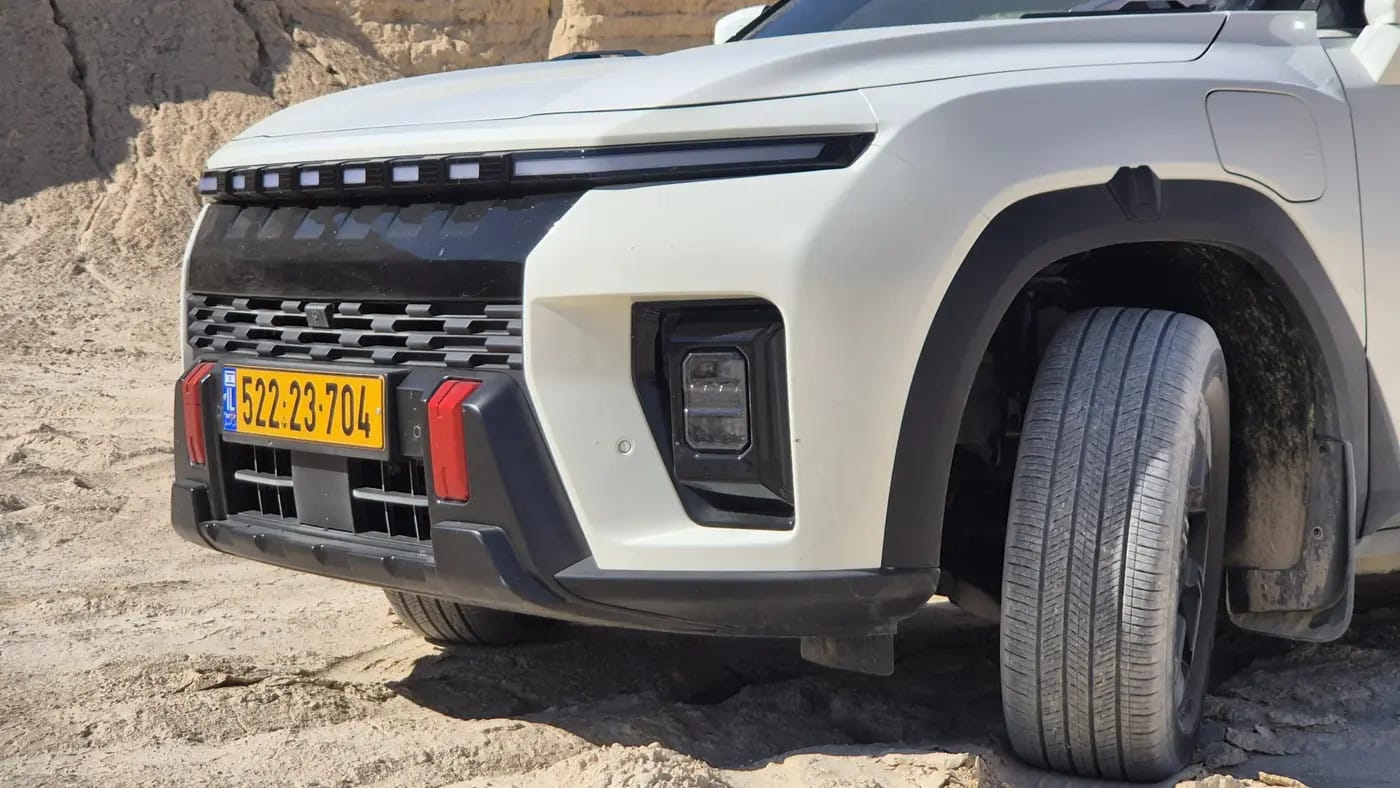
“When I grow up, I want to be a Hummer,” the KGM seems to dream at night. For now, it makes do with a massive front grille featuring six lighting elements, slim headlights, and exaggerated air intakes. The designers missed no opportunity to add bold styling touches: Red plastic tow-hook covers inspired by the Rubicon, fake tie-down handles on the hood reminiscent of the Bronco or Camel Trophy vehicles, and various expedition-inspired details.
Personally, I find it a bit excessive, but there is no doubt that many customers will love the bold appearance. The roof thickens toward the rear, which looks somewhat awkward. On the Torres it flows naturally, but here the roof was cut to accommodate the cargo bed. Vertical grab handles at the front of the bed are made from lightweight plastic and are not genuine load bars. The electric Musso is visually loud and aggressive, but it certainly attracts attention. People liked the design.
Interior
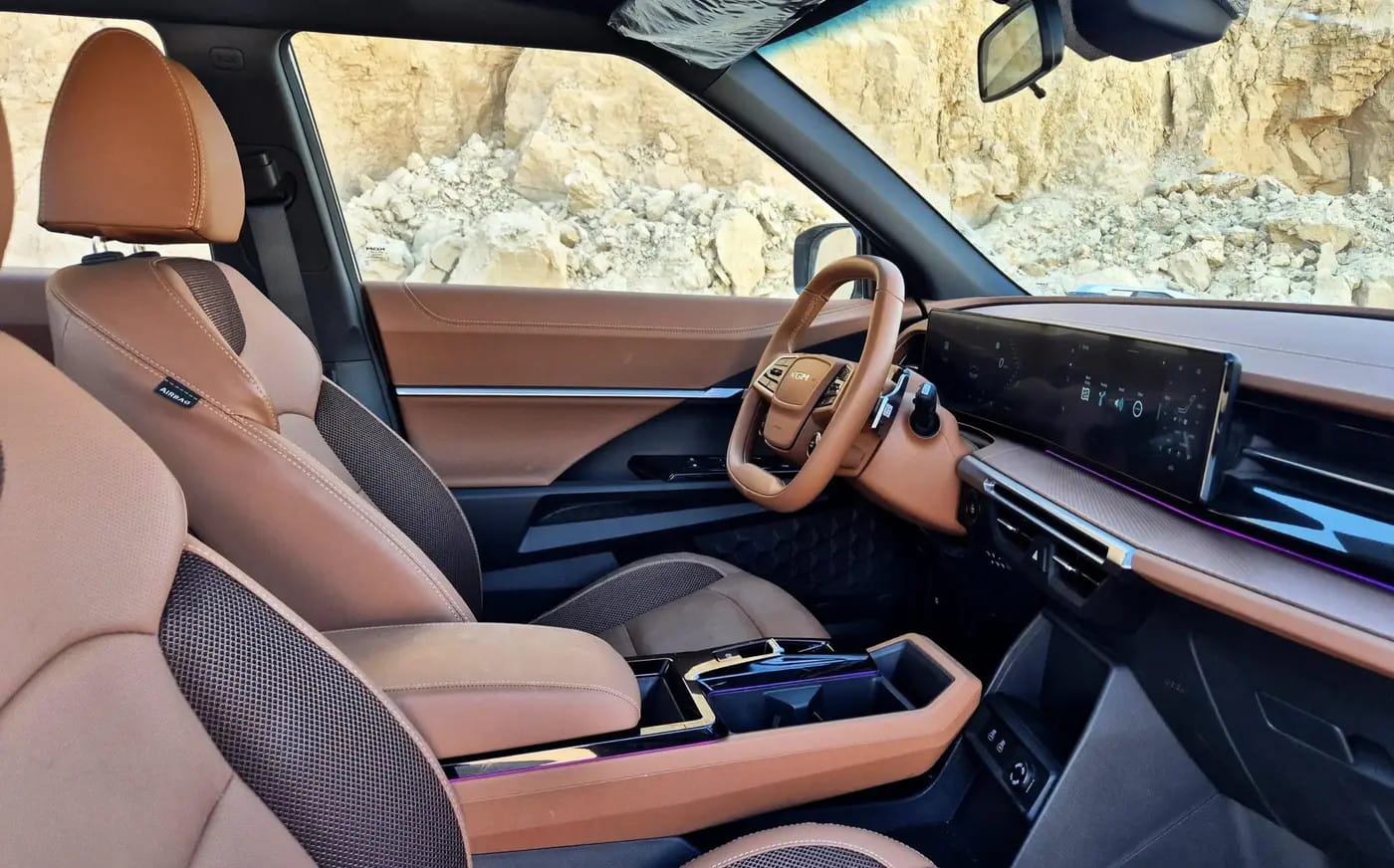
Inside, the electric Musso feels thoroughly modern, attractively designed, and generally finished with quality materials. Forget the rough-and-ready atmosphere of traditional one-ton pickups - this is a comfortable family vehicle.
The driving position is good, the seats are electrically adjustable, ventilated, and heated, and the equipment list is generous. Two 12.3-inch displays include a 360-degree camera system. Ambient lighting enhances nighttime driving, and the overall impression is that of a modern passenger vehicle rather than a pickup.
A closer look reveals some less impressive details. The infotainment screen is large but relatively slow to respond, and navigating the menus is not always intuitive. Climate-control adjustments require screen interaction, and even switching between Eco and Sport modes is done through the touchscreen. Instrument-cluster text is small and sometimes difficult to read, and smartphone connectivity is not wireless.
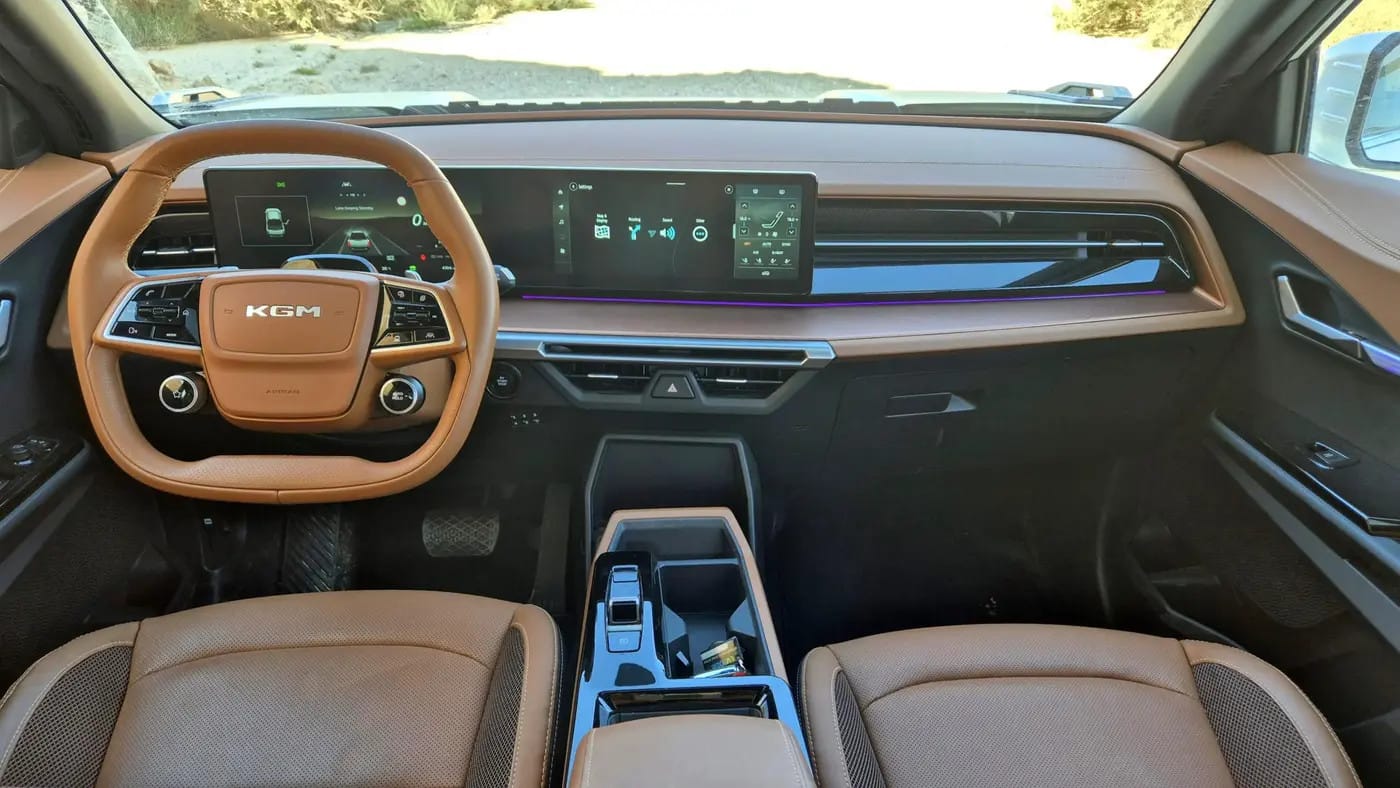
There are large storage compartments in the doors, but the center console offers limited storage space, and the largest compartment is difficult to access. There are quite a few physical buttons, but some feel unpleasant to operate, including the audio and cruise-control controls.
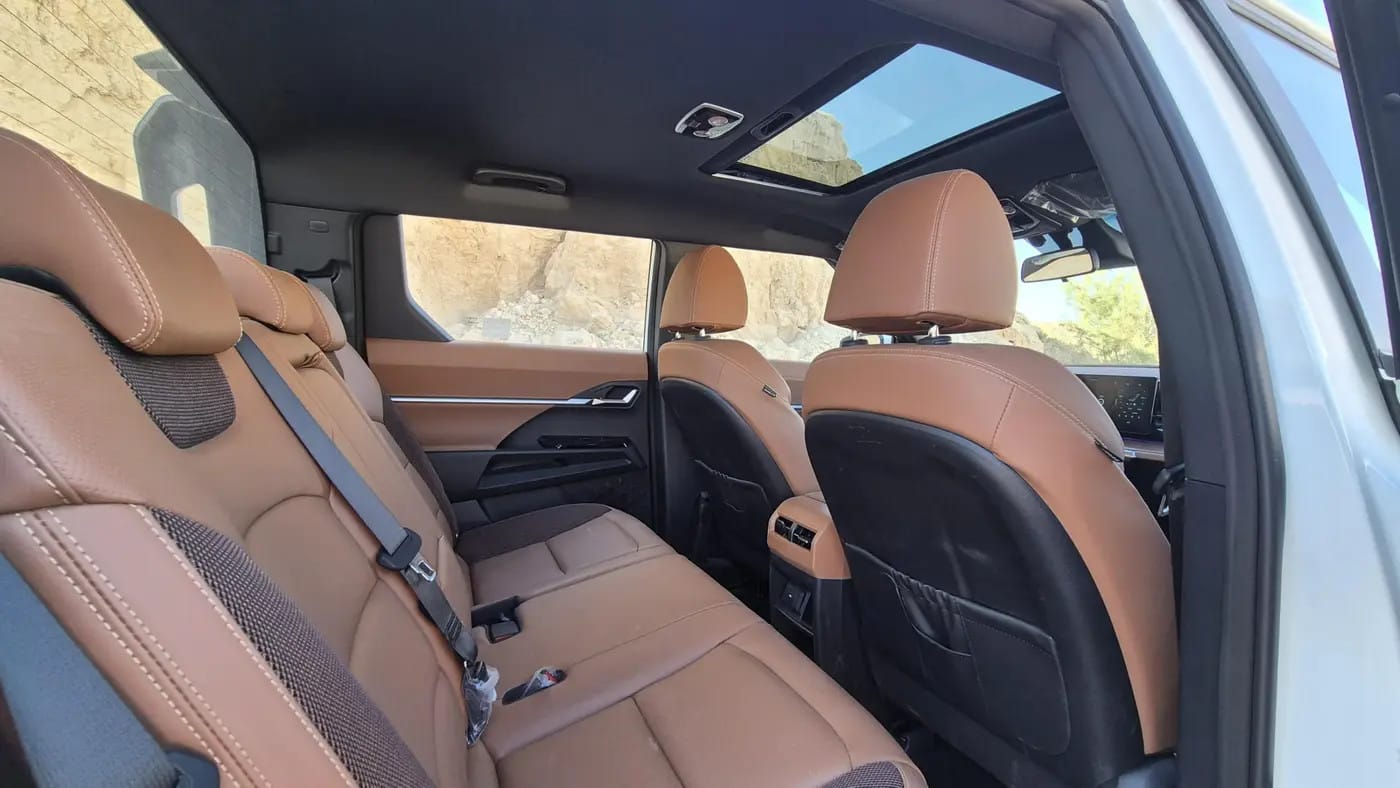
Despite these ergonomic shortcomings, the Musso delivers a sense of comfort and luxury absent from the Toyota and Isuzu competitors. Front-seat comfort is excellent, although the side mirrors somewhat restrict diagonal visibility. There is a sunroof, and the rear bench comfortably accommodates two adults, while a fifth passenger will need to squeeze in slightly. Rear seating is a bit low but still better than what is typical in a pickup. The reclining rear seatback is a major advantage in pickup-truck terms. Rear passengers also get air vents and two charging ports.
For the record, full-size American pickups offer far more interior space and luxury, but they belong to an entirely different category.
Cargo Bed
The Musso’s greatest strength lies behind its comfortable cabin: A versatile and highly practical cargo bed. Muddy bicycles, gardening equipment, a mobile workshop powered by 220 volts, firewood - everything fits.
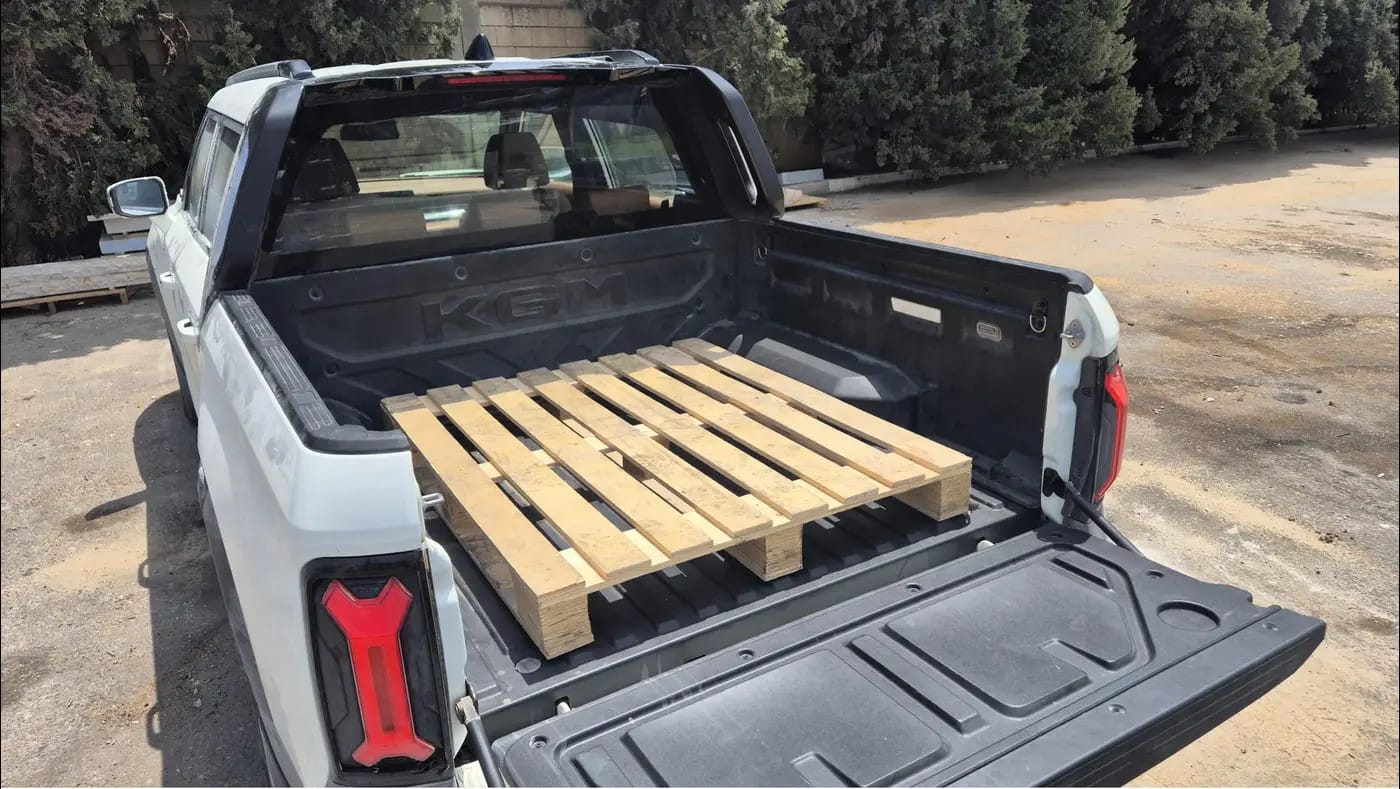
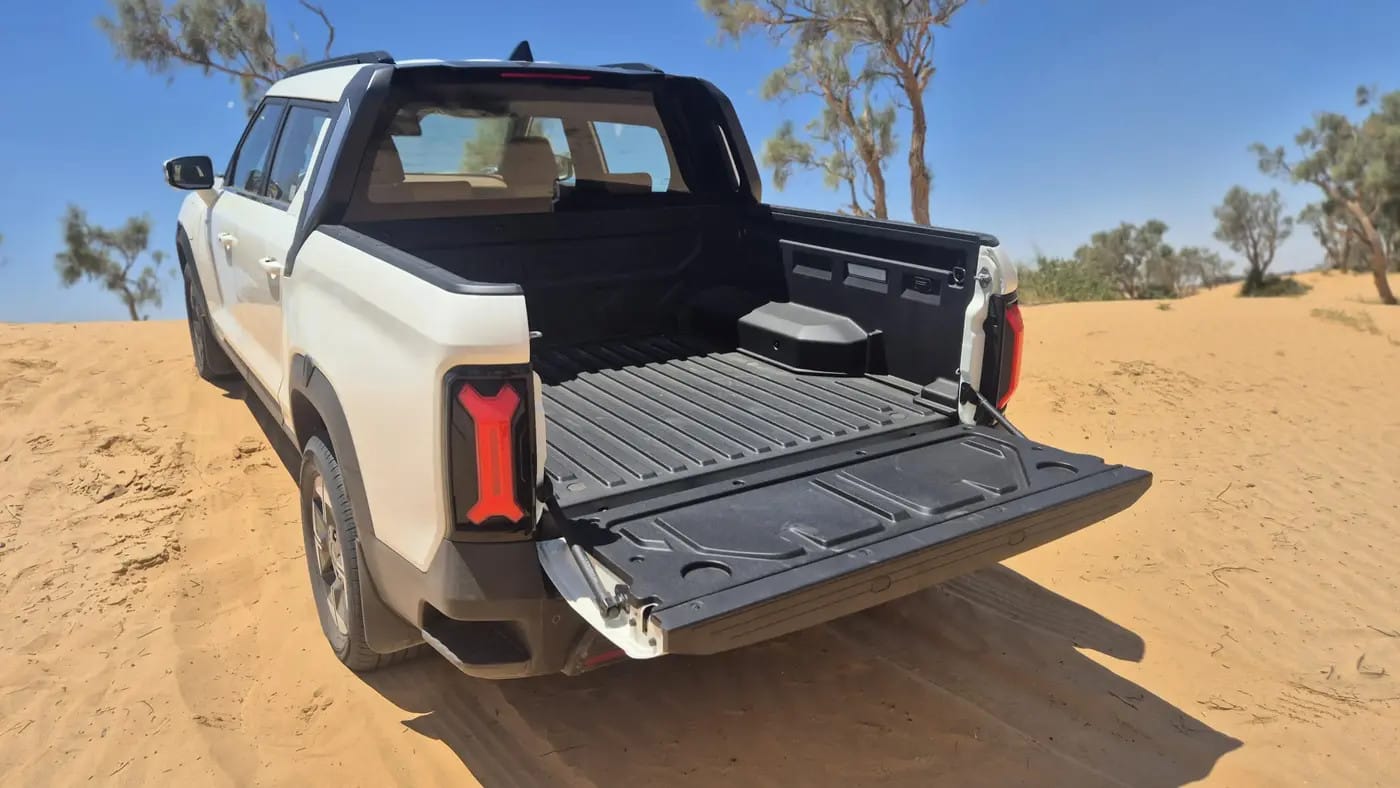
The bed measures 134.5 cm long, 151 cm wide, and 51 cm deep. It is 17 centimeters shorter than the Toyota’s bed, but it is deeper, and width is nearly identical. A standard wooden pallet fits easily between the wheel arches, and with the tailgate lowered, the usable floor length extends to a respectable 195 centimeters.
The main limitation is payload capacity. Total payload is only 730 kg (830 kg in the 2WD version), with KGM specifying a maximum of 500 kg in the cargo bed itself. That is less than rival pickups can carry, but still sufficient for many users.
The Musso is not intended for heavy construction contractors. It is better suited to recreational use, urban tradespeople, and light-duty institutional work. Those who can live with the payload limitation will appreciate the eight tie-down hooks located both at floor level and along the upper bed rails. Bed lighting is included, and integrated steps in the rear bumper make climbing into the bed easier.
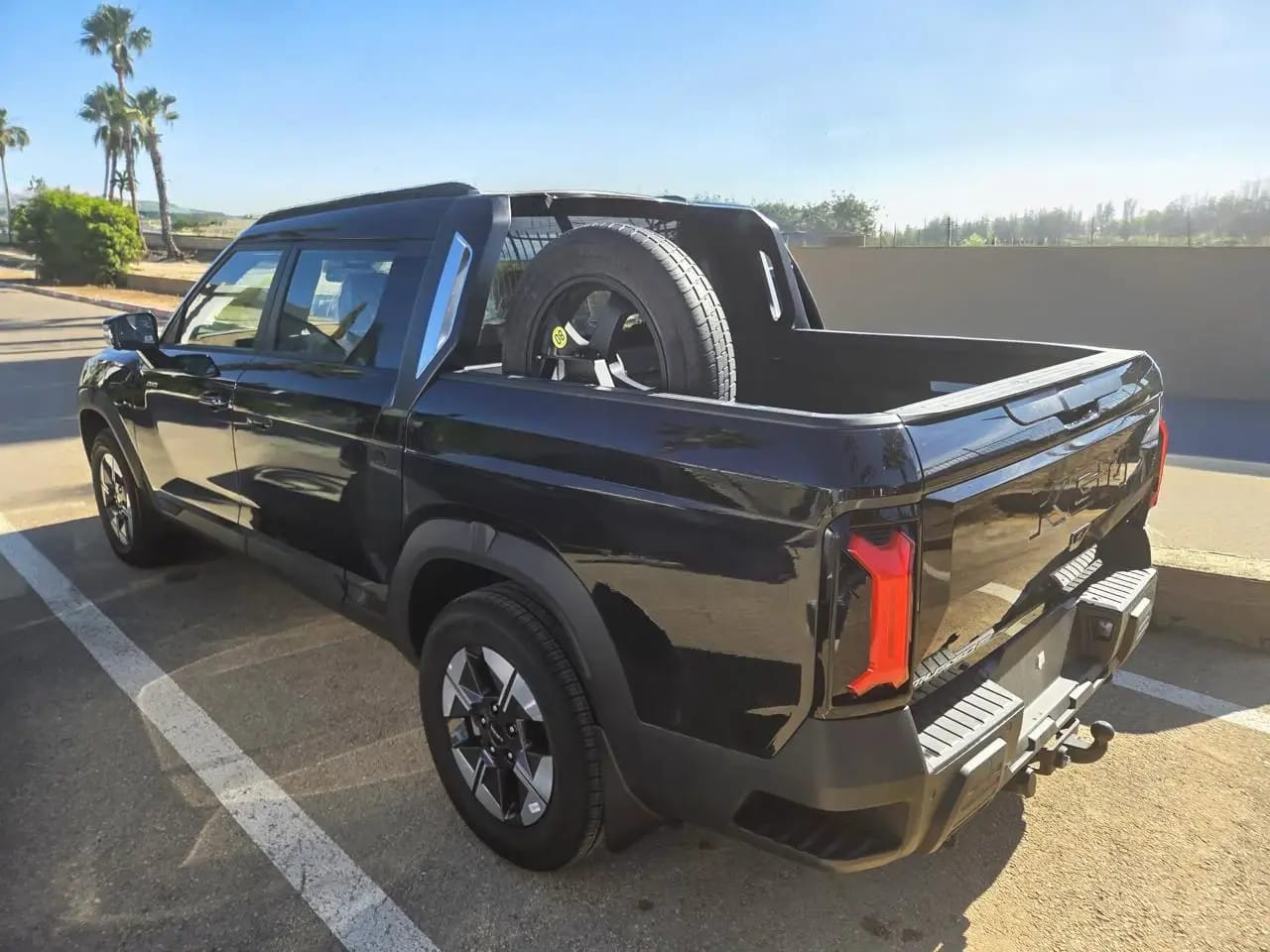
Customers will receive a spare wheel mounted vertically in the cargo bed above the left rear wheel arch, because the vehicle does not come with one as standard. It is not the most elegant solution, but it is far better than relying on luck - or a tire-repair kit. I suspect many owners will secure the spare flat in the bed most of the time. A retractable cover is available, and I expect a hard metal cover to be offered in the future for secure storage.
The Musso is also equipped with a mechanical load-leveling system designed to maintain bed height even under maximum load, although we did not test it.
Performance
The base version features a front-mounted electric motor producing 207 hp and 34.6 kg-m of torque, with a claimed range of 420 km and a 0–100 km/h time of 9.2 seconds.
The tested 4WD version uses two electric motors with a combined output of 356 hp and 63 kg-m of torque. Claimed range is 380 km, and the sprint to 100 km/h takes 8.0 seconds.
In today’s EV world, 8.0 seconds is no longer headline-grabbing, but in real-world driving the Musso’s performance proved entirely adequate. Most of our test was conducted in Eco mode, which was perfectly sufficient for everyday driving. Acceleration is strong enough, and highway cruising at 140 km/h is effortless, although wind noise becomes noticeable above 120 km/h.
The electric drivetrain delivers smooth, quiet operation that bears no comparison to diesel pickups, which feel like outdated agricultural machinery next to the Musso. In Sport mode, however, the vehicle comes alive. It launches with tire squeal and provides strong acceleration for overtaking on mountain roads.
We did not test towing (rated at 1,800 kg with brakes and 750 kg without) or a fully loaded cargo bed, but I have no doubt it would handle towing duties competently.
Range and Charging
KGM claims a combined driving range of 380 kilometers, but unsurprisingly, I did not achieve that figure.
During relaxed highway driving at up to 115 km/h, the Musso delivered around 320 kilometers of range. More spirited driving reduced that figure to around 300 km or even less. Energy consumption ranged between 19 and 25 kWh per 100 km, which is not particularly efficient.
This is hardly surprising given the vehicle’s unapologetically un-aerodynamic design and the turbulence created by the open cargo bed. I could live with the energy consumption, but when range drops to 300–320 km, range anxiety starts appearing after about 250 km, especially when you do not know where the next charger is, whether it works, or whether it is occupied.
Urban users with home charging will have no issue, but longer journeys require planning. Three levels of regenerative braking are available and can be adjusted conveniently via steering-wheel paddles.
The Musso uses an 80.6-kWh BYD battery employing advanced LFP technology. Charging power is rated at up to 120 kW, but I never saw more than 65 kW, even at 180-kW charging stations. Not a disaster - I simply had another cup of coffee.
A V2L outlet allows operation of 220-volt devices, from espresso machines to light welders, and can also charge mountain bikes. During light off-road driving, energy consumption nearly doubled and range dropped dramatically, but that is hardly the intended use case.
It raises an interesting question: Will KGM eventually offer a larger battery pack, or perhaps something even more interesting - a hybrid version using the Torres hybrid powertrain?
Ride and Handling
Ride comfort in the electric Musso is vastly superior to any conventional pickup and even better than many competing crossovers. The suspension is tuned for softness, the seats are supportive, the cabin is quiet, and the audio system performs well.
Urban bumps are absorbed effectively, helped by the relatively high-profile 245/60R17 tires. Highway comfort is excellent. The unusual steering wheel requires some acclimatization; personally, I could do without the flat upper section.
On winding roads, the Musso remains composed and balanced thanks to its long wheelbase and low center of gravity. The brakes perform well, although the transition between regenerative and friction braking is not entirely smooth.
Push harder and body roll becomes apparent. The front end begins to dive under braking, rough pavement can unsettle the chassis, and the Kumho tires start protesting. Then again, nobody is going to drive the Musso like a sports car. It is stable, comfortable, and refined at normal speeds. Ultimately, this is a practical family vehicle, not a track machine.
Safety systems include autonomous emergency braking, active lane-keeping assistance, adaptive cruise control, blind-spot monitoring, rear cross-traffic braking, and eight airbags.
One particularly irritating issue is the excessive number of safety warnings, which cannot be completely disabled. They are relentless.
Off-Road
On paper, the Musso’s specifications do not suggest serious off-road capability. The body is long and heavy, ground clearance is only 18 cm (compared, for example, with 22 cm in a Forester), and approach and departure angles are 20 and 24 degrees respectively.
Nevertheless, I wanted to see how it handled gravel roads and minor terrain obstacles.
The good news is that power delivery from the dual-motor setup is excellent and perfectly linear. There is always more than enough power available, yet throttle modulation remains easy and precise.
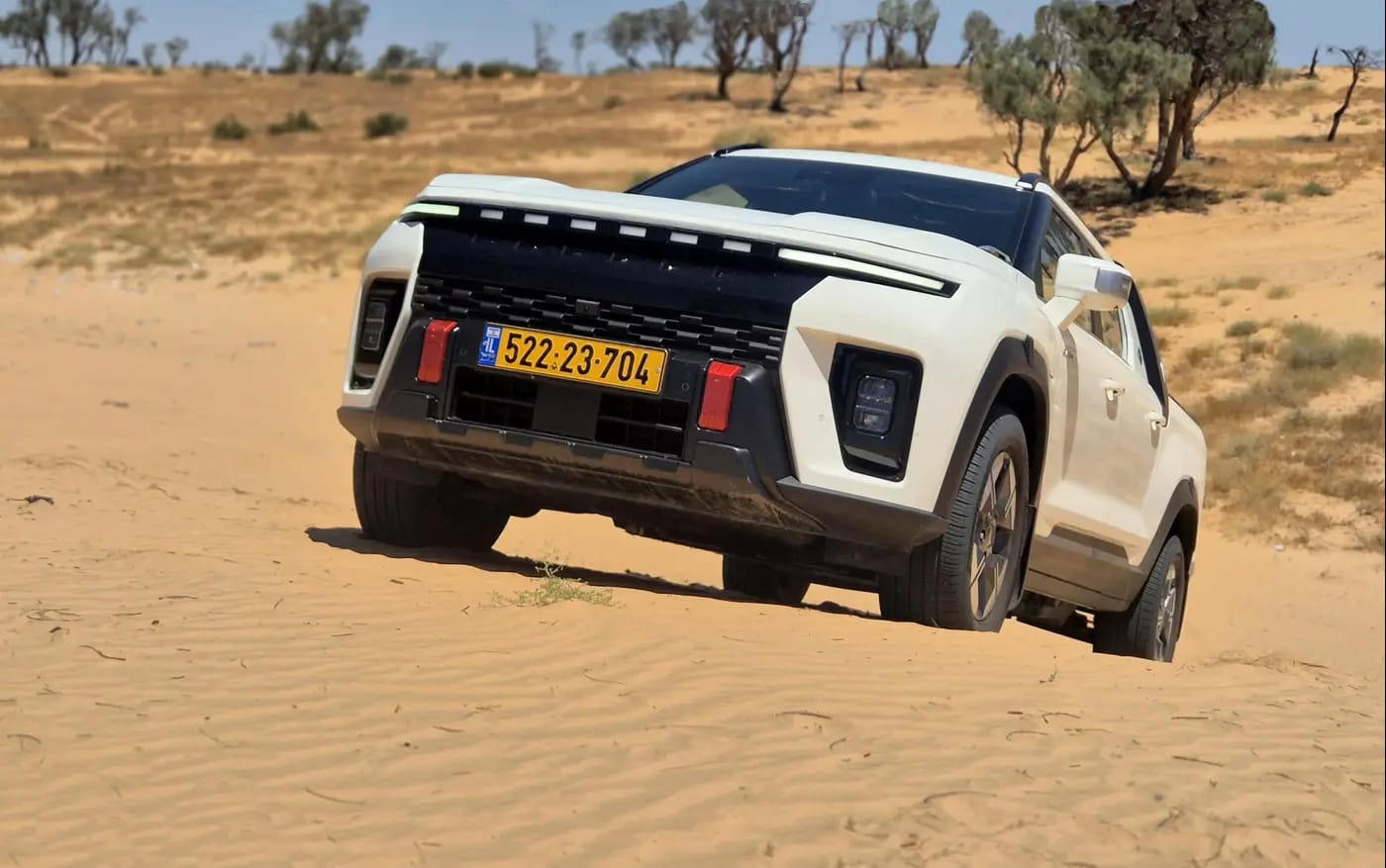
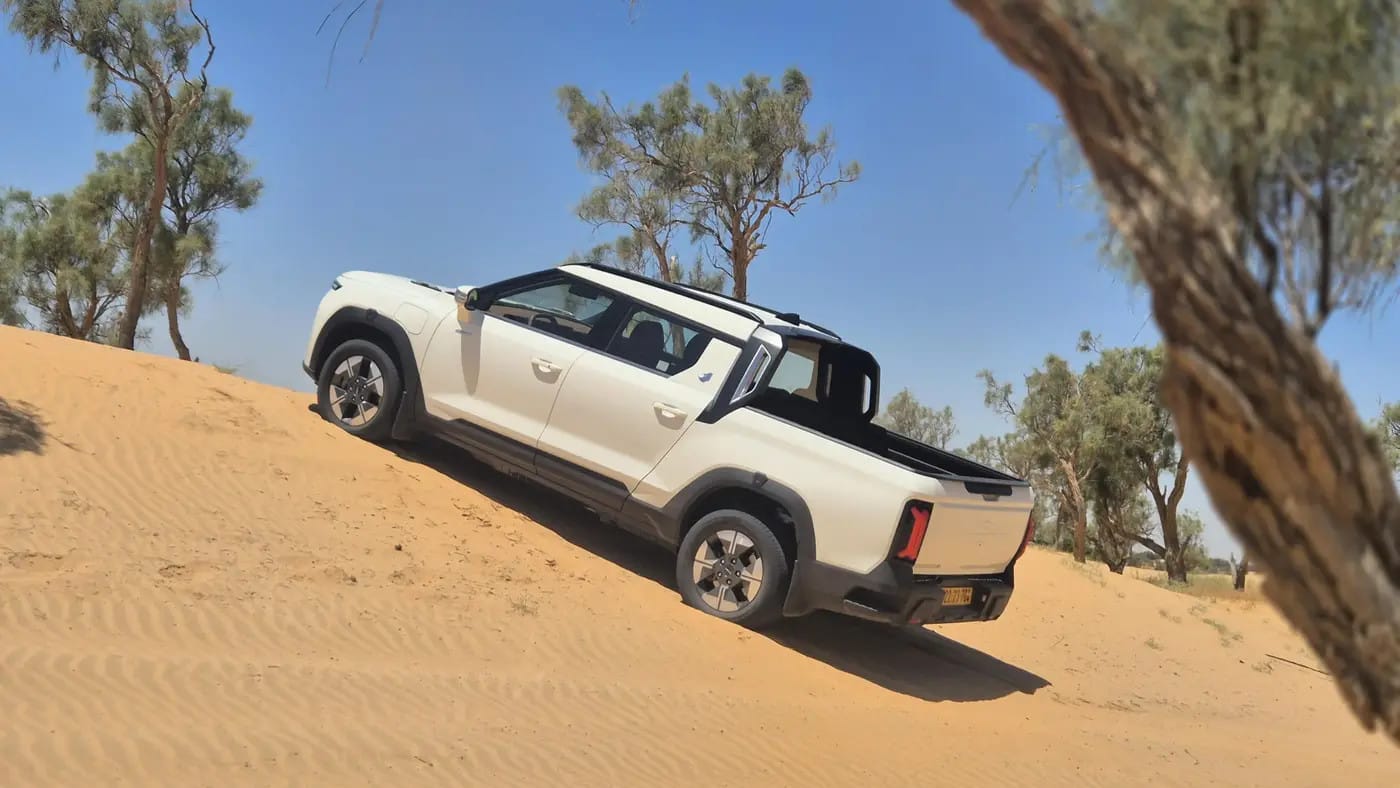
At one point I got carried away and ventured into the deep dunes of Nahal Sekher. The sand was hot and soft, but the Musso floated across the dunes without even lowering tire pressure. Disable traction control, select Sport mode, and off you go.
The problem is that the excitement can turn into disaster in half a second. One small mistake in line choice, a slight loss of momentum on a dune crest, and the vehicle ends up high-centered - with 2.4 tons of weight and no recovery hooks suitable for extraction. I quickly realized the dune adventure could end badly and made my way back out.
I continued exploring the trails of the Arava region. On such roads the Musso is enjoyable, but the low ground clearance means you can easily strike the underbody on a ridge or rock. Articulation challenges the traction-control system, and there is little point fighting the laws of physics.
In short, the Musso EV offers meaningful off-road advantages over a regular front-wheel-drive crossover, but it is not an off-road vehicle. Taking a surfboard to the beach or heading out for a family picnic? Absolutely.
Bottom Line
We cannot recommend the electric Musso to anyone seeking an expedition pickup or a long-range EV.
As a work truck, it can suit users who do not require a one-ton payload and who can live with its range limitations. But for buyers looking for a comfortable family vehicle that can also carry cargo in an open bed, there is currently no real alternative.
The Musso’s electric drivetrain is not among the best available, but road performance is entirely satisfactory, and its ride comfort and refinement are unmatched in the pickup segment - perhaps with the exception of the much larger and considerably more expensive Maxus eTerron 9.
The front-wheel-drive version may be sufficient for many buyers, but perhaps it is worth spending the additional NIS 20,000 for the extra power and capability of the AWD version.
We would be happy to see this pickup roaming city streets and back-country trails - and perhaps inspiring competing manufacturers to bring similar vehicles to market, making this important category more affordable.
Technical Specifications: KGM Musso EV 4WD
Powertrain: Dual electric motors
Combined output: 356 hp
Torque: 63 kg-m
Drivetrain: All-Wheel Drive (AWD)
Electric System
Battery capacity (kWh): 80.6
AC charging (kW): 11
DC fast charging (kW): 120
Performance
0–100 km/h (sec): 8.0
Top speed (km/h): 177
Combined range (manufacturer): 380 km
Combined range (test): 320 km
Dimensions
Length: 5.16 m
Width: 1.92 m
Height: 1.75 m
Wheelbase: 3.15 m
Curb weight: 2,360 kg
Ground clearance: 18.1 cm
Approach / departure angle: 20.2° / 24.3°
Cargo-bed dimensions (L/W/D): 1.345 / 1.515 / 0.51 m
Payload capacity: 730 kg
Towing capacity (without / with brakes): 750 / 1,800 kg
Safety
European crash-test rating: Not yet tested
Active safety: Autonomous emergency braking (forward and reverse), adaptive cruise control, lane-keeping assist, blind-spot monitoring, automatic high beams
Warranty
7 years or 150,000 km for the vehicle
10 years or 1 million km for the battery