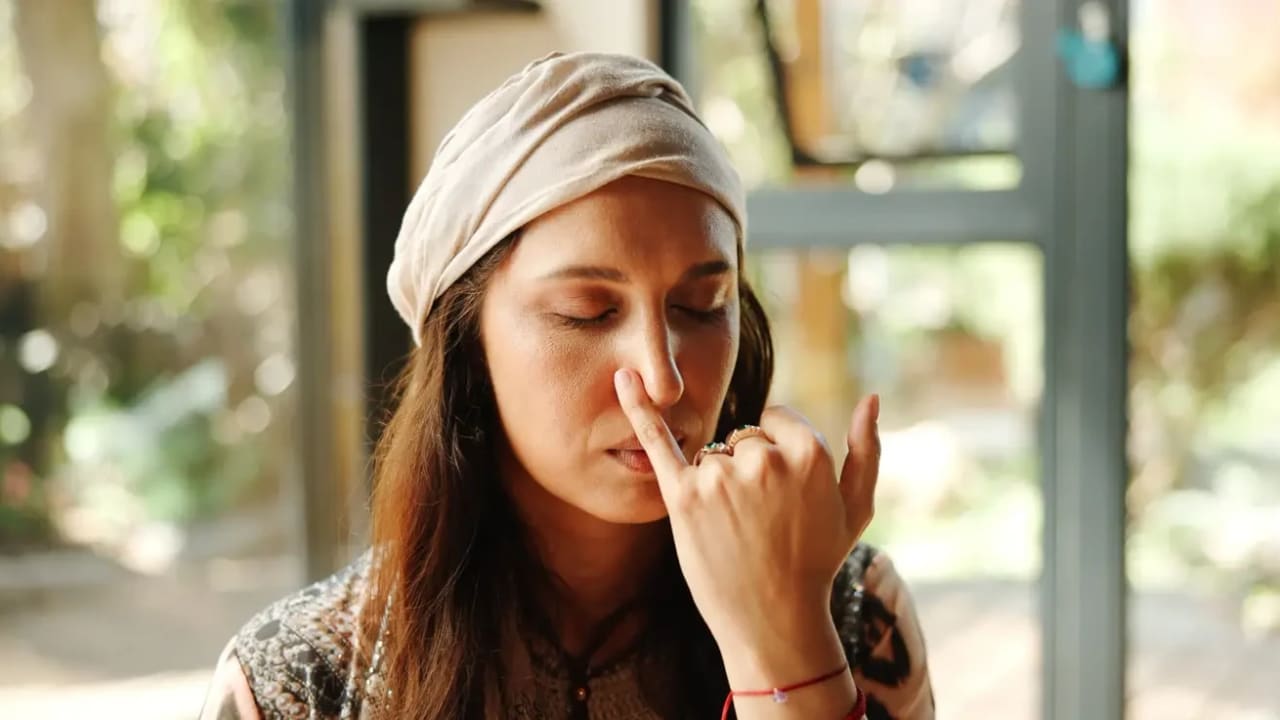
Between the moment we emerge into the world and the moment we part from it, there is one action that accompanies us without pause: Breathing. The first action we take as babies is a deep inhalation, and our last action is an exhalation.
Recently I read the fascinating book by James Nestor, "Breath," a book that made me understand just how much the way we breathe affects every aspect of our lives – from concentration and sleep, through energy levels, to our immune system and overall health.
Why don’t we breathe well?
Nestor explains that throughout evolution our faces have become narrower and our jaws smaller – among other things due to the transition to processed and soft food that does not require significant chewing. This change gradually blocked our airways.
The result: We breathe through the mouth, breathe too quickly, and suffer from a long list of symptoms and problems – sleep disorders, high blood pressure, chronic fatigue, dental problems, canker sores, mouth ulcers, and waking up in the morning with a feeling of exhaustion instead of freshness.
The good news is that it can be fixed. In this article we will dive deep into Nestor’s tips, and discover that they are not only backed by current scientific research – but also take us thousands of years back, to the wisdom of Judaism and Maimonides.
Judaism saw breathing as the essence of life since the dawn of history. Maimonides, one of the greatest physicians and thinkers of the Jewish people, emphasized in his writings the importance of air quality and breathing for human health.
He argued that a change in the air we breathe is the primary cause of a change in health status, and wrote: "A person should strive that the air he breathes be pure and clean."

6 steps to proper breathing
1. Close your mouth at night
Make sure you breathe only through the nose – both during the day and at night. The nose is the body’s air conditioner and filter.
According to Nestor, people who sleep with an open mouth suffer from many health problems, and this is based both on scientific studies and on his personal experience.
If nasal breathing is challenging for you due to a blocked nose, it is important to understand: No one is born with a blocked nose. During my years in Maimonides medicine I met dozens of people who chose to change the diet and habits that caused the problem – and the nose reopened.
Most people who suffer from a blocked nose and chronic runny nose report that during vacations they almost do not suffer from the phenomenon, or experience significant relief. The reason is simple: The mind calms down, the diet changes slightly, and the environment is less toxic.
2. Practice the 5.5 rhythm
Three times a day – morning, noon and evening:
Inhale for 5.5 seconds, and exhale for 5.5 seconds.
This is the optimal rhythm for calming, balancing the nervous system and reducing stress.
3. Breathe more slowly
Do not try to take giant breaths. Small, quiet and slow breathing is much more effective for oxygen absorption. When we breathe too quickly (hyperventilation), we expel too much carbon dioxide. This causes the blood vessels to constrict, and the oxygen to "get stuck" in the blood instead of reaching the brain and muscles.
4. Use the diaphragm
Proper breathing moves the belly – not the shoulders and not the upper chest. Deep diaphragmatic breathing enables efficient oxygenation, calmness and inner stability.
5. The night test
Try gentle mouth taping for a few nights, to ensure nasal breathing during sleep.
Many are surprised to discover a sharp increase in energy levels upon waking in the morning.
6. Chew firmly
Add to your diet foods that require significant chewing, such as hard vegetables, nuts, seeds. Chewing strengthens the jaw structure and naturally opens the airways.
Additional practice: Alternate nostril breathing
A technique from the world of yoga that balances the two hemispheres of the brain:
• Close the right nostril, inhale through the left
• Close the left nostril, exhale through the right
• Inhale through the right, exhale through the left
And finally – gratitude. Every morning take a minute to give thanks for the breath. After all, it is the soul within you.