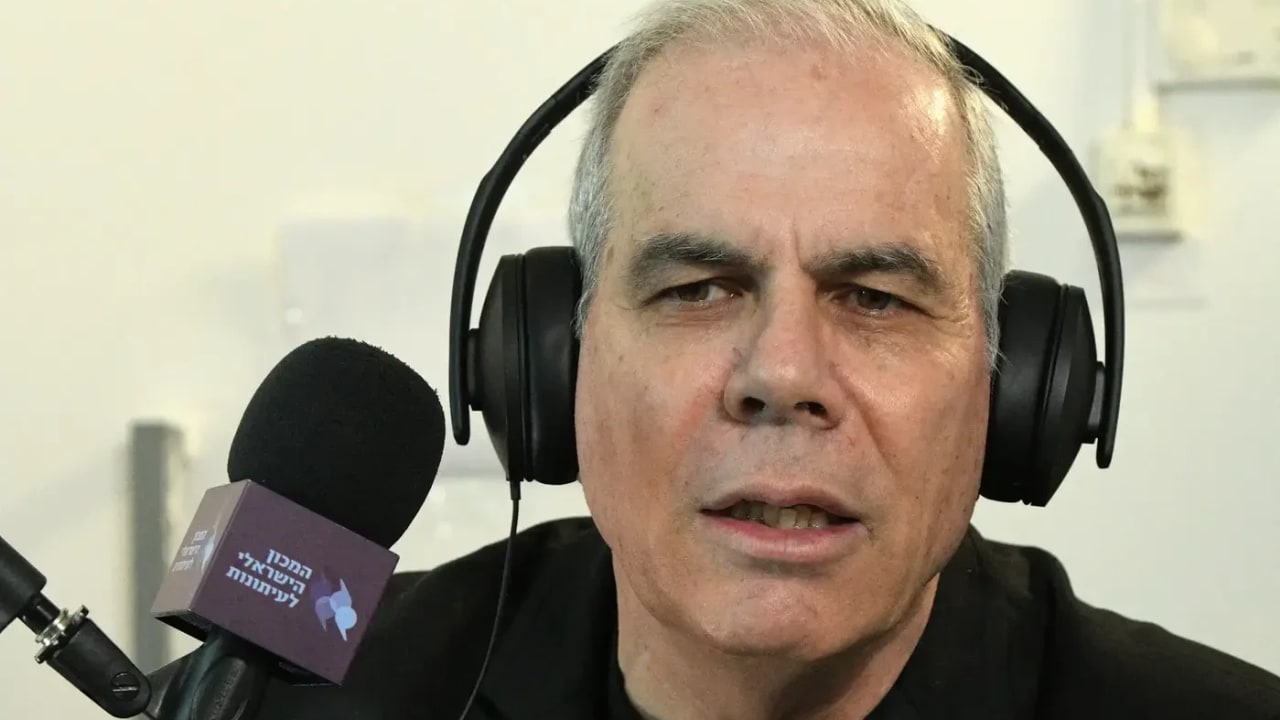
The veteran journalist and commentator Oren Nahari revealed on Roni Koben’s program “Meeting” on Channel 11 that he has been diagnosed with ALS, a severe degenerative neurological disease. Nahari, one of the most prominent voices in news broadcasting in Israel, chose to share his struggle with the disease with the public, thereby raising awareness once again of one of the most difficult and challenging diseases in the world of medicine.
Nahari’s diagnosis sparked many reactions of support and identification from colleagues, media professionals and the general public. At the same time, it once again raised the question of how common the disease is in Israel and what is currently known about it.
According to Efrat Carmi, CEO of the IsrALS association, which works to research ALS and support patients and their families, Nahari’s diagnosis also generated great emotion.
“I was sorry to hear about Oren’s ALS diagnosis and was moved by his courage and willingness to share the diagnosis of the disease and his coping with it with the public”, said Carmi. “Although it was discovered 150 years ago, unfortunately ALS is still an incurable disease. The association invests many resources in advancing research aimed at developing a cure for the disease”.
How many Israelis are diagnosed with the disease each year
According to data from the IsrALS association, in 2025, 115 new patients were diagnosed with ALS in Israel.
The data indicate that the disease affects slightly more men:
• 55 percent of those diagnosed are men
• 45 percent women
The youngest patient diagnosed in the past year was 35 years old, but most patients are diagnosed after the age of 60.
In total, about 600 ALS patients currently live in Israel, while each year about 120 new patients are diagnosed and a similar number of patients die from the disease.
The IsrALS association accompanies patients and their families from the moment of diagnosis and provides medical, technological and social assistance throughout coping with the disease.
A disease discovered more than 150 years ago
ALS, or by its full name amyotrophic lateral sclerosis, was first described about 150 years ago by the French neurologist Jean Martin Charcot.
It is a degenerative disease that affects the motor nerve cells, the cells responsible for transmitting commands from the brain to the muscles of the body.
As the disease progresses, these nerve cells are damaged and degenerate, which gradually leads to paralysis of the muscles. At first, muscle weakness, difficulty in movement or speech may appear, and later the disease may impair the ability to walk, speak, eat and breathe.
The senses and thinking remain normal
One of the unique characteristics of ALS is that the disease mainly affects the motor system but usually does not affect the sensory system.
That is, despite the gradual paralysis, patients continue to see, hear, smell and feel touch normally.
Cognitive abilities also usually remain intact, and therefore patients are fully aware of their condition. This situation sometimes creates significant emotional difficulty, since the person remains clear-minded and aware while their physical ability gradually declines.
What causes the disease
The exact causes of ALS are still unknown, and this is one of the greatest challenges in research. However, scientists have proposed several possible mechanisms that may be related to the development of the disease.
Among the factors being studied are exposure to environmental toxins, metals or chemicals, increased activity of chemical substances in the brain such as glutamate, as well as a deficiency of factors that support the survival of nerve cells.
In five to ten percent of the cases a genetic influence has also been found, meaning a hereditary connection.
Despite its severity, ALS is not generally considered a disease that causes direct pain. However, as the disease progresses and the ability to move declines, pain may appear due to lack of movement, unnatural body postures and muscle spasms.

The respiratory challenge
One of the most difficult stages in coping with ALS is the damage to the respiratory muscles. In advanced stages of the disease, patients have difficulty breathing on their own.
At this stage, patients face a complex decision: Whether to connect to a ventilator that will allow life extension, or to avoid it.
In Israel more than half of the patients choose to connect to a ventilator, a rate much higher compared with other Western countries.
As the disease progresses, the muscles responsible for speech and hand movements also weaken. To deal with this challenge, advanced technologies have been developed that allow patients to continue communicating with their surroundings.
Among the existing solutions are computer systems operated by eye movements, special communication boards and software that translates tiny movements into letters and words.
A new innovative Israeli development even allows patients to communicate using eye movements alone.
The struggle to find a cure
Despite more than one hundred and fifty years of research, ALS still has no drug that cures it. However, there are medications that slow the rate of disease progression.
“There are currently two FDA-approved drugs given to patients with the disease: Riluzole since 1995 and edaravone – from 2017, which slightly slow the rate of disease progression”, Dr. Shahar Shelly, chairman of the Israeli Society for Neuromuscular Medicine, which operates under the Israeli Neurological Association, told Walla Health.
According to him, “The most significant breakthrough came in 2023 with the approval of tofersen (Qalsody), an antisense oligonucleotide therapy intended for patients with a mutation in the SOD1 gene, found in about 2% of sporadic cases and about 15% of familial ones.
“In Israel, tofersen is currently given as compassionate treatment at Ichilov only and has not yet been included in the health basket. At the same time, advanced research in the fields of gene therapy, monoclonal antibodies and stem cells offers hope for future generations of patients”.
Dr. Shelly also notes that “Israel suffers from a severe shortage of neuromuscular specialists, the neurological field responsible for diagnosing and treating ALS. Today there are 20 physicians for a population of more than 9 million people. Dedicated ALS clinics exist only in large centers such as Ichilov, Sheba, Rambam, Beilinson and Hadassah and are not accessible to patients from the periphery. The report of the committee examining the neurology profession of the Ministry of Health from 2022 identified a shortage of about 300 neurologists in Israel relative to the need and recommended defining neurology as a profession in distress. The shortage is reflected in diagnostic delays, severe geographical gaps and damage to the ability to recruit Israeli patients for international clinical trials”.
The struggle to find a cure for the disease is now also gaining a public face following the diagnosis of Oren Nahari. Another public figure who revealed his illness in the past two years – Moshe Nussbaum, the veteran police affairs correspondent of Channel 12.
Nahari’s and Nussbaum’s personal exposure may raise awareness of the difficult disease, strengthen support for patients and their families and give an additional boost to research aimed at one day finding a cure for the disease.