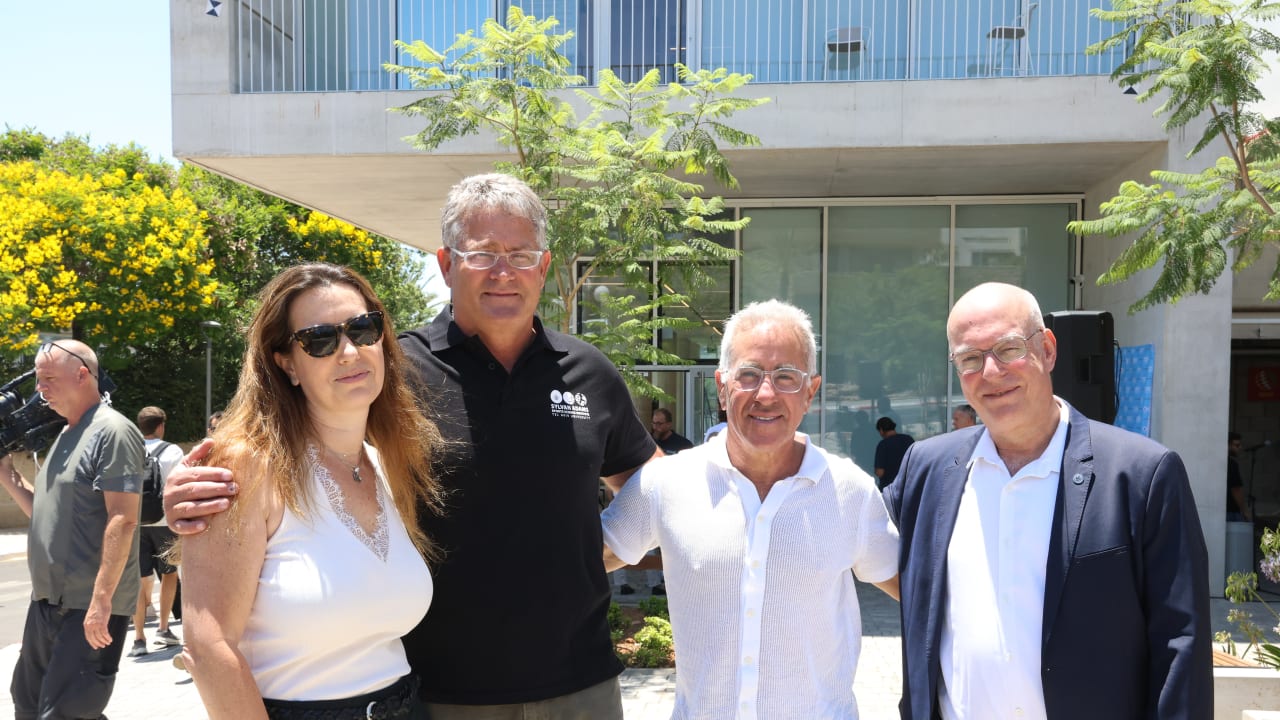
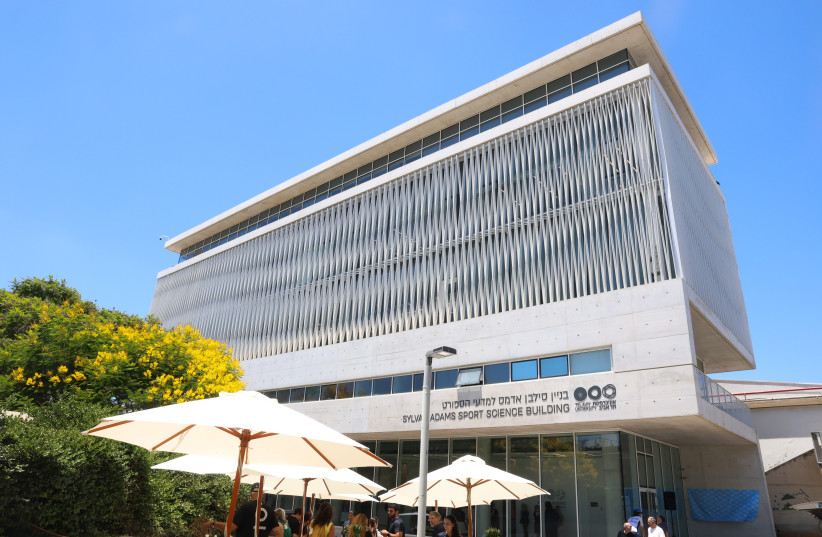
“Sports is a language—everybody speaks it,” says Canadian-Israeli philanthropist Sylvan Adams. “It enables us to show the true and best face of Israel.” In that context, the Sylvan Adams Sport Science Institute, which opened the doors to its new building this past July, will translate Israeli athletes' achievements into measurable, quantifiable results to improve their performance and truly show Israel’s best face in the world of competitive sports. The Institute joins the Sylvan Adams Sports Center, which opened in 2022 and includes a gym, swimming pools, and training grounds for TAU sports teams.
The Sport Science Institute brings together researchers, physicians, engineers, physiologists, data scientists, and AI experts who transform scientific discoveries into practical tools to enhance athletic performance. Established through a $35 million philanthropic gift from Adams, the Institute positions Tel Aviv University at the forefront of sports science research while strengthening Israel's competitive edge on the international stage.
Adams, an amateur cycling champion and co-owner of the Israeli Cycling Academy professional cycling team, is deeply involved in the Institute's work. “He is very different than other donors, who often just donate their name to a building,” says Professor Irad Ben-Gal, head of the Institute. “Sylvan’s professional teams take part in the main decisions of the Institute.”
Ben-Gal, who, in addition to serving as the head of the Institute, is a professor of engineering at Tel Aviv University, explains its goals, “The vision is to, on the one hand, promote the scientific level of sport, and, on the other hand, actually to help Israel win more Olympic medals.” Researchers at the Institute conduct sports-related research in a variety of disciplines, including AI, data science, bioinformatics, body composition, physiology, and applied sciences.
Professor Israel Halperin, head of the Exercise Physiology Program and a researcher at the Sylvan Adams Sport Science Institute, says the Institute focuses on three areas: sports-related research, athlete testing and training, and educational workshops and lectures for physical therapists, coaches, and other professionals in the field.
State-of-the-art training and testing facilities
The Institute houses some of the world’s most advanced sports science facilities, including an advanced scientific gym, motion analysis systems with high-speed video technology, a swimming flume, comprehensive fitness assessment facilities, and a climate chamber capable of recreating the temperature and humidity conditions athletes encounter at competitions around the world. A hypoxic ‘hotel,’ where athletes live for a few days at a time, can even simulate training at altitudes of up to 5,000 meters, allowing researchers to study and enhance performance under extreme conditions. Training at high altitudes, such as those simulated in the hypoxic hotel, affects blood volume and the levels of certain markers that enhance aerobic capacity, which can improve athletic performance.
The Institute’s gym includes an advanced treadmill with force sensors, capable of reaching extreme speeds suited to cycling tests. “We can bring the cycling team and let them do various physiological tests on a treadmill as they ride, while we’re collecting their oxygen consumption data,” explains Halperin.
He adds that the swimming flume uses a motor that pushes water backward, forcing swimmers to swim against resistance. This enables researchers to inspect swimmers' technique and provide immediate feedback to improve efficiency.
Athletes from all sports circulate through the Institute each week for testing and training, and Ben-Gal says it will add athletes from additional disciplines in the near future. “Part of it,” he explains, “is a new collaboration with the Israeli Olympic Committee. Originally, it was primarily cyclists, runners, and swimmers, but nowadays we see a lot of basketball and soccer players, judoka and jiu-jitsu practitioners.”
Crossroads of sports and science
Halperin says the Institute enables unique interactions between athletes and scientists, bringing together people who otherwise wouldn't necessarily meet daily. That, in turn, leads to many interesting conversations and questions that can be answered using equipment or expertise, combining knowledge, and responding in a more sophisticated, enriched way. That's a huge benefit of us being physically in the same place.”
In addition to monitoring performance, researchers at the Institute also examine how athletes monitor their performance subjectively. “I am interested in how people align the effort that they're exerting during exercise and how they're able to map it subjectively,” says Halperin. “For example, on a scale that ranges from zero to 10, how much effort do you think you're exerting right now?
“We explore people's ability to monitor their own effort exertion during exercise, and we see that they're doing a very good job at finding how much effort they're actually exerting, whether it's physiologically or performance-wise. We then use that to tailor specific training interventions and programs to create the training environment that is a bit more adapted to one's ever-changing capacity.”
Ben-Gal says that the Institute will soon become a testing ground for new sports technologies that can improve athletic performance. “We have heard from some high-tech companies working in sports that are very much interested in testing and validating their technologies. We have someone testing a new type of shoe. We have people that are using cameras with AI to measure sports games. We have another data science and AI team that is working with soccer. We believe that it will be a very natural background to combine technology, sports, and science.”
While a major emphasis of the Institute is on elite athletes, it is dedicated to all athletic endeavors in Israel. Halperin shares, “The Institute aims to support athletes training for the Olympics or other major competitions worldwide with all available tools, and we're doing as much as we can to enhance Israeli sports at all levels,” adding that high school students visit weekly as part of their physical education program. “They come here with their schools, and we provide them with lectures, we show them the testing environment, and we teach them about strength and conditioning. In that sense, we’re also supporting the future Israeli athlete because we're expanding and enriching their understanding and exposing them at a young age.”
Written in collaboration with Tel Aviv University