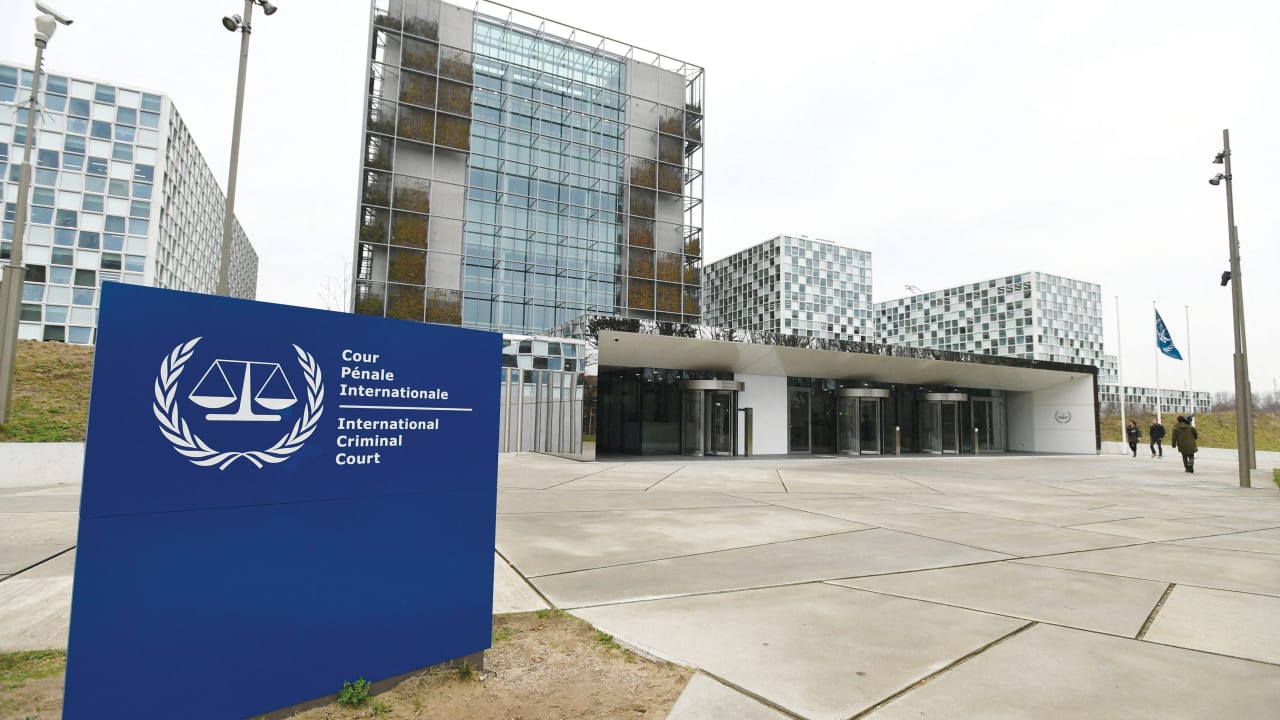
Monday night’s International Criminal Court Appeals Chamber ruling to keep in place the war crimes warrants against Prime Minister Benjamin Netanyahu and former defense minister Yoav Gallant was a major blow to Israel.
But it did not end the 16-year-long ICC legal war.
What battles did Israel lose, and what cards does it have left to play before a more permanent war crimes controversy disaster?
There are three battles it may have lost and a fourth that does not look promising from the Israeli perspective.
The first battle was Israel’s hope that it would get some amount of legal sympathy based on Hamas’s October 7, 2023 invasion and massacre of around 1,200 Israelis, mostly civilians. It got no such sympathy.
Whether or not the majority of three ICC judges who ruled against Israel have some sympathy for the Jewish state in the back of their minds, as it appears the two dissenting judges did, when it came to the legal issues, they saw the saga as irrelevant.

October 7 deemed legally irrelevent by ICC judges
As far as they were concerned, the only issue that mattered was whether the accusations of war crimes made against Israel regarding the 2014, 2018, and 2021 conflicts were similar to those made post-October 7. The 3-2 majority found that the actions were similar enough to make Israel’s defense of the October 7 invasion legally irrelevant.
Put differently, Hamas’s war crimes against Israel on October 7 would have come into play to indict three top Hamas leaders whom the ICC probed but cannot be used by Jerusalem as a defense for its counterattack. This is one of the main reality disconnects of the ICC and Western critics.
It was a reasonable goal for Israel to want to topple Hamas after October 7 to avoid such a future recurrence.
Hamas refused to surrender, and its military numbered between 25,000 and 40,000, depending on different IDF estimates at different points in the war. That could have meant legitimately killing 25,000-40,000 Hamas troops if they refused to surrender and tried to maintain control of Gaza.
Add in that Hamas systematically used human shields – something that the ICC still does not seem to have fully absorbed to date, even if there have been small mentions here and there – and that the 25,000-40,000 number grows.
At some point, a reasonable observer could differ with Israel on a variety of specific attacks and whether the IDF accepted too much collateral harm to civilians. For example, in an operation aimed at killing Hamas chief Mohammed Deif, Israel might have allowed collateral harm to as many as 70 Palestinians – some of them who were Hamas fighters, many possibly civilians.
But that is a much narrower argument about specific attacks than a general evaluation that Israel deliberately targeted civilians.
So the ICC has ignored this issue as a defense to date.
Next, Israel seems to have lost the defense of ending the war.
Some hoped that once Israel ended the war in October, the ICC would finally back off.
The latest decision is a resounding rejection of that view, not really taking the issue into account at all.
Another Israeli hope was that sanctions by US President Donald Trump against the ICC would have a cumulative effect and that the ICC Appeals Chamber would use Israel’s appeal as an off-ramp to get out of them.
This also did not transpire.
Those are the lost battles.
Israel still has an open battle about whether the ICC judges should disqualify suspended ICC chief prosecutor Karim Khan and then whether that disqualification should lead to tossing the arrest warrants and the cases against Netanyahu and Gallant.
The ICC Appeals Chamber did not rule on that issue or on some additional jurisdictional issues.
But it seems unlikely that the ICC would issue this separate decision against Israel if it meant to toss the cases later based on the disqualification argument.
In contrast, the jurisdictional issues could still be real defenses.
It is strange that the ICC issued a separate decision on one of three major issues, rather than waiting to decide all of them at once.
That could mean a hint that the other jurisdictional issues may have more of a chance.
On the other hand, it could simply be that the ICC did not want to issue hundreds of pages of decisions in one day, and the one decision it did issue already covered dozens of pages. It could also be that the ICC judges have a variety of complex negotiations going on among them about how their votes will come out, and part of the deal was to first issue this 3-2 split decision, followed by a different mix of votes in later decisions.
Whatever the reason that the ICC issued the separate ruling, it was a big hit for Israel after an unusual interim win in April 2025 when the Appeals Chamber said that the ICC’s lower court had not sufficiently analyzed Israel’s defenses.
Netanyahu may once again want to consider repeated legal advice dating back to mid-2024 that he establish an independent probe of his and Gallant’s war-making decisions, just as he did with the Turkel Commission following the 2008-2009 Gaza conflict.
Such a decision could potentially freeze the ICC in its tracks, as it would show that Israel is ready to probe Netanyahu and Gallant and not only IDF soldiers. Absent that, Israel has not yet lost the legal war with the ICC, but the number of large defeats continues to add up.