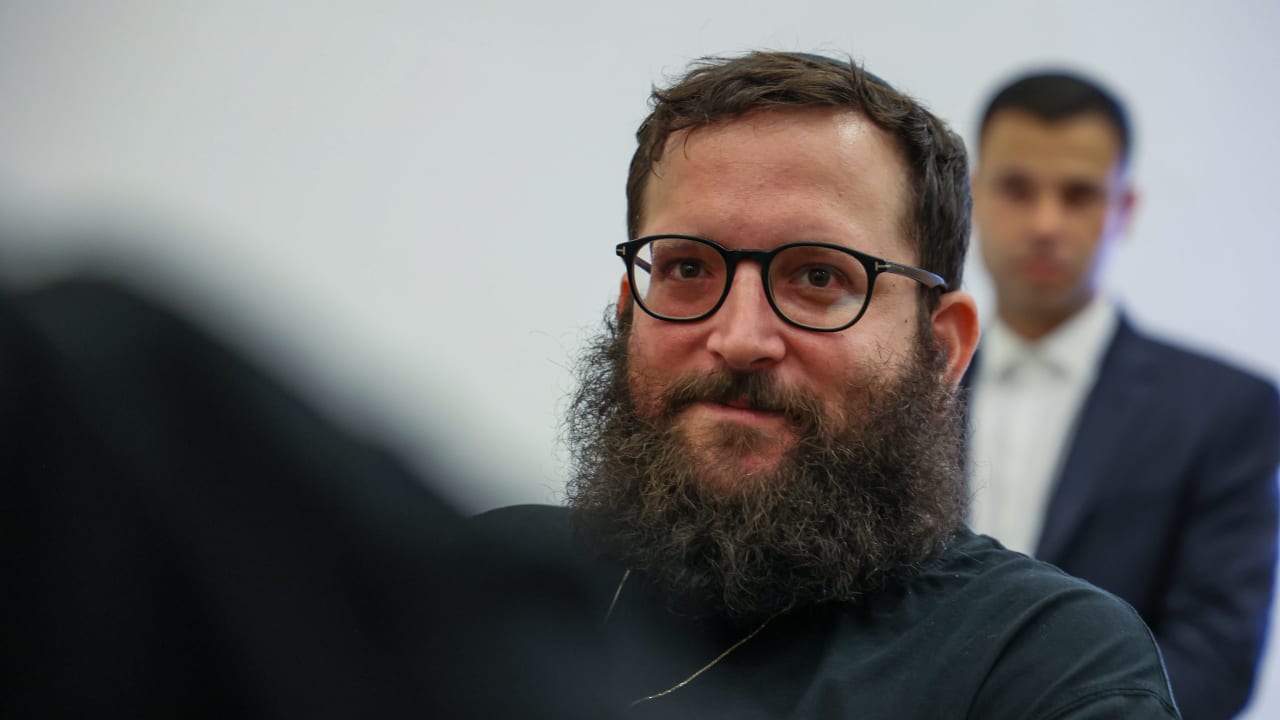
A magistrate’s court on Tuesday extended the restrictive conditions of Prime Minister Benjamin Netanyahu’s close aide Yonatan Urich – but clarified that he is not barred from speaking with the prime minister, rejecting thg the police’s attempt to read such a restriction into an earlier district court ruling.
Rishon Lezion Magistrate’s Court President Judge Menachem Mizrahi ruled that while Urich remains prohibited from working at the Prime Minister’s Office and from contacting individuals listed in the case, the name of Netanyahu does not appear on that list of 18 individuals. With Urich’s consent, the court added one limitation: he may not discuss the investigation itself with the prime minister.
The ruling came in the ongoing “Bild leak affair,” in which Urich - a longtime political strategist and senior figure in Netanyahu’s orbit - is suspected, alongside former military spokesperson Eli Feldstein and others, of involvement in the transfer of classified material later published in the German tabloid Bild. The investigation examines whether sensitive wartime information was unlawfully disclosed and whether the leak was coordinated or politically driven.
Procedurally, the case has at times intersected with a parallel investigation informally dubbed “Qatargate,” though the matters were later partially separated by court order. Release conditions and contact restrictions imposed on Urich have nonetheless been litigated across both tracks.
The hearing focused on one unresolved step: the still-unexecuted questioning of Netanyahu. Under questioning by defense counsel Amit Hadad, the police representative confirmed that investigators intend to take the prime minister’s testimony. The defense pressed repeatedly: When was the need to question Netanyahu first identified? Why was it not carried out earlier? And why have restrictive conditions against Urich remained in place for nearly a year without this central step being completed?

No current foreseeable date for completing the questioning
Investigators told the court they had believed summoning Netanyahu was necessary even before January, but formal authorization was granted only on February 24. Mizrahi noted that in a January decision, he had already described the failure to carry out that step as an investigative shortcoming.
A Sunday memorandum further indicated there is no foreseeable date for completing the questioning under present wartime conditions. When asked what would occur by March 19 – the date requested for the extension – police conceded there was no guarantee that any of the remaining investigative actions, including questioning Netanyahu, would be completed by then.
Urich has been under restrictive conditions since March 31, 2025, for nearly a year. While those conditions have evolved, he remains barred from working at the Prime Minister’s Office and at Perception, a political consulting firm associated with him and the probes, prohibited from leaving the country, and required to appear for questioning upon request.
Defense counsel highlighted what it described as a critical inconsistency: until January 12, there had been no prohibition on contact with individuals involved in the case – only after the court required submission of an updated list of involved parties was a contact ban imposed.
The defense also secured an acknowledgment from police that, despite Urich having been permitted to communicate with certain individuals for an extended period, investigators do not indicate that he attempted to obstruct the investigation or coordinate testimony.
Police nevertheless argued that their request should be understood to include a prohibition on contact with the prime minister. Mizrahi rejected that position, stating that the District Court’s ruling must be implemented as written – without interpretation.
The prosecution’s subsequent request for a stay of execution was denied, with the judge stating that the investigative unit had received precisely what it formally sought and that no new condition beyond the District Court’s ruling had been clearly requested during the hearing.
The decision repeatedly references the war’s impact on investigative timelines and makes clear that delays in advancing Netanyahu’s questioning cannot be attributed to Urich. The hearing itself was interrupted by an air raid siren, underscoring the broader wartime context in which the proceedings continued.
For now, Urich remains under restrictive conditions. But absent appellate intervention, he is not barred from speaking with the prime minister – so long as the investigation itself is not discussed.
And the central procedural question remains: when – and whether – the questioning of the prime minister will ultimately be carried out.