
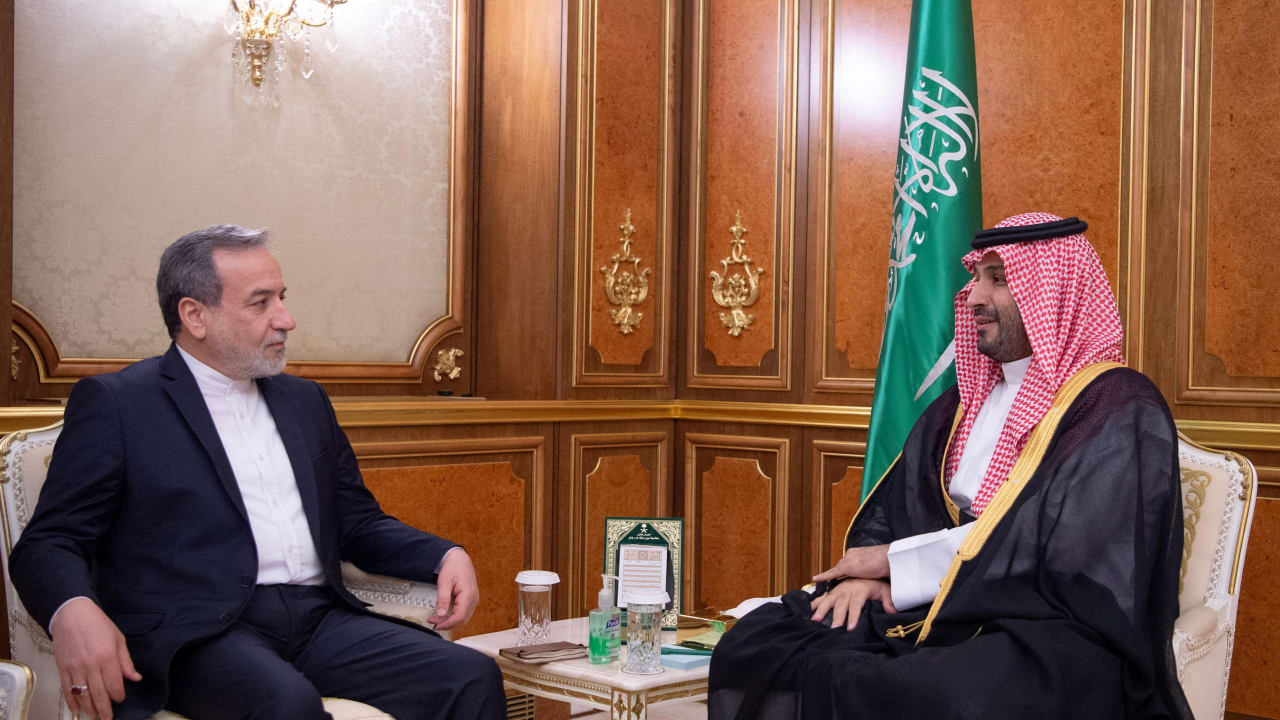

In the Middle East, illusions almost never die quietly. They are celebrated first, wrapped in the language of breakthroughs and historic openings, and only later – often abruptly – are they buried when reality begins speaking louder than the official communiques. That is precisely what now appears to be unfolding with the Beijing-brokered Saudi-Iranian accord: a deal once marketed as a diplomatic masterstroke, now increasingly resembling a wall constructed from fragile political plaster.
From the beginning, the premise was as seductive as it was deceptive. The notion that the clerical regime in Tehran could suddenly become trustworthy simply because it shook hands under the bright lights of Chinese mediation was never a hard-nosed strategic calculation. It was hope – misplaced and poorly hedged – in a region that has repeatedly punished optimism detached from power realities. Iran’s record, when read without romantic filters, reveals a political system that historically treats agreements less as endpoints and more as tactical breathing space. Deals are pauses, not pivots; they are instruments, not transformations.
The proverbial paint began to peel as soon as the first serious stress tests arrived. Iran’s regional behavior did not undergo any meaningful structural shift. Its network of allied militias and proxy relationships did not dissolve. Its forward-leaning posture across multiple theaters did not meaningfully contract. The much-advertised “historic shift” never quite materialized beyond the press releases. What remained, increasingly visible with time, was a carefully packaged political illusion colliding with stubborn geopolitical facts.
Parallel narrative
Even more revealing was the parallel narrative – widely circulated in some policy and media circles – of an emerging Saudi-Pakistani-Turkish alignment. In its more enthusiastic versions, this alignment was portrayed as the embryo of a new deterrence architecture capable of rebalancing regional power. On paper, it looked impressive: a major Gulf economy, a nuclear-armed Muslim power, and a regionally ambitious NATO member. In theory, this triangle could have projected meaningful weight.
In practice, however, the moment of truth told a different story.
When tensions sharpened and strategic clarity was required, the so-called axis dissolved into a familiar Middle Eastern silence. Pakistan – the nuclear power frequently invoked in Gulf security conversations – behaved exactly as its domestic constraints and strategic caution would predict. Islamabad calculated risks carefully, spoke softly, and showed no appetite for entanglement in Gulf escalation dynamics. There was no credible deterrent signaling toward Iran, no muscular posture, and certainly no indication of a binding security commitment that would alter Tehran’s risk calculus.
Turkey, for its part, executed its well-rehearsed balancing act with characteristic discipline. Ankara preserved maneuvering space with all parties, avoiding the costs that come with firm alignment. This is not surprising; Turkish foreign policy over the past decade has been defined less by rigid blocs and more by flexible positioning. But for those who imagined a tightly coordinated trilateral deterrent front, the gap between expectation and reality was difficult to ignore.
Under pressure, what had been presented as an emerging deterrence architecture looked increasingly like a loose network of political understandings lacking the power necessary to influence adversarial behavior. There was plenty of diplomatic noise – but very few teeth.

Strategic loneliness
The deeper strategic irony is that this outreach toward new understandings unfolded at the same time that some traditional sources of leverage appeared to be eroding. Nowhere has this been more visible than in Yemen, where the operational picture over time has suggested a growing sense of strategic loneliness. As various partners recalibrated their priorities or reduced their exposure, the burden on Riyadh appeared increasingly asymmetric.
This is the hidden cost of betting heavily on partners whose threat perceptions, risk tolerances, and regional priorities do not fully align with your own. Alliances are not built on shared press conferences; they are built on convergent threat assessments and credible willingness to bear costs. When those elements diverge, the facade of partnership can endure for a while – but it rapidly abates under stress.
It is important to be clear about one point: de-escalation itself is not the problem. In fact, de-escalation is a legitimate and often necessary instrument of statecraft. Every serious power uses it. The danger emerges when de-escalation is misread as transformation, or when diplomatic choreography is allowed to substitute for measurable structural change in an adversary’s doctrine and behavior.
The academic literature in international relations has been remarkably consistent on this issue for decades. Rivalries can be managed. Tensions can be reduced. Communication channels can prevent miscalculation. But deeply ideological competitors – especially those whose regional strategy is embedded in regime identity – rarely become dependable strategic partners without profound internal shifts. Absent such shifts, tactical calm should not be mistaken for strategic convergence.
What recent months have underscored, in increasingly blunt fashion, is that the Middle East remains deeply unforgiving of wishful thinking. Agreements made on paper tend to fracture under real pressure. Carefully staged diplomatic moments rarely alter entrenched security doctrines. And ideological adversaries do not mellow simply because a major global power hosted a signing ceremony in an elegant hall.
Trust, in this region’s security environment, remains what it has always been: a commodity earned through consistent behavior over time, not through declarations, photo opportunities, or mediated handshakes.
An unsentimental reassessment
The uncomfortable but necessary implication is that several recent strategic bets appear to have been built on overly optimistic assumptions. Reality has exposed a widening gap between diplomatic narrative and hard-power outcomes. For Gulf decision-makers – whose credibility is ultimately measured in results rather than rhetoric – this gap carries real consequences.
What is required now is not cosmetic adjustment or rhetorical reframing. What is required is sober, unsentimental reassessment. The region is entering a period of heightened volatility in which ambiguity will be punished and misaligned expectations will carry increasing cost. Strategic clarity, credible deterrence, and carefully chosen partnerships will matter more – not less – in the years ahead.
The central question, therefore, is no longer whether miscalculations occurred; the signals are becoming too visible to ignore. The real test is whether there exists sufficient institutional willingness to recalibrate course before tactical misjudgments harden into long-term strategic liabilities.
In the Middle East, history has a habit of being unforgiving to those who mistake temporary quiet for durable stability. This current moment may yet prove to be another reminder.■
Abdulaziz Alkhamis is a veteran Middle East researcher, columnist, and media analyst. He is also chairman of the Board of Directors of MENA2050.