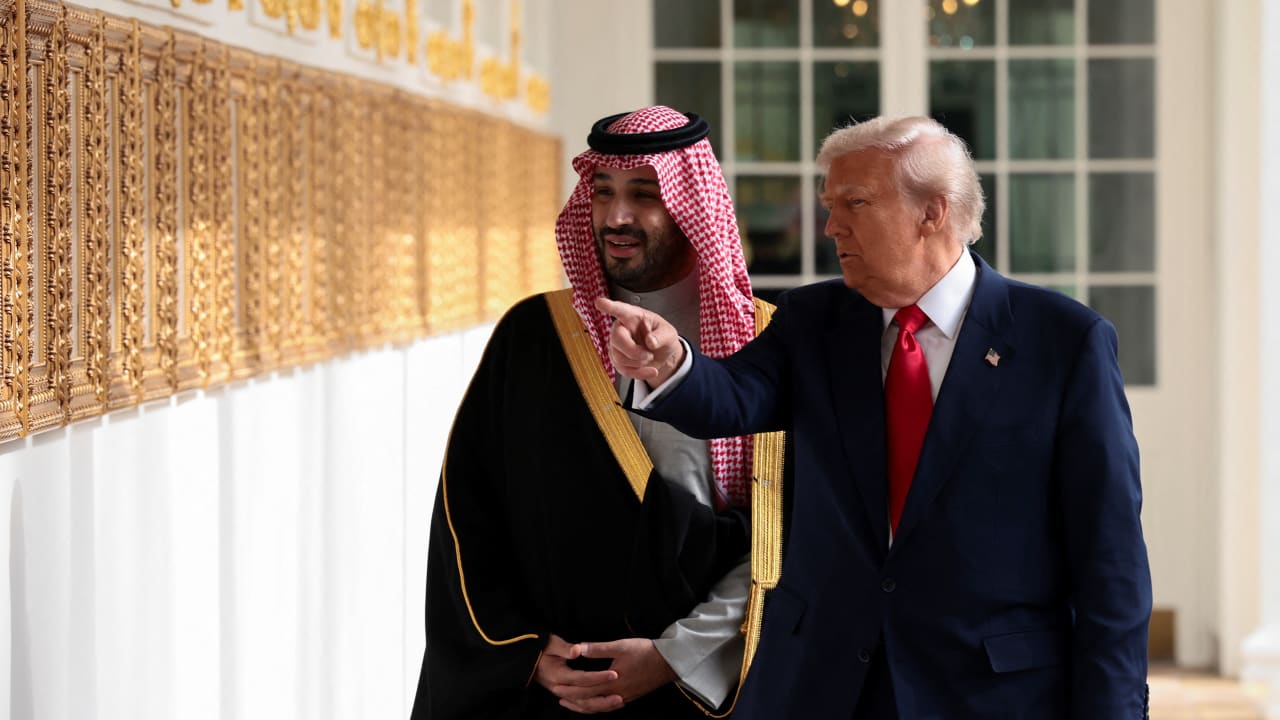
Saudi Arabia no longer trusts the US to provide protection, Saudi analyst Mubarak al-Ati said in an interview on Russia Today TV earlier this week.
"It seems that [US President Donald] Trump refuses to return to war and overthrow the Ayatollah's regime. This will cost him dearly,” Ati said, while claiming that the US president has shown that he is a paper tiger.
Ati said that the US’s first real sign of its failure in international affairs was Biden’s “humiliating exit” from Afghanistan in 2021. “The US is still a superpower, but not as it was a decade ago,” he opined.
“The balance of power has changed significantly, and for rising powers such as India, Saudi Arabia, and Brazil, all of which are G20 members, there are now new possibilities, and they can establish relations with all forces, not just with the US.”
The Saudi expert claims that the US’s dwindling presence on the world stage has led Gulf States and other Muslim countries to not take Trump’s demands to join the Abraham Accords very seriously.

“Saudi Arabia refrained from being drawn into war and did not stand alongside Israel and the United States, just as it did not stand alongside Iran,” Ati said. “Saudi Arabia has not declared hostility toward any of the parties, and this means they analyzed the situation and saw themselves as an independent actor who cannot be a satellite of Israel and the US."
New 'Arab-Islamic bloc'
He said that instead, Saudi Arabia is leading a new “Arab-Islamic bloc” with Pakistan, Turkey, and Qatar, which will likely be announced soon.
“It has put the brakes on the Abraham Accords and is clearing the region of Israeli presence in Sudan, South Yemen, and Somaliland. Saudi Arabia will not join the Abraham Accords,” he said.
Ati said that Saudi diplomacy is “paving the way for a non-violent agreement in the region.”
It will be an agreement between Iran, the Gulf states, and anyone who wants to join,” and will include Islamic and international guarantees."