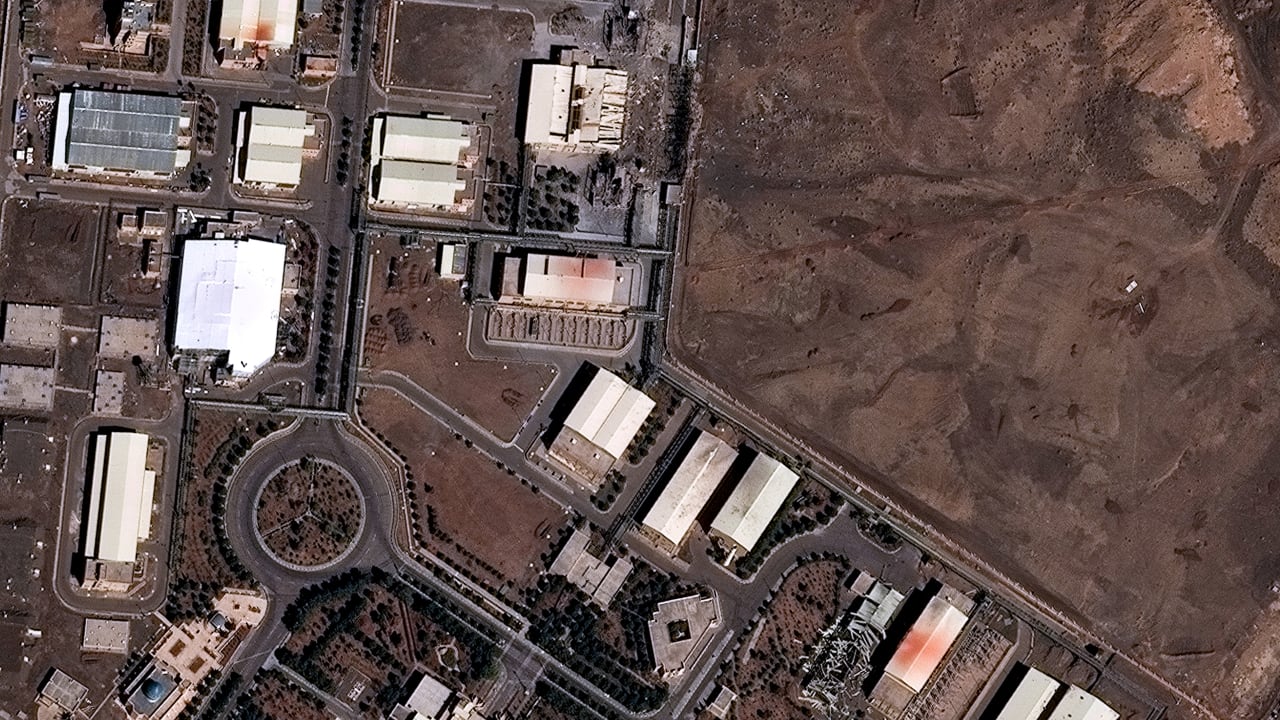
While Iran's nuclear capabilities can be severely damaged, this war on its own cannot completely destroy Iran's nuclear ambitions or capability, IAEA Director-General Grossi said in an interview with CBS News, the transcript of which was published Thursday.
Grossi said that the war has "really rolled back the [Iranian Nuclear] program considerably," even though the focus on nuclear sites has been marginal when compared to the 12 Day War last June.
However, Grossi specified that war could not result in a long-term solution to the problem of Iran's nuclear capabilities.
"Once the military effort comes to an end, we will still inherit a number of major issues," Grossi said.
The most notable of these is Iran's current inventory of enriched uranium at 60%, which is "very close" to the degree necessary for a nuclear bomb, which will still remain.

'You cannot unlearn what you've learned'
Additionally, it will be impossible to ascertain just how many facilities, infrastructure, and equipment may have survived the attacks, either damaged or even unscathed, until IAEA inspectors are allowed back.
Even if facilities and equipment are damaged, Grossi emphasized that reconstruction would be "very possible," since Iran has the knowledge of how to build them. With no research required, Grossi compared the process of rebuilding the facilities needed to that of building "a sophisticated washing machine."
"It's nothing, I mean, and you cannot unlearn what you've learned."
Both Israel and the US have raised the possibility of special forces going in to retrieve the enriched uranium.
Grossi expressed doubts as to the feasibility of such an operation. "We're talking about cylinders containing gas of highly contaminated uranium hexafluoride at 60%, so it's very difficult to handle."
Even during negotiations, Grossi said that the difficulty of handling and transferring the uranium was discussed.
Additionally, Grossi estimated that there would be decoy cylinders as well as other materials that would provide more difficulty.
"I'm not saying it's impossible. I know that here there are incredible military capacities to do that, but it would be a very challenging operation for sure," Grossi said.
When asked if the IAEA had been in contact with the White House about their own inspectors moving the nuclear material after combat ended, Grossi said that he had “been having important conversations here at the White House, and also with Iran.”
Grossi wouldn’t share any more information about his Iranian contacts, saying “it would be unfair” to the Iranian Foreign Minister, Abbas Araghchi, to say that Araghchi has said he’s interested in negotiations.

Former security adviser says Iran operation would not be successful without securing nuclear material
Former national security adviser to President Donald Trump, John Bolton, also emphasized the importance of securing Iran’s nuclear material, telling NBC News that the US operation in Iran “would not be a success under any circumstances” without it.
Bolton also expressed fears that the nuclear material could be given to “terrorist groups, to other rogue states, or other malicious actors.”
While Bolton acknowledged that US forces retrieving the uranium would not be a small operation, he seemed to think it was not only feasible but an option Trump was considering.
“The president has said he doesn’t want to put boots on the ground, but I never understood that to mean he would not try and get that material,” Bolton told NBC.