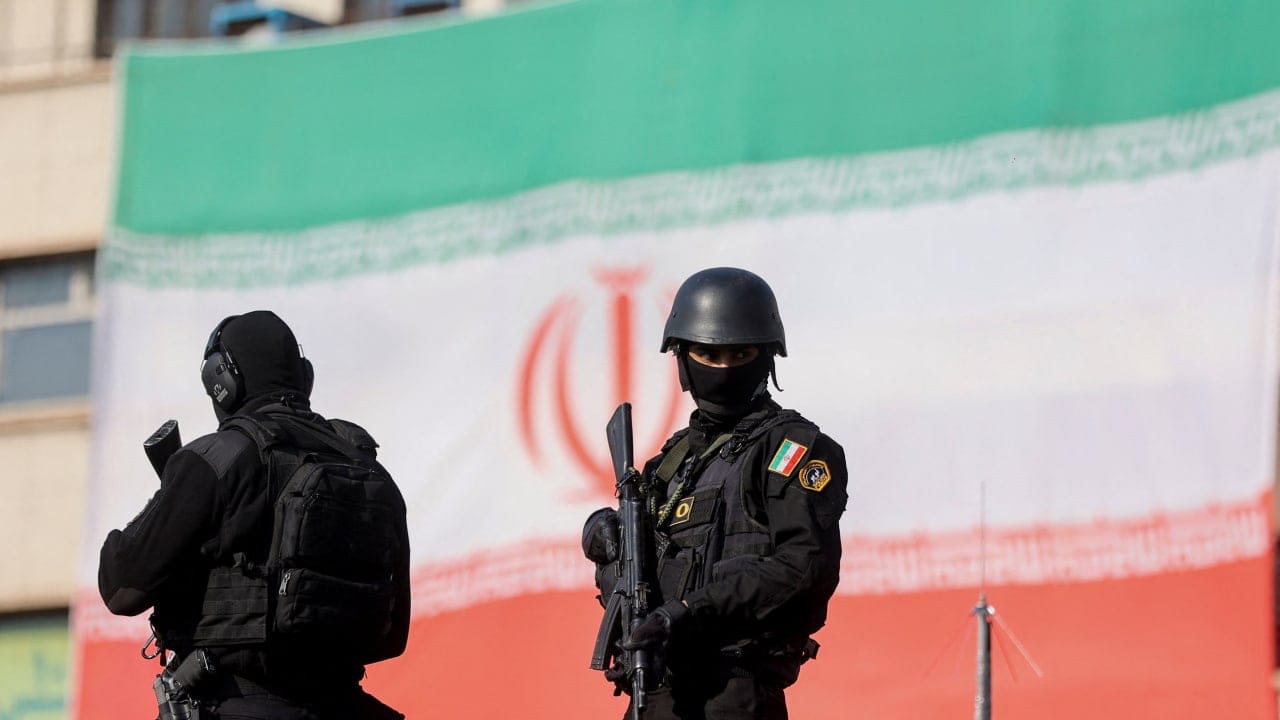
The Islamic regime has used “wartime conditions” as a cover to intensify repression against the Iranian people, according to text messages reviewed by Amnesty International.
The Islamic Revolutionary Guards Corps (IRGC) warned that anyone attempting to violate the regime’s Internet restrictions could be prosecuted under the Espionage Act and receive the death penalty, Amnesty International reported. The threats were issued under the pretense that ordinary online activity was a threat to national security, it said.
The IRGC sent messages to individuals who circumvented Internet restrictions and cited their individual IP addresses, VPN, or satellite Internet use, the report said.
The IRGC also threatened that individuals who continued to circumvent the restrictions could have their cellphone service and SIM cards blocked and be referred to judicial authorities. It explicitly warned that any link to “hostile states” or the “Zionist regime” would result in prosecution under the Espionage Law.
Under Article 508 of the Islamic Penal Code, any individual or group who cooperates with “hostile states” against the Islamic Republic of Iran, unless recognized as a Mohareb (waging war against God), can be sentenced for up to 10 years of imprisonment.

The 2020 Law on Countering Hostile Actions of the Zionist Regime against Peace and Security can lead to the death penalty if the individual is prosecuted for intelligence sharing or a five- to 10-year sentence and a permanent lifetime ban from holding any public or government positions if the individual was connected to Israelis on any diplomatic or informal level.
Amnesty International said it had reviewed 11 instances of such messages being sent to Iranian civilians, including eight warning that photographing areas damaged in airstrikes and sharing such content either online or with the media would be deemed as “collaborating with the enemy” and will have legal consequences.
Last week, Iran seemingly ended its Internet blackout after almost three months, although human-rights organizations have warned that significant restrictions remain.
“Iranian authorities are exploiting the crisis to further erode the human rights of people in Iran who are already suffering from the devastating consequences of unlawful airstrikes by US and Israeli forces, as well as decades of crimes under international law at the hands of the Islamic Republic,” Erika Guevara Rosas, Amnesty International’s senior director of research, policy, advocacy, and campaigns, said in the report.
“To maintain their grip on power, the authorities have unleashed an all-out assault on people in Iran, targeting anyone who dares to criticize the Islamic Republic, share information about the US or Israeli airstrikes or human-rights violations with the outside world, or simply attempt to break through what became the longest recorded Internet shutdown to communicate with loved ones or access independent information.”
Islamic regime continues with arbitrary arrests
In addition to threats against those accessing restricted online spaces, the regime arbitrarily arrested thousands of people, including children, under the cover of national security, Amnesty International reported.
Iran’s police chief, Ahmadreza Radan, last month said more than 6,500 “traitors and spies” had been arrested since February 28 and confirmed the ongoing arrest of individuals said to be involved in the January demonstrations, the report said.
Official statements, information from victims’ families, and human-rights defenders confirmed that the authorities have used wartime conditions as an excuse to crack down on civil society, particularly against minority religious and ethnic groups, journalists, and human-rights defenders, it said.
Lawyers representing individuals charged in politically motivated cases, such as Amir Raisian and Milad Panahipour, who were both arrested on April 29, have been charged with crimes such as “spreading lies” and “spreading propaganda against the system” for publicly raising due process concerns, Amnesty International reported.
Panahipour and Raisian had both warned of abnormalities in the case of their client, Ehsan Hosseinipour Hesarloo, 18, who was believed to be at risk of execution, the report said.
Human rights defender Nasrin Sotoudeh, who was arbitrarily arrested in Tehran on April 1 and disappeared for about six weeks, was released on bail in May. Regime officials initially denied to her family knowledge of her whereabouts, according to an informed source, the report said.
In one case, an NGO said a sibling of a human-rights worker had been forcibly disappeared as a means to pressure his brother to end an investigation.
Those who disappeared also face increased risk of torture and ill-treatment in detention, Amnesty International said. Numerous suspicious deaths have been reported in custody, including the case of Hesam Alaeddin, who died in detention after seeking information on his brother who was arrested for possession of a Starlink device.
The regime has also used the guise of wartime security needs as an excuse to seize the private property of more than 750 people since March, when it introduced the digital system called “Saham” to identify “terrorist and mercenary agents affiliated with the Zionist enemy and other hostile countries,” the report said.
The regime has escalated its use of the death penalty as a tool of political oppression, expediting judicial proceedings, and carrying out the killings of those who confessed under the duress of torture, it said.
“The international community must not allow the Iranian authorities to use the conflict as a smokescreen to deepen their machinery of repression and carry out crimes under international law with impunity,” Guevara Rosas said in the report.
“Iran’s human-rights and impunity crisis requires urgent and sustained diplomatic international action to prevent further atrocity crimes by the authorities, as well as establishing pathways for international justice including through the UN Security Council’s referral of Iran’s situation to the International Criminal Court.”