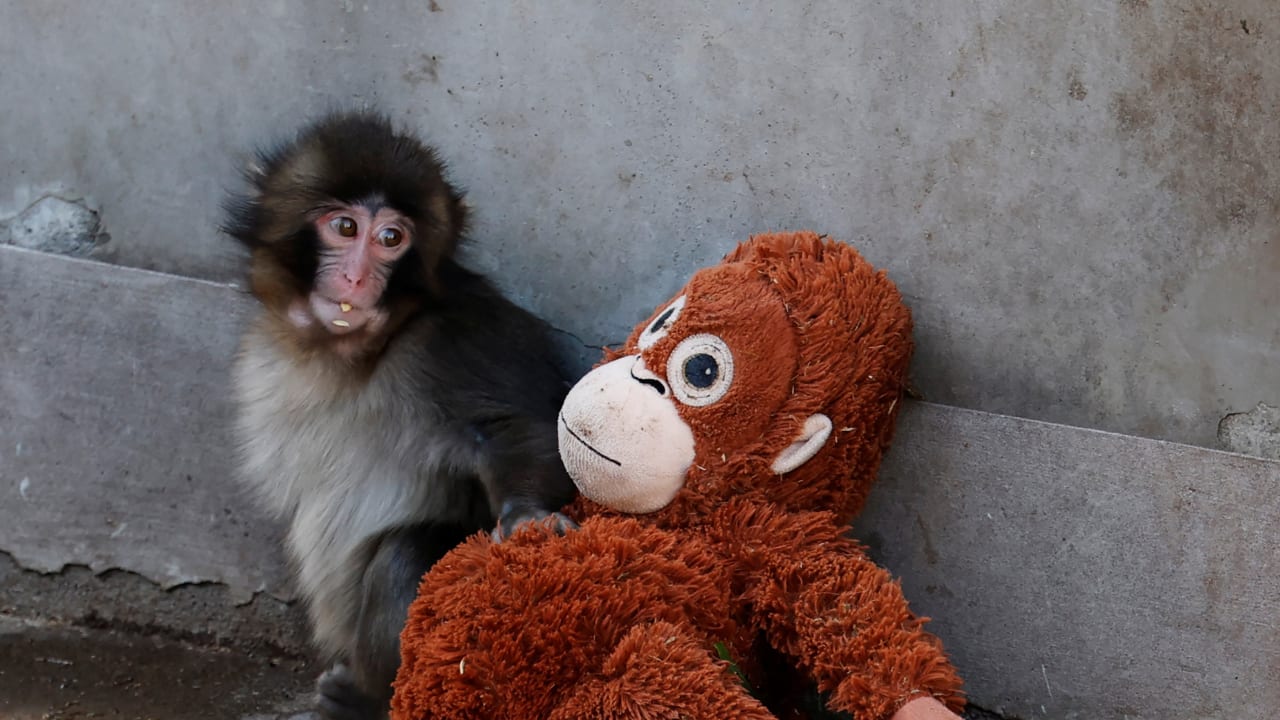
Punch, a baby macaque abandoned at birth at a zoo near Tokyo, is relying less on the oversized orangutan plush toy that once comforted him. He is spending more time among adult monkeys. He has been seen riding on backs, sitting with the group, and at times being groomed or hugged, according to The Associated Press. Keepers say the shift marks a hopeful step in his social development. Early on, other monkeys shooed him away and he clung to the stuffed animal for reassurance.
After his mother left him shortly after birth, keepers provided round-the-clock care and nursed him. They introduced the plush toy to encourage clinging behavior, a critical survival skill for newborn macaques. Images of Punch dragging the toy—larger than his body—drew widespread attention online and spurred a surge of visitors. The response grew so intense that staff implemented special rules to shield the troop from noise and stress. Visitors were asked to remain quiet, and viewing times were capped at 10 minutes to protect the more than 50 other monkeys that share the exhibit. In a statement released in mid-February, his zookeepers wrote that he shows “resilience and mental strength” despite his difficult start in life, according to Parents.
Internalizing the troop’s rhythms
In recent days, observers have seen Punch reach for the plushie far less during daylight. Caretakers say this shows he is internalizing the troop’s rhythms and expectations, from acceptable play to moments of rest and grooming. The soft toy remains part of his nighttime routine, and he still sleeps with it. Keepers described a benchmark they hope to see: Punch curled up to sleep between other monkeys, a sign of full acceptance and security within the group. They emphasize a long-term goal of physical health and social competency, including unwritten rules on interactions, access to food, and safe proximity to dominant animals. His earliest overtures were tentative and often rebuffed, but recent sightings of him perched on another monkey’s back and tolerated by adults have encouraged the team.
The decision to use a plush surrogate balanced immediate comfort with the need for species-typical behavior. The toy offered a dependable anchor when social encounters were overwhelming. It was also used to strengthen clinging muscles and reflexes that could translate to real relationships. With Punch seeking contact from the troop more and returning to the toy less, workers see the day approaching when the plush can be phased out. They caution that attachment objects are important transitional tools for infants who faced early rejection, buying time for gradual social learning and avoiding abrupt separations that could cause regression.
Punch the celebrity
Online attention made Punch a celebrity and drew fans concerned about bullying or isolation. Keepers say setbacks are part of the process. Even as Punch progresses, he may retreat to familiar comforts when rebuffed. What matters is the trajectory: more time among peers, more grooming and tolerant contact, and growing readiness to sleep nestled among others—signs he is being recognized as a member of the troop.
For Punch’s caregivers, success means a young macaque confident in a complex social hierarchy without needing a substitute for companionship. The plush toy was a bridge, a training tool, and a safety net through his most fragile stage. As he outgrows it, they hope he will carry forward those practiced skills into enduring bonds with the troop, turning early abandonment into a story of careful rearing, steady exposure, and acceptance.
This article was produced with the assistance of a news discovery technology.