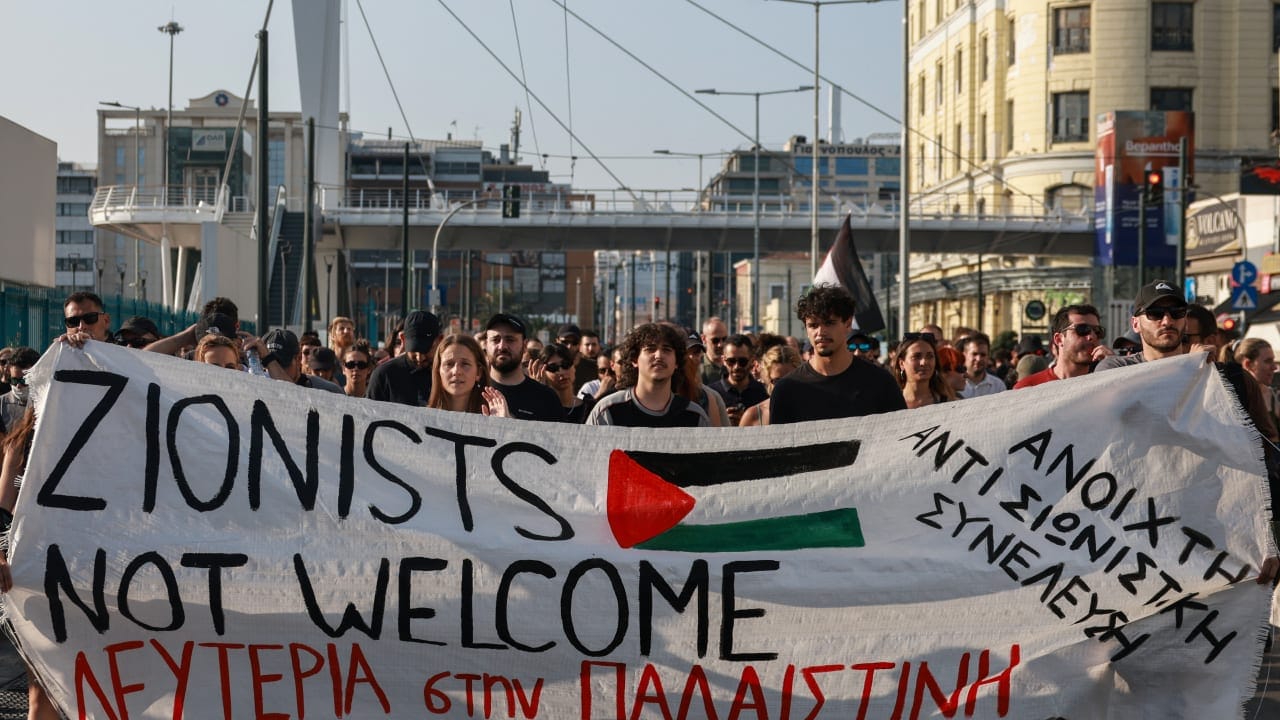
A direct line leads from the antisemitic Nuremberg Laws of Nazi Germany to BDS schemes and other boycott campaigns against the Jews and the State of Israel.
The slogans are similar: Hitler accused the Jews of creating international instability, claimed Jews were destroying society, and that the Zionist movement was a significant part of a global Jewish conspiracy. Similar lies are spread today.
The Laws aimed to make the Jews, first in Germany and then everywhere else, into Non-Persons, people with no identity or status, and that was just the first stage.
The Nazis initially concealed their aims against the Jews. This tactic reapered, the BDS movement which focused, sometimes even with the cooperation of people in Israel, on efforts framed as targeting Israeli economic enterprises in the ‘territories’, but soon expanded its aims to rejecting the very existence of the State of Israel, with some of its main supporters, such as the American writer Alice Walker, the author of The Color Purple, making clear that this was their aim and the aim of the movement itself.
In their violent demonstrations and rallies against Israel and the Jews in universities and public squares, the symbol of the swastika has been replaced by Yasser Arafat’s keffiyah, and just as the Gestapo and German Foreign Ministry at the time, plus various pro-Nazi organizations in the US, Latin America, and Britain, sought to whip up popular sentiments against the Jews.

According to Israeli security bodies, the current displays of antisemitism and anti-Israelism are driven both by behind-the-scenes and undisguised efforts by countries such as Qatar, whose aims include bringing about a cooling off in relations between the United States and Israel, as well as instigating antisemitic acts.
Culture as a tool for antisemitism
A central focus of antisemitic incitement by the Nazis and now on the extreme left and right is in culture. Nazi Germany forbade Jewish artists from performing the music of German composers, while the work of Jewish composers was banned, together with Jewish literary, cinematic, and other works, with the intention of blurring Jewish identity in culture.
The great German Jewish writer Heinrich Heine said more than two hundred years ago: "Where they burn books they will ultimately burn people too," and his warning proved true, not only by the Nazis but also by Hamas in the Gaza perimeter to which parts of western culture astoundingly responded not by condemning the perpetrators of the slaughter, rape and murder – but with criticism of the victims and Israel which sought to hold the monsters and their supporters accountable.
The height of hypocrisy in the world of books, and not only of known antisemitic authors such as the Irish writer Sally Rooney, was the decision in some quarters to start a literary boycott of Israel just two weeks after the October 7 massacre, as if identifying with it.
The boycotts spread to other areas, as happened with the Nazis before, and with special emphasis on musical activity. Artists who were threatened with violence cancelled visits to Israel, while Israeli artists and Israeli movies were banned, in contrast to pro-Palestinian propaganda movies (some produced in Israel) that were featured in various cinema festivals, while pro-Palestinian gangs violently prevented performances by Israeli or Jewish artists in general.
Covent Garden was forced to yield to terror and cancelled a joint production with the Israeli Opera. Even the Nazis had failed to achieve such positive and supportive resonance in the world of culture at the time. Israel’s creative artists and performers have faced this murky wave with courage and talent, and they deserve every assistance from the government and cultural institutions.
Yet there is a glimmer of light and signs of awakening, as some are taking a stand against the slander and incitement, e.g the European Broadcasting Union which voted by a large majority to reject attempts by five countries to have Israel excluded from the Eurovision contest; leading the potential boycotters was the Netherlands which after the Second World War had managed to hide the fact that more than any other western country, even Vichy France, it had cooperated with the Nazis and the Holocaust, this time revealed its true face.
By the way, this was not the only time the Netherlands has surrendered to the boycott campaign: it also cancelled one performance of the traditional Hanukkah concert in the National Concertgebouw auditorium because of the participation of a singer who had served in the IDF.
The name of Nuremberg is a symbol not only of the Nazi laws of hatred and genocide, but also of the place where some of the perpetrators were. were sentenced — their present-day followers and imitators are still at their evil activities.