On January 3, 2026, US President Donald Trump held a press conference that had the world glued to its screens. The news was shockingly historic, and global audiences were eager to hear every detail. Yet surrounded by Marco Rubio, Pete Hegseth, and Gen. Dan Cane, how many viewers paid close attention to how the president introduced Hegseth – not as Secretary of Defense, but as Secretary of War?
The rebranding of the Department of Defense had been announced months earlier, in September 2025. As a result, it was widely dismissed as old news – and therefore unimportant. That assumption could not have been more mistaken. In that moment, the administration demonstrated the power of rebranding not merely to reflect intent, but to guide it. More importantly, it signaled that this was not simply a change in name, but a change in ethos, posture, and interdepartmental operational readiness.
The rationale reportedly offered for restoring the title Department of War – and for Secretary Hegseth’s use of the title Secretary of War – centered on symbolism, mission framing, and strategic clarity. There are few arenas in which clarity of mission, coordination, and intent matter more than national security.
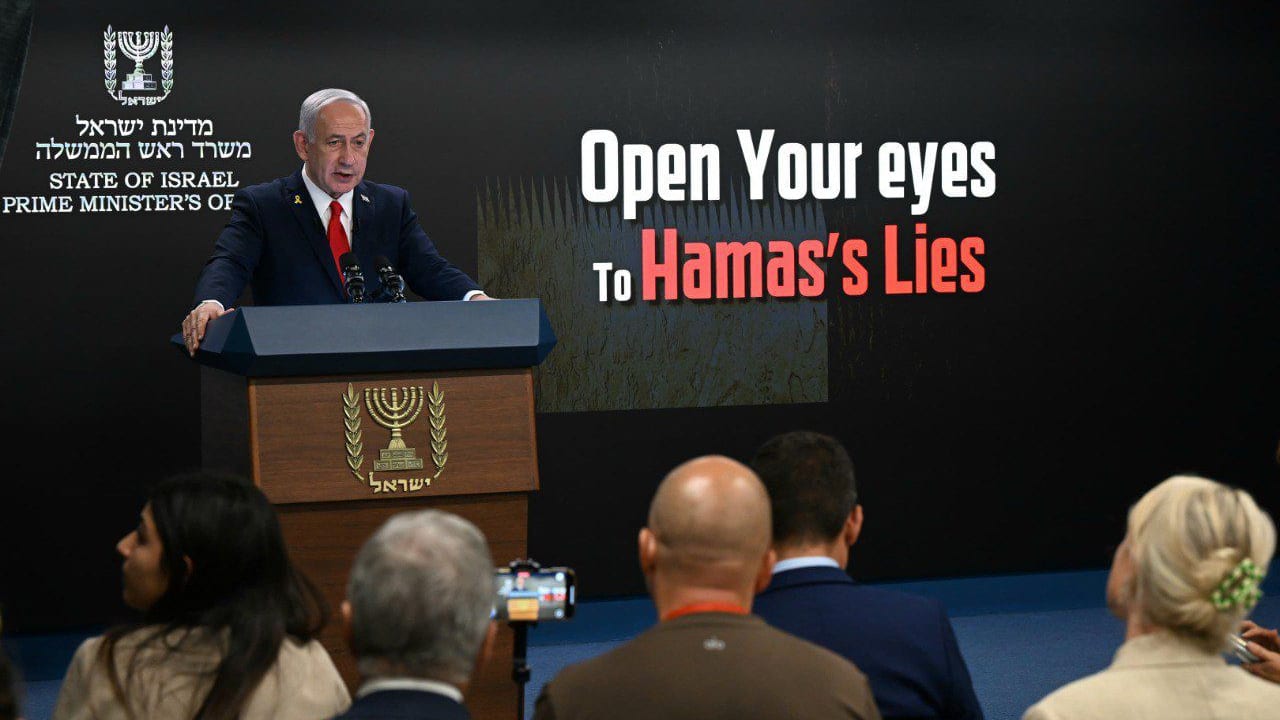
In a post-October 7 world, Israel cannot afford a communications doctrine conceived for a gentler era. Words, narratives, and information have not only been weaponized against Israel and world Jewry; they now travel at the speed of light. As we learn more about how far back the planning for October 7 extended, and how carefully it was coordinated – not only among Israel’s enemies, but also among actors presenting themselves as “neutral” – the scope of the failure becomes clearer.
While attention has understandably focused on the monstrous massacres and the abduction of more than 250 hostages, as well as on the unprecedented war now waged against Israel from seven different fronts, an eighth front has been dangerously ignored and underestimated: the psychological and information warfare campaign directed at Israel and Jews worldwide. If Israel’s image and the security of world Jewry were properly understood as national security issues, this information war might have been identified early enough to prevent it from metastasizing.

How early this campaign was devised, by whom, how it was funded, and how its true scope went undetected remain urgent questions. One conclusion, however, is already unavoidable: the physical attack, horrific as it was, does not pose the same long-term strategic danger as the global information campaign that preceded it – and, more importantly, followed it and continues to this day.
Why hasbara must be reframed
Reframing hasbara (public diplomacy) as information warfare is no longer a theoretical exercise. It is a strategic necessity required to confront an existential threat to Israel and world Jewry.
In the aftermath of October 7, the geopolitical landscape confronting both Israel and the global Jewish community has fundamentally shifted. The significance of recent antisemitic attacks, including last month’s mass-casualty Hanukkah attack in Bondi Beach, Sydney, still appears insufficiently understood. We remain inadequately prepared to defend the basic right to live as Jews, or to sustain a sovereign Jewish state.
Much as President Harry Truman’s decision to rename the Department of War as the Department of Defense reflected a new post-World War II global reality and strategic mindset, Israel must now undertake its own reframing. Hasbara, meaning “explanation,” belonged to a different era. Today, the information domain is a battlefield capable of determining the fate of millions of Israelis and Jews worldwide.
This is not a matter of semantics, but of strategic alignment. Truman understood that naming shapes posture, posture shapes strategy, and strategy shapes outcomes. President Trump demonstrated a similar understanding when he proposed restoring the name Department of War. Israel must now communicate – to itself and to the world – that it fully understands the nature of the conflict it faces.
After October 7, we no longer inhabit the same political or psychological terrain. Across the United States, Europe, and Australia, antisemitic violence and harassment have surged to levels unseen in decades. The forthcoming film October 8 documents how, within hours of the massacre, crowds on Western campuses and city streets publicly glorified the murder of Jews.
This was not spontaneous. It was fueled by coordinated messaging networks, foreign-funded organizations, and a digital ecosystem primed for psychological manipulation. After the Holocaust – and now after October 7 – we must finally acknowledge that words can kill, often more efficiently than weapons. Narratives shape alliances, dissolve support, and influence decisions that determine whether Israel receives vital arms, diplomatic protection, and strategic legitimacy.
Historically, Israel has shown its willingness to confront threats to Jews wherever they arise, from tracking down Adolf Eichmann to neutralizing existential military dangers. Yet when facing the coordinated surge of anti-Israel agitation and antisemitism, Israel’s posture has been fragmented, under-resourced, and strategically outdated. We defend our borders with cutting-edge systems, but defend our narrative with obsolete tools and assumptions.
Consider the consequences. Even the most advanced aircraft, such as the F-35, become strategically meaningless if political pressure – amplified by hostile information campaigns – prevents maintenance, repair, or resupply. Iron Dome interceptors are useless if shipments are delayed by legislators influenced by narrative warfare unfolding online and on university campuses.
Losing the information battle can yield the same result as losing a conventional one: undefended skies, exposed civilians, and soldiers forced to fight without what they need to prevail.
This is not hypothetical. Political shifts in major Western cities, including the rise of openly anti-Israel local governments, already reflect the power of coordinated digital agitation. Decisions once grounded in bipartisan security doctrine are increasingly shaped by viral narratives.
Reframing Hasbara as information warfare is therefore not an act of aggression: It is an act of precision. Hamas, Hezbollah, Iran, Russia, and Qatar all maintain formal information operations structures. Israel remains the only actor still calling this battlefield “explaining.”
Renaming and restructuring Israel’s national communications doctrine is not symbolic – it is strategic. Assigning responsibility for this challenge to traditional public or digital diplomacy frameworks risks repeating past failures. What is required is the integration of intelligence, operational planning, and strategic communications under a war-time doctrine.
Ironically, the IDF failed in its defensive mission on October 7 until devastating damage had been done. Yet when the same military and intelligence institutions shifted fully to war footing, they achieved results that will be studied for decades.
In a world where narratives shape policy and policy shapes survival, adapting Israel’s communications doctrine to information warfare is not optional. It is the existential imperative of our time.
The author is an experienced global strategist for the public and private sector.