This week, we read the Torah portion of Bo in every synagogue around the world.
Everyone knows the story – 10 plagues, “Let My People Go,” the slaying of the firstborn. We’ve seen the movie.
But this is not just a story about miracles: It is a story about refusal.
By the time we reach this point, Pharaoh is no longer ignorant. He has data. He has warnings. He has evidence stacked upon evidence. Egypt is unraveling before his eyes, and still the Torah repeats the same phrase: his heart is kaved – heavy.
This is not stubbornness: It is moral obesity. A heart so full of itself that it can no longer move.
That is what the Torah calls darkness.

“No one could see his brother, and no one could rise from where he was.”
Darkness in Egypt was not merely the absence of light: It was the collapse of human recognition. People could no longer see one another as fellow human beings. They were frozen – emotionally, morally, politically.
This is not ancient history.
Iran uses repression and censorship on its own people
We are watching it again in Iran, where a regime terrified of its own people has chosen the Pharaoh playbook: repression, censorship, prisons, intimidation, and the systematic extinguishing of public space.
When power fears truth, it turns out the lights. It silences testimony. Darkness becomes policy.
But Parashat Bo refuses to let the story remain “over there” – for them to “pass it over.” It instead drags Egypt into the home.
Because tyranny does not live only in palaces, but in how societies treat their most vulnerable.
Earlier this week, two babies tragically died, and others were made seriously ill.
They died in Jerusalem, in an unlicensed, overcrowded childcare facility. They did not die because of fate. They died because adults made decisions – about regulation, responsibility, oversight – and those decisions failed.
The Torah’s first national commandment is not prayer: It is time. Structure. Order.
“This month shall be for you the first of months” (Exodus 12:2).
Redemption begins when chaos is restrained, not sanctified.
Freedom does not mean the absence of rules. Freedom means systems that protect life.
The Torah does not allow a society to hide behind intentions when outcomes are lethal. It does not accept piety as a substitute for responsibility. It does not tolerate religious language that excuses preventable death.
And then – almost obscenely – we watched the response.
Not quiet mourning. Not serious moral reckoning.
Riots.
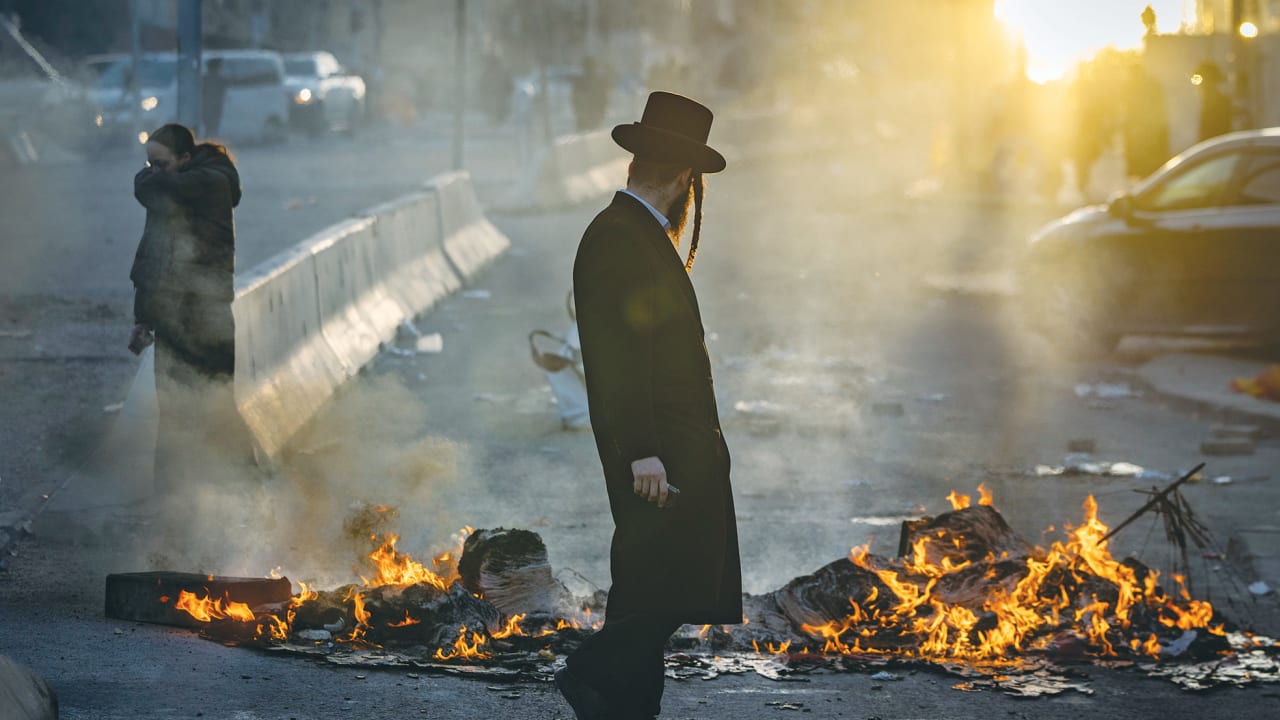
Violent haredi (ultra-Orthodox) demonstrations against the rule of law. Streets blocked. Police attacked. All in the name of opposing autopsies ordered to determine how children died.
Let's stop pretending.
This was not about kavod hamet – honoring the dead.
This was about refusing accountability.
Kavod hamet does not include throwing stones.
Kavod hamet does not cause people to scream at emergency workers.
Kavod hamet does not terrorize forensic professionals trying to ensure that no other child dies the same way.
Judaism is not anarchic – it never has been.
The same Torah that recoils from unnecessary desecration of the dead also demands pikuah nefesh – the preservation of life – and mishpat – the legitimacy of lawful process. These are not modern intrusions into Jewish law: They are its backbone.
Halacha does not sanctify ignorance. It does not glorify chaos. And it does not outsource moral reasoning to mobs.
When lives may be at stake – when children have died and others may still be at risk – the obligation to investigate is not a betrayal of Judaism.
It is Judaism.
The halachic question is not “How do we stop the state?” but “What is the minimum intrusion required to establish truth, prevent future deaths, and secure justice?”
That is how Torah works: proportionality, responsibility, expertise, restraint.
If families consent, if limited or non-invasive procedures can establish cause of death, then Halacha demands that route.
If alternatives exist, they must be pursued honestly.
But if determining cause of death is essential to preventing future harm – and no alternative exists – then refusing investigation is not religious fidelity: It is moral cowardice dressed up as piety.
Judaism does not require us to protect systems that kill children.
Pharaoh also claimed moral outrage. Pharaoh also insisted he was defending something sacred. Pharaoh also spoke the language of values while crushing human life beneath it.
The Torah is merciless on this point: When religion is used to evade responsibility, it becomes Egypt.
Yes, Judaism reveres the dead. Deeply. Authentically.
But Judaism reveres the living even more.
A community that cannot tolerate investigation into the deaths of babies has not elevated sanctity – it has inverted it. It has declared that its own autonomy matters more than the lives it failed to protect.
That is not Halacha. That is idolatry.
The Torah portion of Bo insists that redemption requires testimony. Again and again, the Torah repeats: You will tell your children. You will answer them. You will explain what you did when history demanded courage.
What exactly are we planning to tell ours?
That we were very sensitive when children died?
That we were very pious while systems collapsed?
That we screamed loudly enough to drown out inconvenient questions?
Darkness is not imposed on a society. It is chosen.
It is chosen when governments silence dissent instead of listening.
It is chosen when communities reject regulation because it threatens autonomy.
It is chosen when religious passion overrides law, expertise, and basic human decency.
Egypt chose darkness – again and again.
Israel is being asked the same question, without theatrics and without mercy: What kind of society are you building?
Parashat Bo does not end with reconciliation – it ends with rupture. Egypt breaks because Pharaoh refuses to soften his heart; because he will not bear the weight of truth.
The Torah’s demand is terrifyingly simple: See one another, protect life, accept responsibility, tell the truth – even when it indicts you.
“And for all the children of Israel, there was light in their dwellings” (Exodus 10:23)
Light is not slogans.
Light is not rage.
Light is not screaming “holy” while refusing to count the dead.
Light is the courage to build systems that protect the vulnerable, the humility to investigate failure, and the moral strength to say: This must never happen again.
Darkness is easier.
But the Torah warns us, with absolute clarity: Once you choose darkness, it does not let go.
The writer is a rabbi and physician. He writes and teaches on Jewish ethics, leadership, and resilience. His work appears on rabbidrjonathanlieberman.substack.com and youtube.com/@rabbidrjonathanlieberman.