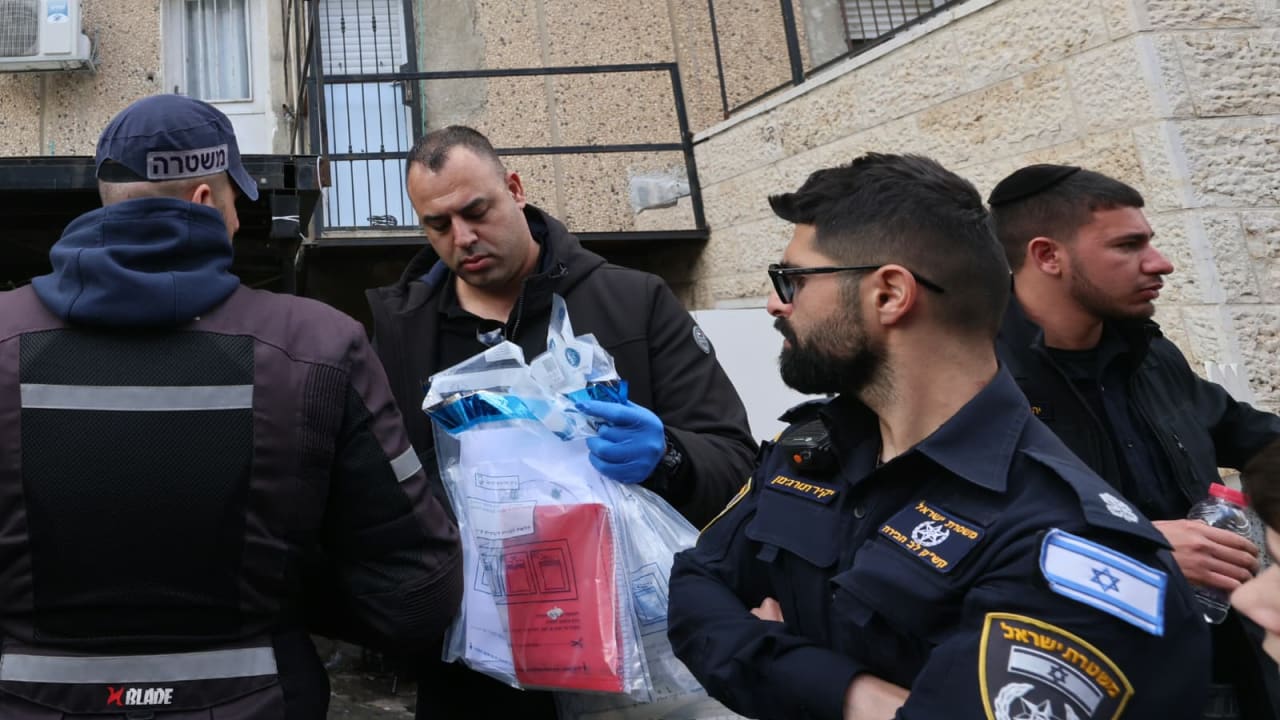
The tragic death of two babies under the age of one, in a private and unregistered daycare in the predominantly haredi neighborhood of Romema in Jerusalem last Monday, has given rise to a good deal of comment regarding some of the anarchy that prevails in this field.
This is not the first time that such a tragic event has occurred. It has even been reported that 16 years ago, a similar occurrence took place in the very same location. However, since there are said to be several additional daycare nurseries in the same building and many more in the same neighborhood, the accuracy of this report is unclear.
Many details of the current tragedy are tied to the fact that the event occurred within the haredi community, with its various social peculiarities.
Unregulated private daycares exist in most sectors of Israeli society, and, as stated above, the field is generally characterized by anarchy.
Even though, back in 1965, a law was passed requiring the regulation and supervision of daycare centers for children, the elderly, and the disabled.

Law passed in 2018 to protect babies and toddlers
A special law was also passed in July 2018 to regulate and supervise daycare centers for babies and toddlers, followed by detailed regulations issued by the Welfare and Social Services Ministry, which was in charge of daycare centers at the time, and approved by the Knesset in January 2021.
One of the people who actively pushed for this development was a private citizen from the center of Tel Aviv - Anat Dayagi-Burg.
Dayagi-Burg had lost her firstborn son, David, at the age of eight months, when she left him at a private toddler daycare near her home in February 2017.
The caretaker had told her that two people were responsible for the eight children in the nursery, and that she herself had the appropriate qualifications, including experience in resuscitation. Neither piece of information proved to be true.
When the caretaker found David lifeless, she was alone with the toddlers, and it took her several hours before she informed the appropriate authorities. She did not inform Anat, who was told that David had been taken to the hospital when she arrived to pick him up.
Anat never found out what David had died of. The police said it had been SIDS (Sudden Infant Death Syndrome), but a post-mortem did not verify this allegation.
Anat gave birth to two more sons, but also decided to devote the next few years to changing the state of affairs regarding unregistered and unregulated private toddler daycares.
The passage of the 2018 law and the 2021 regulations were largely the result of her efforts. The minister who assisted her was labor, welfare, and social services minister Itzik Shmuli of the Labor Party, who served in Israel’s 35th government [The National Unity (Corona) Emergency Government, led by Benjamin Netanyahu and Benny Gantz].
However, the resulting legislation was partial and ineffective, as last week’s tragedy proved. The organization which acted most vociferously against the passage of effective legislation, on ideological grounds, was the Kohelet Policy Forum (KPF), which has much influence on many policy issues in the Likud, and argued that the proposals for regulating the private daycares would lead to many of these nurseries closing down, and to a sharp rise in the cost for the parents who place their children in these institutions.
Anat’s experience with the MKs, whom she tried to convince to support the legislation, was also negative in many respects, since it transpired that most voted in accordance with instructions from their parties, under the influence of the KPF, without bothering to seriously study the information laid before them.
On January 2, 2022, the issue of daycare nurseries for toddlers was passed over to the Ministry of Education in Naftali Bennett’s Government of Change. Yifat Shasha-Biton, from New Hope (Gideon Sa’ar’s party), was education minister when this occurred. The minister in charge is now Yoav Kisch.
And now to last week’s tragedy. Today, there are in Israel over half a million babies and toddlers aged 0-3, one-fifth of them in unregulated daycare institutions.
From the 2026 budget we learn that the funds allotted for the regulation and supervision of these daycare institutions, are to be cut from NIS 190 million in 2023 to NIS 46 million this year, unless second thought will be given to this as a result of the death of the two babies, one – Leah Goloventzitz – aged three months, and the other – Aharon Katz – aged six months. This is yet another challenge for Kisch.
Beyond the fact that the two did not survive their afternoon nap, what is known about what happened to them is no more nor less than what was known about David’s death nine years earlier.
The parents of the two refused to perform autopsies for religious reasons; the cause of death is not known for certain, though it is assumed that they both slept in an overheated room without the entry of fresh air.
We also know that there were around 20 babies and toddlers crammed into a small apartment, with only two caretakers to care for and watch over them, and that the physical conditions in the apartment were appalling.
However, the approach of the two newly bereaved mothers to the event was fundamentally different from Anat's in 2017.
As haredi women, they both did not blame anyone for the deaths of their babies, saying that it was what was meant to happen – i.e., what was ordained by God. They also praised the person who owns and operates the daycare nursery, claiming that she was their children’s second mother and that they would not hesitate to send their yet-to-be-born children to her in the future.
This is an attitude that is very difficult for a non-religious person to fathom and that rejects the efforts of parents to do something to prevent such occurrences from repeating themselves and the occurrence of additional superfluous deaths.
The High Court of Justice also finally decided not to insist on autopsies being performed on the two babies, out of respect for the parents’ rejection of such acts for religious reasons, even though this meant that there was no way to determine the cause of death, and/or the level of guilt of the caretakers for what had happened.
It is interesting to note that while the mothers refused to blame anyone for what had happened, haredi politicians were quick to blame the attorney-general, the HCJ, and the rest of the current government’s scapegoats.
The writer has written journalistic and academic articles, as well as several books, on international relations, Zionism, Israeli politics, and parliamentarism. From 1994 to 2010, she worked at the Knesset Library and the Knesset Research and Information Center.