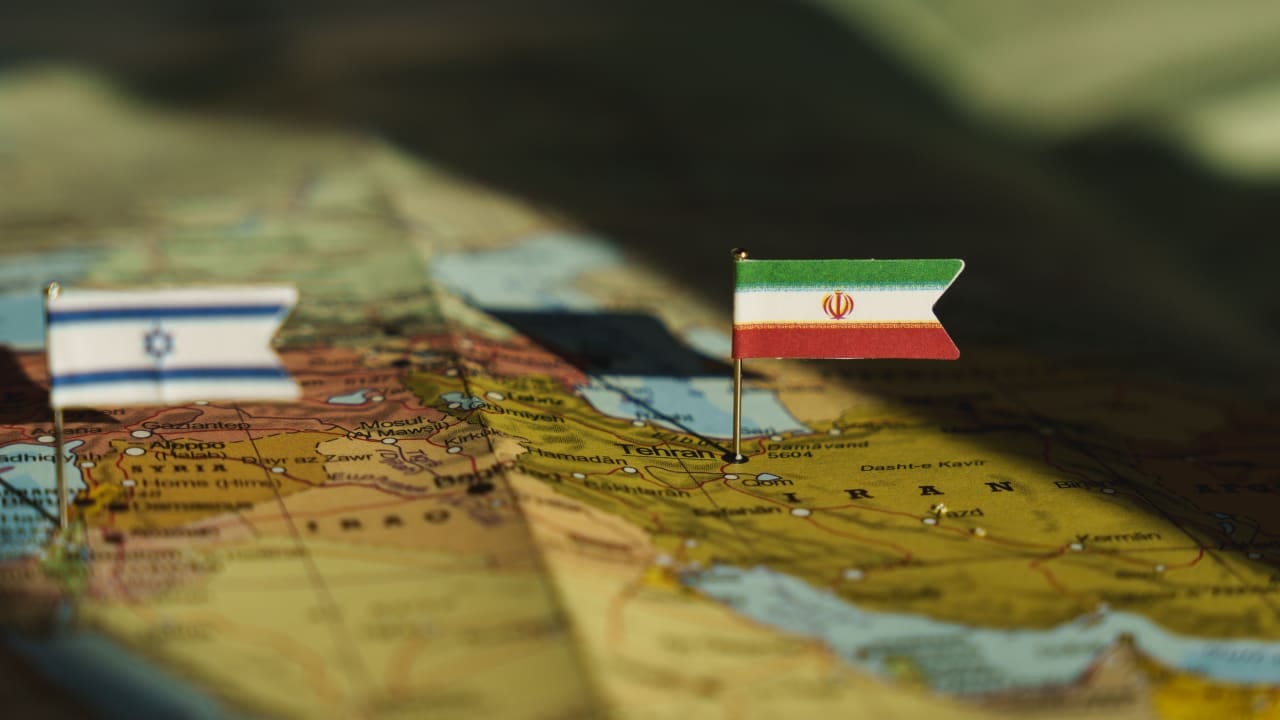
It is easy to understand what Israelis think about Iran and why they justify the war launched by Israel and the United States. The following are some of the hostile and alarming public quotes by Iran’s (dead) supreme leader, Ayatollah Ali Khamenei: “Israel won’t exist in 25 years.” “God willing, there will be nothing of the Zionist regime in 25 years.” “I favor destroying Israel.” “The Zionist regime is headed for destruction.”
Israel has long perceived Iran as a hostile regional power that could eventually acquire a nuclear weapon and that openly threatens Israel’s existence. This is powerful in Israeli strategic thinking not only because of Iran’s repeated hostile rhetoric but also due to its continued support for Hezbollah and Hamas.
Iran’s massive missile development and the proximity of proxy forces on Israel’s borders makes the threat even more real. Iran’s plans have been perceived as a long-term existential and strategic threat that must be stopped before nuclear weaponization becomes irreversible.
Iran’s ideological and military leadership led many to believe that only sanctions and military pressure could contain its ambitions, making diplomacy seem unrealistic. Yet in 2015, the Joint Comprehensive Plan of Action (JCPOA) proved otherwise.
Signed by Iran and the major world powers, it placed strict limits on Iran’s nuclear program by reducing uranium stockpiles, capping enrichment levels, limiting centrifuges, and allowing extensive IAEA inspections. In return, international sanctions were eased and Iran regained access to frozen assets and global markets.
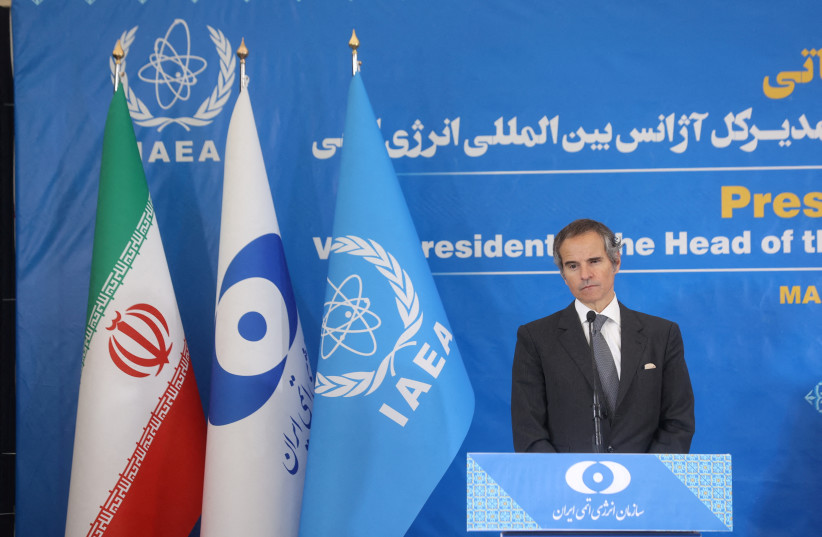
Despite Iran adhering to the terms of the agreement, Prime Minister Benjamin Netanyahu opposed it, arguing that Iran remained an existential threat. In 2018, he convinced President Donald Trump to withdraw the US from the deal, and it gradually unraveled.
Iran afterward enriched some 450 kilograms of uranium to dangerously high levels, enabling its “break-out” to a weapons program in a short time frame. Even though the JCPOA was not a perfect agreement, once it was canceled, Iran moved rapidly toward a bomb, which could have been prevented if the deal remained in place.
Peace begins not with trust, but with exhaustion
After the establishment of the State of Israel, the biggest existential threat to it was Egypt.
Egyptian president Gamal Abdel Nasser’s rhetoric demonstrated Egypt’s commitment to the eradication of Israel.
Here are some examples: “Israel is an artificial state which must disappear.” “There isn’t even the smallest place for negotiations between the Arabs and Israel.” “The battle will be a general one and our basic objective will be to destroy Israel.” “Our path to Palestine will be covered with blood.”
Before president Anwar Sadat’s visit to Jerusalem in November 1977, most Israelis did not believe peace with Egypt was realistically possible, even if many wanted it. The dominant feeling was deep skepticism. For nearly 30 years, Egypt had been at the center of Arab military confrontation with Israel. That made real peace seem almost unimaginable.
Examining history may offer us insights regarding Israel’s current existential threats. Peace with Egypt once seemed impossible, but we have a peace treaty for almost five decades.
Even peace with Jordan once seemed impossible, but in 1994 Israel and Jordan signed a peace agreement. Germany and France moved from repeated wars to partnership. Even more remarkable is that in 1965, 20 years after the Holocaust, Israel and Germany established full diplomatic relations.
Peace usually begins not with trust but with exhaustion. When both sides conclude that war no longer serves their interests, diplomacy becomes thinkable. Even without a regime change as a result of the current war, a look at Iran’s economy might provide hope for change.
Iran’s economy before the war was already under severe strain, and the war has pushed it into a deeper crisis. Over the past years, Iran has suffered from a sharp economic contraction. Iran experts expect a severe GDP decline, with some estimates suggesting the economy could shrink by around 10% in 2026 because of the war, on top of the damage already caused by sanctions and structural weakness.
This reflects the destruction of infrastructure; falling industrial output; disruption to trade and transport and capital flight, as well as reduced investment. Inflation was running above 40% before the war, and it has now worsened significantly. Recent reports indicate food inflation above 100%.
Add to this the currency collapse with the rial continuing to weaken dramatically. The Iranian Central Bank has reportedly issued its largest-ever banknote (10 million rial note) as inflation and war drive demand for cash and accelerate currency depreciation.
The war will continue to disrupt oil and trade, in addition to the direct war damage, with recent strikes hitting steel plants in Isfahan and Khuzestan and power infrastructure all over the country. The war has turned an already fragile economy into a full-scale economic emergency.
Israel’s economic growth is slowing but not collapsing. Israel is still functioning as a high-income advanced economy, but the war has reduced growth expectations. Recent estimates suggest 2026 growth may be revised down versus higher prewar expectations. That means the economy is still growing but significantly below potential, with key sectors under pressure such as tourism, retail consumption, services, aviation, and logistics.
Israel’s biggest economic challenge is the budget deficit. The newly approved 2026 budget is defense-heavy, with an additional NIS 32 billion for military needs, and that is probably not the final figure. The deficit target is now around 4.9%-5.1% of GDP.
That is high for Israel and means more borrowing with higher debt service costs and most likely significant tax increases later this year. Israel’s debt is expected to rise toward 70% of GDP. The real risk is not immediate recession but a lost decade of slower growth, higher taxes, and rising debt if multiple fronts remain active.
Former Bank of Israel governor and world-renowned economist (the late) Dr. Stanley Fischer noted that under peace conditions, Israel’s economy could grow “at even 7%.” Fischer went beyond short-term growth rates and described a larger vision: “We could within one or two decades find ourselves living in one of the most advanced economies in the world.”
Fischer believed peace would allow Israel to convert military resilience into long-term prosperity. Fischer was not speaking about peace between Israel and Iran but between Israel and Palestine.
In March 2002, the Arab League adopted the Arab Peace Initiative, offering Israel full normalization in exchange for withdrawal to the 1967 lines and a Palestinian state. Iran is not an Arab League member so it was not a direct signatory. But a few months later, in June 2002, the Organization of the Islamic Conference – which included Iran – endorsed the initiative.
This meant that Iran, as an OIC member, effectively accepted the diplomatic framework at that time, at least formally. There is no assurance that, if the next government of Israel were to accept the Arab Peace Initiative, Iran would change its position on the destruction of Israel. But Iran would be isolated in the Muslim world, which would welcome Israel’s changed position on the creation of a Palestinian state next to Israel.
It is questionable if Israel and the US will succeed in their war aims vis-à-vis Iran. There may not be a regime change, there may not be the extracting of the highly enriched uranium from Iran. The new leaders may be more extreme than those killed in the war.
Both Israel and Iran have suffered from this war. The thought of having to do more of the same in the future should be cause enough to search for an alternative to more death and destruction. That is in the hands of the people of Israel and the people of Iran. War should always be the last possible choice – in our case it is not. And that needs to change.
The writer is the Middle East director of the International Communities Organization and the co-head of the Alliance for Two States.