Spain, under Prime Minister Pedro Sanchez, has chosen a shameful role in the confrontation between the West and the Iranian regime.
In recent weeks, Madrid blocked US use of the jointly operated Rota and Moron bases for strikes connected to the Iran campaign, later closed its airspace to American military aircraft involved in that effort, and this week announced it would reopen its embassy in Tehran.
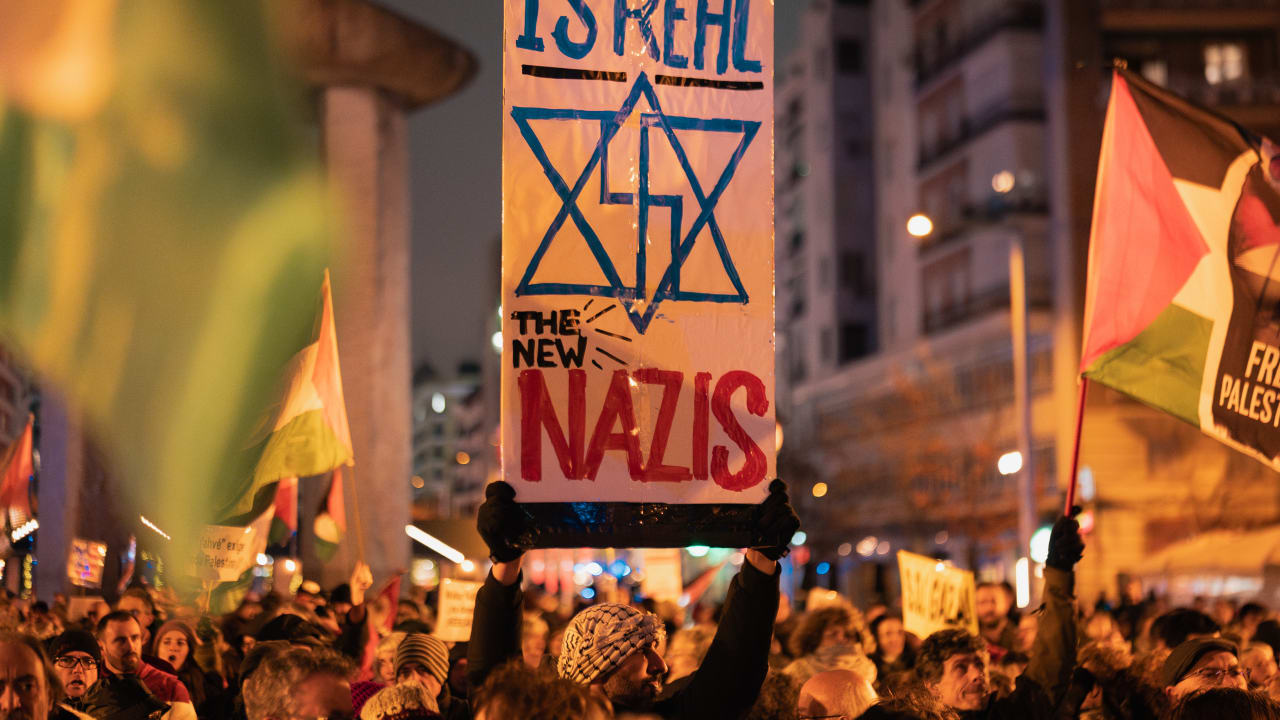
At the same time, Spain intensified its pressure on Israel and called for the European Union to suspend its association agreement with the Jewish state.
This is a profound strategic error. It is also a revealing one.
The symbolism could hardly be clearer. Iran is the main sponsor of Hezbollah, Hamas, Palestinian Islamic Jihad, and the Houthis. It has armed, financed, and encouraged instability across the region for decades. Yet as Israel continues to fight a seven-front war that began with the October 7 massacre, and after the United States joined the effort to degrade Iranian capabilities, Sanchez’s government chose to distance itself from Washington and Jerusalem while restoring diplomatic presence in Tehran.

Spain presents this as a policy of peace, legality, and restraint. The reality looks different. A NATO member that limits allied military cooperation during a major regional crisis, then reopens its embassy in the capital of the regime that fuels so much of that crisis, is not acting as a stabilizing force. It is broadcasting confusion, weakness, and moral vanity.
This is not a new pattern
The pattern did not begin this week. Spain’s rupture with Israel has been building for months. Madrid recognized a Palestinian state in 2024, hardened its anti-Israel posture in 2025, and made its arms embargo on Israel permanent. Last month, it permanently withdrew its ambassador from Israel, leaving relations at a new low.
No serious observer should confuse this with mediation. Spain is not emerging as a decisive Middle East power. It does not have unique leverage over Iran, and it has not produced any diplomatic framework that might plausibly change Tehran’s behavior. What it does have is a government eager to turn foreign policy into domestic theater.
Sanchez governs through a fragile coalition whose hard-left and separatist partners are deeply hostile to Israel, suspicious of the US, and comfortable with anti-Western posturing so long as it is wrapped in the language of human rights and international law.
That domestic context matters. Sanchez has repeatedly found political advantage in presenting himself as the European leader most willing to challenge Israel and push back against Washington.
The NATO dimension makes the hypocrisy even harder to ignore. Spain was the alliance’s lowest defense spender in 2024, at 1.28% of GDP, and Sanchez fought for special treatment at last year’s NATO summit to avoid the new 5% spending benchmark and remain far below it.
His government wants the protection, deterrence, and prestige of NATO without accepting the burden that comes with them. Free-riding on Western defense while obstructing Western action against Iran is not independence. It is opportunism.
Spain’s move also drew condemnation from ACOM, the Spanish pro-Israel advocacy group founded by David Hatchwell, which wrote on X/Twitter that reopening the embassy in Tehran while downgrading ties with Israel says “everything you need to know about Pedro Sanchez’s Spain.”
What, exactly, did Spain achieve? It did not shorten the war. It did not restrain Iran. It did not protect civilians. It did not strengthen Europe’s diplomatic hand. It weakened alliance unity, handed Tehran a propaganda gift, and signaled that parts of the West remain more eager to scold democracies than to confront theocrats who arm terrorists and threaten their neighbors.
Europe has made this mistake before. It confuses posture with courage and rhetoric with seriousness. Sanchez has made that confusion a governing instinct. The result is a Spain that spends too little on defense, asks too much of its allies, punishes Israel, and reaches out to Iran while preaching to everyone else about civilization.
The West should see this clearly. A NATO member that underfunds collective defense, obstructs allied operations, downgrades relations with Israel, and restores ties with Tehran is eroding Europe’s credibility at the very moment Europe needs resolve.
History is unlikely to remember Pedro Sanchez’s Spain as a principled dissenter. It will remember a government that chose moral exhibitionism over strategic responsibility.