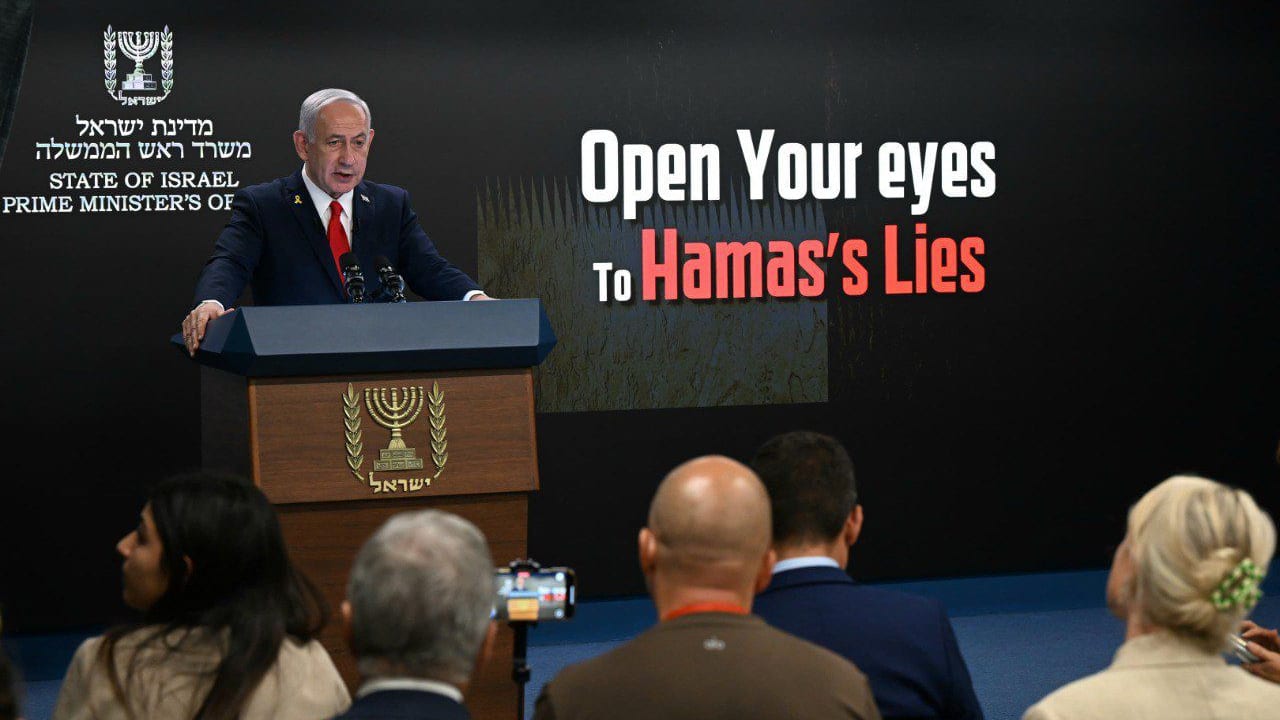
With the recent appointment of new “public diplomacy” chiefs in the Prime Minister’s Office and Foreign Ministry, it is time to rethink approaches in Israeli hasbara (public diplomacy).
This is especially true following the war with Iran, which has alienated large segments of global opinion from Israel; after a devastating vote in Congress (where most Democratic Senators voted to block the sale of munitions and military material to Israel); in the wake of renewed initiatives to boycott Israel in Europe, and given the spiraling, blended antisemitic and anti-Israel violence everywhere.
Sixteen months ago, I detailed in this newspaper a plan for Israel (that largely has been adopted over the past year by Israeli Foreign Minister Gideon Sa’ar and deputy foreign minister Sharren Haskel) to focus on bringing many missions of “influencers” to Israel. Nothing, but nothing, more effectively develops friends for Israel than a well-planned visit to this country. Such visits are always overwhelmingly transformative.
Getting relevant influencers to visit Israel is hard work, especially since the violent anti-Israel hordes abroad are attempting to make Israel into a contaminated product, and they have succeeded in raising the social cost of sympathy and support for Israel. Indeed, in the current moment, there are certain publics that just will not visit Israel.
But there are important target sectors with residual basic goodwill towards Israel whose thought leaders and community activists can and must be invited to visit here to discover Israel in all its richness; its aspirations, beauty, battles, warts, and all. The Foreign Ministry has facilitated the visit of more than 200 such missions over the past year.

Early in 2025, I additionally outlined a necessary revolution in Israel’s messaging – also adopted by Saar – involving an embrace of Israeli strength and a restoration of Jewish faith to Israel’s diplomatic arsenal, to match Israel’s necessarily aggressive strategic and defense posture.
After all, 25 years of Oslo-era hasbara epistles have not worked. It is simply insufficient to explain Israel’s security dilemmas or emphasize Israel’s past and potentially future diplomatic generosity towards the Palestinians.
Needed is forthright talk about Israeli ferociousness – the justified use of power to fight Iran, Islamic jihadism, and annihilationist-against-Israel Palestinianism; and a narrative that proclaims incontrovertible, indigenous Jewish rights in Israel, and which speaks of Israel as a grand reunion of faith, people, and land. People are forced to respect these messages, even if they may not attribute to Israel spectacular charity.
Since then, this newspaper has hosted a range of proposals for diversifying and deepening Israel’s public diplomacy (and also strengthening Israel-Diaspora relations).
This includes the wise writings of The Jerusalem Post’s Editor-in-Chief Zvika Klein for outreach to an “extra nine million” (foreign leaders and peoples who hold some religious or ethnic connection to Judaism) and to civilizational leaders (like Indian Prime Minister Narendra Modi) who can and must be long-term strategic allies.
Others have laid out serious civil rights strategies focused on robust legal protections for Jews and vigorous defense of Israel in the courts. And some thinkers have called for a wholesale shift in funding away from Jewish defense organizations towards investment in educational institutions that can revitalize Jewish life and re-stoke Jewish resilience in the Diaspora.
The freshest and most disruptive thinking I have seen about Israel advocacy appears in a long essay just published by Uriel Zehavi on his “Israel Brief” website.
He contends that since bipartisan consensus on every issue in Western democracies has broken down, pro-Israel advocacy must change too. It must splinter into separate tracks and institutions.
Zehavi explains that today, politically salient issues are absorbed into partisan identity. They get “sorted” in a way that codes issues in zero-sum terms, feeding into a deep liberal-conservative divide that is not easily reversed.
As a result, liberal Republicans and conservative Democrats (not to mention conservative Republicans and liberal Democrats) no longer coexist in overlapping coalitions. They travel in completely different ideological ecosystems, fed by different media and elites, and espousing values and “truths” that are incompatible with the values and truths of the other side.
This goes for the “Israel issue” too. Progressive activists today code Israel as aligned with nationalism and militarism, and not with their preferred values of minority rights, democratic norms, and humanitarian law.
On the other hand, Conservative audiences positively code Israel as aligned with faith, family values, Biblical ties, freedom, and military resilience, while affirmations about Israel’s human rights and democratic affinities sound mushy or needlessly defensive, and are even alienating.
As such, the architecture built over decades that promotes Israel as a bipartisan issue – say, by organizations like AIPAC – no longer works well, according to Zehavi. The vocabulary they built about Israel – security alliance, shared democratic values, and strategic cooperation – no longer resonates effortlessly in the same way on both sides of the harsh political divide.
Therefore, he argues, Israel advocates need entirely different arguments, vocabularies, and messengers for democratic/liberal and republican/conservative audiences. They must narrow-cast one or another narrative, instead of broadcasting the single-pipeline messaging that once worked in an era of consensus politics.
Differences on how Republican's, Democrat's process news
Zehavi offers the following example. A moderate Democrat processing a news item about an IDF strike in Gaza routes the item through his camp’s reigning moral psychology, the prism of harm and care as well as fairness and reciprocity – how many civilians were hit, what was the proportionality, what does humanitarian law say, was there a reasonable alternative, etc.
A moderate Republican will process the same news item through his default values of loyalty, authority, and sanctity – highlighting the facts that Israel is an ally, the ally is defending itself, allies deserve support, Israel authorized the operation inside its own sovereign decision-making framework and the challenge to that authority is itself suspect, the defense of Israel carries Biblical covenantal significance while third-party concerns are secondary, etc.
In short, the same event enters two completely different moral processors belonging to two brutally sorted political camps with bifurcated vocabularies. In this reality, single-message architecture fails; it does not land equally and simultaneously well on the moderate Democratic core’s individualizing foundations or the moderate Republican core’s nationalist foundations.
Instead, Zehavi would have Israel deploy multiple public diplomacy directorates that would share intelligence and research but operate with different messages and framings.
One would employ Republican-track messaging through recognizable republican/conservative messengers, via evangelical broadcasting, national-security conservative platforms, and think-tank partners like Heritage, Hudson, and AEI.
The other directorate would drive democratic/liberal messaging through Democratic-recognizable messengers with humanitarian-law and shared-democratic-values framing calibrated to Obama-alumni foreign policy networks and liberal media outlets, and via think-tank partners like Brookings, Carnegie, and CNAS.
This is intrepid thinking that must be considered seriously, especially since the Diaspora Jewish world is badly divided along partisan lines too. Zehavi: “The Jewish community itself has sorted into two partisan containers. An American Jewish community that includes 74% Donald Trump Orthodox voters and 84% Kamala Harris Reform voters cannot be lobbied as a single constituency or speak in one voice.” So why not embrace the differences and work both sides of the divide distinctively?
I think that Zehavi’s analysis is stronger than his prescription. His strategy for divergent messaging issuing formally from Jerusalem and from contrary advocacy organizations would surely lead to a credibility deficit. And on the other hand, two-track hasbara architecture already exists to some extent. For example, missions to Israel are programmed very differently for liberal and conservative groups.
Furthermore, consensus organizations like AIPAC are still effective with some important audiences – even if their reach and salience is diminishing, as Zehavi maintains.
In a retort to Zehavi, George Mason University law professor David E. Bernstein asserts that despite the terrible “sorting” into rigid, rival political camps, mainstream Americans, including most Democrats, are overwhelmingly repulsed by terrorism and overt antisemitism.
Therefore, the more that radical anti-Israel movements fuse themselves with excuses for terrorism, harassment of Jewish students, or conspiracy-laden rhetoric about Jews and power, the more they will repel most Americans (and Canadians and others) who still have the moral clarity to distinguish between criticizing Israeli policy and celebrating mass murder.
Consequently, total polarization regarding Israel is not inevitable, and legacy Jewish organizations should not be dismantled. There might still be a moderate middle to work with.
The writer is managing senior fellow at the Jerusalem-based Misgav Institute for National Security & Zionist Strategy. The views expressed here are his own. His diplomatic, defense, political, and Jewish world columns over the past 30 years are at davidmweinberg.com.