For the first time in many years, I believe peace between Israelis and Palestinians may be closer than most people imagine. Not because Hamas changed. Not because the occupation disappeared. But because the strategic landscape of the Middle East has fundamentally changed.
Israel may be only one election away from peace.
After October 7, the hostages, and the war in Gaza, and the massive settlement building and ethnic cleansing taking place in the West Bank, this sounds absurd to many Israelis and Palestinians. Most Israelis no longer believe Palestinians are true partners for peace. Most Palestinians no longer believe Israel intends to end the occupation or permit genuine Palestinian independence. Yet, beneath the trauma and despair, the foundations of a regional political settlement are more developed today than at any time since the Oslo years.
The outlines of peace have long been known: two states based on the 1967 lines with agreed land swaps; security arrangements guaranteeing Israeli security and Palestinian sovereignty; Jerusalem as the capital of both states; and regional guarantees. We do not suffer from a lack of diplomatic knowledge. We suffer from a lack of political courage.
The Middle East of 2026 is not the Middle East of the past. Saudi Arabia, the Gulf states, Egypt, Jordan, Lebanon, Syria, and Morocco all have strategic interests in regional integration, economic development, and security cooperation. There is growing recognition that rebuilding Gaza and stabilizing the region cannot happen without a political horizon for Palestinians.

Military force alone cannot solve this conflict. Israel can destroy Hamas’s military infrastructure and occupy all of Gaza. But Israel cannot destroy the Palestinian national movement and aspiration for freedom, just as Palestinians could not destroy Israel through terror and violence. Each new war has ended with the same unresolved political questions.
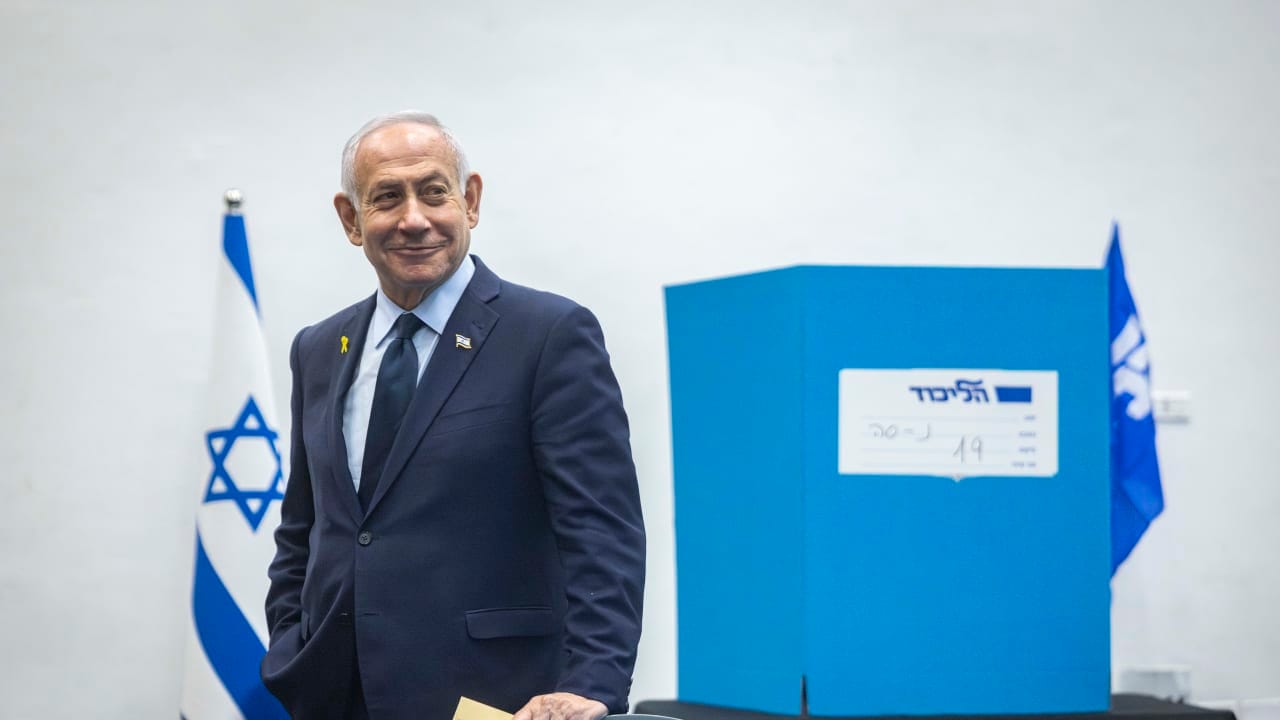
This is why the next Israeli election matters so much
Under a different Israeli government, many things that appear impossible today could suddenly become politically possible: a serious regional initiative involving Saudi Arabia, international support for rebuilding Gaza, renewed Israeli-Palestinian negotiations, and eventual full normalization between Israel and the whole Arab world.
At the center of this possibility stands US President Donald Trump, who may be uniquely positioned to achieve what previous American presidents could not. Every American president since Jimmy Carter approached Israeli-Palestinian peace primarily as a diplomatic process. Trump approaches it as a strategic regional transaction. Unlike previous presidents, Trump has credibility with the Israeli Right. No Israeli prime minister can portray Trump as anti-Israel or weak on security.
Trump also understands that the conflict cannot be solved in isolation from the broader Middle East. Saudi Arabia, the other Gulf states, Egypt, Jordan, and Morocco are not simply observers. They are essential partners in reconstruction, regional security arrangements, and integrating Israel into a broader regional framework.
This is not Oslo revisited. Oslo attempted to build peace through gradual trust-building between Israelis and Palestinians. But Oslo did not fail because peace was impossible. Oslo was systematically foiled by its opponents on both sides. On the Palestinian side, Hamas and other rejectionist groups launched suicide bombings designed to destroy Israeli support for the peace process.
On the Israeli side, Prime Minister Benjamin Netanyahu and the Right worked consistently to weaken Oslo from its earliest days. Netanyahu built much of his political career opposing the accords and convincing Israelis that territorial compromise would bring terror and danger.
After Yitzhak Rabin’s assassination, Hamas terrorism and Israeli right-wing opposition became mutually reinforcing forces. Every Hamas bombing strengthened the Israeli Right. Every settlement expansion strengthened Palestinian rejectionists. Extremists on both sides became partners in destroying trust.
The tragedy is that Oslo actually proved Israelis and Palestinians could negotiate directly, recognize one another, establish security coordination, and begin building frameworks for coexistence. What Oslo lacked was leadership capable of defending the process against its enemies.
What may emerge now is almost the reverse of Oslo: a top-down regional framework driven by shared strategic interests between the United States, Arab states, Israel, and pragmatic Palestinians. In this framework, normalization with Saudi Arabia, reconstruction of Gaza, security guarantees, and Palestinian statehood would become interconnected parts of one larger agreement.
But none of this can happen unless Israeli politicians begin preparing the public for peace during the coming election campaign. For too many years, Israeli politics has been dominated by fear and the illusion that military force alone can guarantee our future. Politicians competed over who can sound tougher and convince Israelis there is “no partner” and therefore no alternative except endless conflict.
Responsible leadership must begin telling Israelis the truth: Israel cannot remain forever democratic, Jewish, secure, and prosperous while permanently ruling over millions of Palestinians deprived of national rights. Israeli politicians seeking to lead the country after the next election must stop exploiting fear and begin explaining what peace would look like: strong security guarantees, regional alliances, normalized relations with the Arab and Muslim world, economic opportunities, and an end to perpetual war.
At the same time, Palestinian leaders have an equally historic responsibility. Palestinians in both the West Bank and Gaza must demonstrate clearly to the Israeli public that they are prepared to end the armed struggle and pursue a durable political settlement with Israel.
Israelis need to hear Palestinian leaders say openly that there will be no permanent armed militias operating alongside a Palestinian state, no continued calls for Israel’s destruction, and no glorification of terrorists. This is especially important after October 7. No Israeli government will be able to move toward peace unless Israelis believe Palestinians are also prepared to move toward coexistence.
The Arab world also has an essential role unlike at any previous moment in history. For decades, Israelis were taught that peace with the Palestinians would produce insecurity and isolation. Today, Arab countries have the power to demonstrate the opposite: that resolving the conflict could open the door to Israel’s full integration into the Middle East.
Saudi Arabia plays the central role in this transformation. If Saudi Arabia openly commits itself to normalization with Israel within the framework of a serious political process leading to Palestinian statehood, most Israelis would understand that peace is no longer simply about ending conflict with the Palestinians. It would mean Israel becoming a legitimate and welcome partner throughout the Arab and Muslim world.
Imagine Israel integrated economically and diplomatically with Saudi Arabia, the Gulf states, Egypt, Jordan, Syria, Lebanon, and Morocco. Imagine regional infrastructure projects, energy partnerships, tourism, technology cooperation, and joint security arrangements against extremism and Iran. The Arab states can help Israelis understand that peace is not a concession leading to weakness. Peace is the gateway to regional legitimacy, prosperity, security, and normalization on a scale Israel has never experienced before.
None of this means success is guaranteed. Hamas still exists. Israeli extremists still reject Palestinian statehood. Palestinian politics remain divided. But despite everything, there is no military solution to this conflict. There never was.
There is only one future in this land: separation into two states with cooperation, security coordination, economic partnership, and mutual recognition – or endless war. Israelis and Palestinians already know the outlines of peace. The real question is whether Israelis will elect leaders prepared to pursue it, whether Palestinian leaders will prepare their people for coexistence, and whether the Arab world and the United States will help make that future politically possible.
The distance between war and peace in the Middle East may not be measured in years. It may be measured in one election.
The writer is the Middle East director of the International Communities Organization and the co-head of the Alliance for Two States.