For decades, American strategy toward the Islamic Republic has rested on a familiar assumption: that Tehran, despite its revolutionary rhetoric, ultimately behaves like a rational state seeking regime survival through conventional calculations of cost, deterrence, and strategic compromise.
Even at moments of heightened confrontation, policymakers generally believed the regime would eventually prioritize survival over ideology and retreat from the edge when faced with overwhelming pressure.
That assumption may no longer fully describe the ideological trajectory of the Islamic Republic.
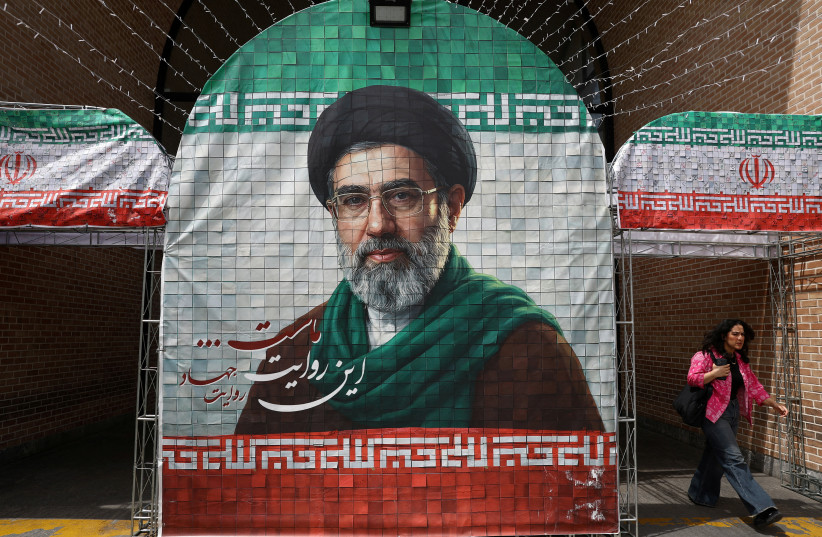
An increasingly influential faction within the regime – particularly inside segments of the Islamic Revolutionary Guard Corps (IRGC) and hardline clerical-security circles surrounding Mojtaba Khamenei – appears to interpret survival itself not merely as a strategic necessity, but as evidence of divine legitimacy.
That distinction fundamentally alters the logic of deterrence. Traditional deterrence theory assumes that states seek survival in order to preserve material interests and avoid catastrophic costs.
Revolutionary-theological systems, however, may gradually begin viewing survival as proof of sacred historical purpose. Under such conditions, military pressure does not always weaken ideological certainty. In some cases, it intensifies it.
This is the dangerous blind spot now emerging in Washington’s understanding of Iran. Western policy debates still analyze Iran primarily through sanctions, military capability, nuclear enrichment, and diplomacy.
These variables are important, but they do not fully capture the ideological psychology increasingly shaping sections of the regime’s security elite. The central issue is no longer simply whether Tehran can withstand pressure.
The more consequential question is how Tehran interprets survival under pressure.
Inside radical revolutionary circles tied to the IRGC, there is growing emphasis on narratives of sacred endurance, historical destiny, and divine protection.
Increasingly, some hardline factions portray the Islamic Republic not merely as a political system but as the guardian of a transcendent religious mission tied to Shi’ite eschatology and the historical struggle believed to precede the return of the Mahdi.
In this worldview, setbacks do not necessarily discredit the regime. On the contrary, surviving confrontation itself becomes evidence that the regime remains under divine protection.
A regime driven purely by ideology may treat war itself as a purpose.
But a regime that sacralizes survival can make both survival and defeat serve the same narrative logic: survival becomes divine vindication, while defeat can still be recast as martyrdom.
That dual framing makes deterrence less predictable and far harder to manage. This ideological evolution carries profound strategic implications.
For years, Western policymakers largely dismissed the Islamic Republic’s apocalyptic rhetoric as symbolic propaganda intended for domestic mobilization. But ideological systems operating under conditions of prolonged conflict and isolation often evolve in dangerous directions.
When revolutionary regimes begin interpreting geopolitical survival through a sacred lens, conventional deterrence models become less reliable.
Military pressure and isolation may strengthen ideological cohesion rather than produce moderation. External pressure can become integrated into a narrative of martyrdom, resistance, and sacred perseverance.
When survival becomes sacred doctrine
History offers multiple examples of movements transforming endurance and survival into narratives of divine legitimacy. Al-Qaeda mythologized Osama bin Laden’s survival under American pressure, while ISIS framed its struggle through apocalyptic symbolism and sacred historical destiny.
In both cases, symbolic endurance became nearly as important as battlefield capability itself.
Yet the Islamic Republic possesses something far more consequential: a state apparatus capable of integrating theology, military power, intelligence operations, propaganda, and proxy warfare into a unified ideological-security structure.
Within some hardline Shi’ite revolutionary circles, supporters increasingly frame figures surrounding Khamenei through messianic and eschatological narratives tied to sacred historical struggle.
Similar rhetoric occasionally appears around Iran’s regional proxy networks, particularly among factions aligned with the Houthis.
Whether such interpretations possess theological legitimacy is strategically less important than the fact that ideological movements do not require beliefs to be objectively true in order to become dangerous.
They require only followers willing to act upon them.
That is the real strategic danger now confronting the Middle East.
If Tehran emerges from the current confrontation weakened yet intact – and if the regime concludes that the United States ultimately lacked the political will for sustained escalation – the result is unlikely to be moderation or strategic restraint.
Instead, many inside the ideological-security apparatus may interpret survival itself as confirmation of divine favor and sacred legitimacy. Under such conditions, deterrence gradually weakens. Sacrifice acquires spiritual value.
Endless confrontation becomes morally redemptive rather than strategically costly. Geopolitical conflict ceases to be merely political and instead becomes fused with revolutionary theology.
This ideological trajectory also changes how the regime may ultimately perceive nuclear capability itself. In classical deterrence theory, nuclear weapons primarily serve as instruments of strategic balance and regime preservation.
But revolutionary-theological systems may gradually assign a broader civilizational and sacred meaning to strategic power.
For factions increasingly influenced by messianic narratives, nuclear capability may eventually be viewed not merely as a deterrent against foreign attack but as a shield protecting a historical and ideological mission.
This is precisely why unfinished confrontations with ideological regimes often produce unintended consequences. Ambiguous outcomes can radicalize revolutionary systems rather than weaken them.
The more ideological survival becomes intertwined with sacred legitimacy, the greater the danger that geopolitical confrontation evolves into a form of theological confrontation unconstrained by ordinary political logic.
The danger is therefore not simply that the Islamic Republic survives military and economic pressure. The greater danger is that it survives while increasingly believing that God ensured its survival for a sacred historical mission.
If such a belief becomes deeply institutionalized inside the IRGC and the broader revolutionary-security establishment, the region may confront a more dangerous form of ideological escalation – one less constrained by traditional calculations of cost, deterrence, and diplomatic compromise.
And once states begin interpreting geopolitics as divine destiny, the Middle East enters a far darker and far more unpredictable phase.
The greatest danger is not that the Islamic Republic survives wounded, but that it survives convinced it forced the United States to retreat – transforming strategic survival into ideological, and ultimately divine, vindication.
The writer is a Middle East political analyst. His recent book, Tehran’s Dictator, examines the theocratic era of Ali Khamenei (1989-2026). @EQFard.