
On September 14, 2019, dozens of drones and seven cruise missiles struck the infrastructure of the Saudi oil company Aramco. Iran never admitted responsibility, but US, Saudi, and European assessments pointed to Tehran, and US officials said the attack appeared to have been launched from Iranian territory.
It was a blatant act of Iranian aggression that exposed the radical nature of the regime. But no less revealing was the absence of any meaningful American response. Saudi Arabia, which for years had built its security on American deterrence, discovered firsthand that it had been left alone precisely when it needed protection most.
In retrospect, this event increasingly looks like a watershed moment in Gulf strategy. At its core was the understanding that while the United States remains a strategic partner, alternatives must be developed to deal with shared threats in the region, but first and foremost, Iran.
It is no surprise, therefore, that this formative event helped shape the strategic environment that later produced the Abraham Accords and accelerated quiet rapprochement between Saudi Arabia and Israel.
The current US-Iran ceasefire, even if still fragile and incomplete, may be creating a similar moment of strategic reassessment across the Gulf. There are clear parallels between then and now: Iranian aggression against Gulf states, a familiar American reluctance to escalate, and the same regional frustration with Washington’s desire to end the confrontation and move on in order to preserve the economy and the flow of energy.
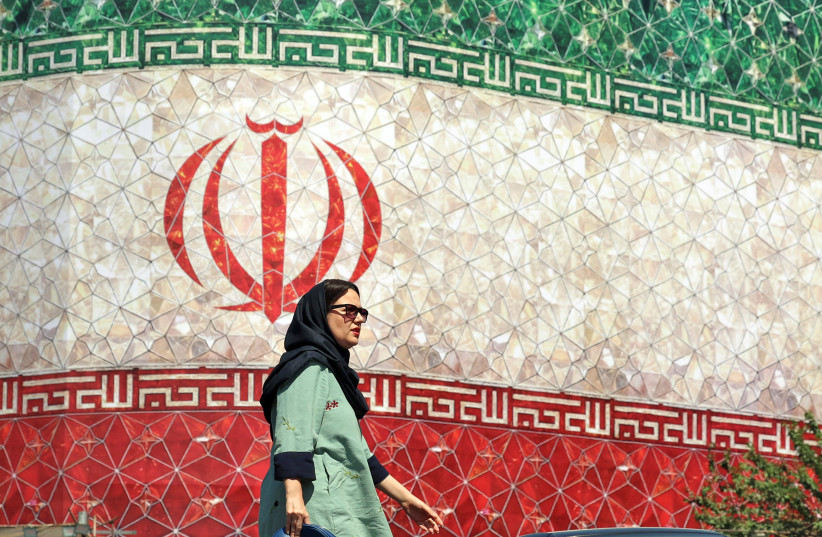
In the current war as well, Iran’s true face has been exposed: a regime prepared to fire indiscriminately at energy infrastructure and civilian facilities in countries across the region. The war has also exposed once again the unpredictable nature of US President Donald Trump, and more broadly, of American foreign policy in the Middle East.
They may not say so publicly, but these states are deeply troubled by the emerging ceasefire between the US and Iran. From their perspective, the agreement leaves three major threats unresolved: money, missiles, and uranium.
The Iranian regime is expected to receive billions of dollars that will provide it with a vital boost and enable it to intensify its efforts to undermine regional stability – efforts it has pursued since the earliest days of the Islamic Revolution.
The United States appears to have set aside, at least for now, its demands regarding Iran’s missile threat, one of the central dangers facing the Gulf states. Even the nuclear threat remains unresolved, with Iran’s stockpile of 60% enriched uranium still a central unanswered question.
In other words, the ceasefire reflects the fundamental gap in interests between the Gulf states and the United States, a gap rooted first and foremost in geographic distance but also in priorities. Iran remains a real threat to the United States, but from across an ocean, one can understand why problems look and feel different. Added to this are recurring questions about the future scale and reliability of the American military presence in the Gulf.
Why Israel matters more than ever
Against the backdrop of this renewed “Aramco moment,” Israel’s value as a proactive regional actor becomes clearer. Israel shares common interests with many Gulf states – above all, the need to confront the “Iranian octopus.”
Even Israel’s most vocal critics, in the US and in the region, would have difficulty denying that in the latest war, it demonstrated military reach, intelligence depth, and a strong willingness to act against the radical axis in the region.
In the face of clear Iranian aggression, and given the possibility that the current Iranian regime is even more hawkish than its earlier version, Israel is becoming a central strategic asset – especially because, unlike the United States, it cannot leave the region.
Israel must seize this window of opportunity to deepen its strategic partnerships with the countries of the region, first and foremost in the security, military, and intelligence spheres. This is also the right time to pursue, with American mediation, the expansion of the Abraham Accords to additional countries in the region, above all Saudi Arabia.
None of this means normalization will be easy, public, or immediate; Gulf leaders will continue to weigh the Iranian threat against domestic, regional, and Palestinian constraints.
It is also time to examine whether relations with Qatar can be reset on more realistic terms. Qatar stands at a crossroads regarding its strategy of “embracing” the radical, a strategy that did not provide it with the security it sought. Such a reset should not be rhetorical. It should be tied to concrete expectations regarding Hamas, Iran, media incitement, and regional mediation.
With Jordan and Iraq, too, both of which directly absorbed Iranian aggression in the latest campaign, there may be room for quieter forms of coordination, especially in air defense, intelligence sharing, and border security.
The Palestinian issue will continue to cast a shadow over any attempt to build a regional coalition. But it does not blunt the fact that Iran will remain the central threat to the moderate Arab states. The latest war only demonstrated that this threat is real, severe, and strategic – and that confronting it requires strategic insurance that is not only American.
Israel must seize the “Aramco moment” and become precisely that insurance policy.
The writer is a senior fellow at the Jewish People Policy Institute (JPPI). In the Israeli Defense Intelligence, he served as head of the Hezbollah and Lebanon Branch (2022–2024) and later as senior adviser to the director of IDI (2024–2026).