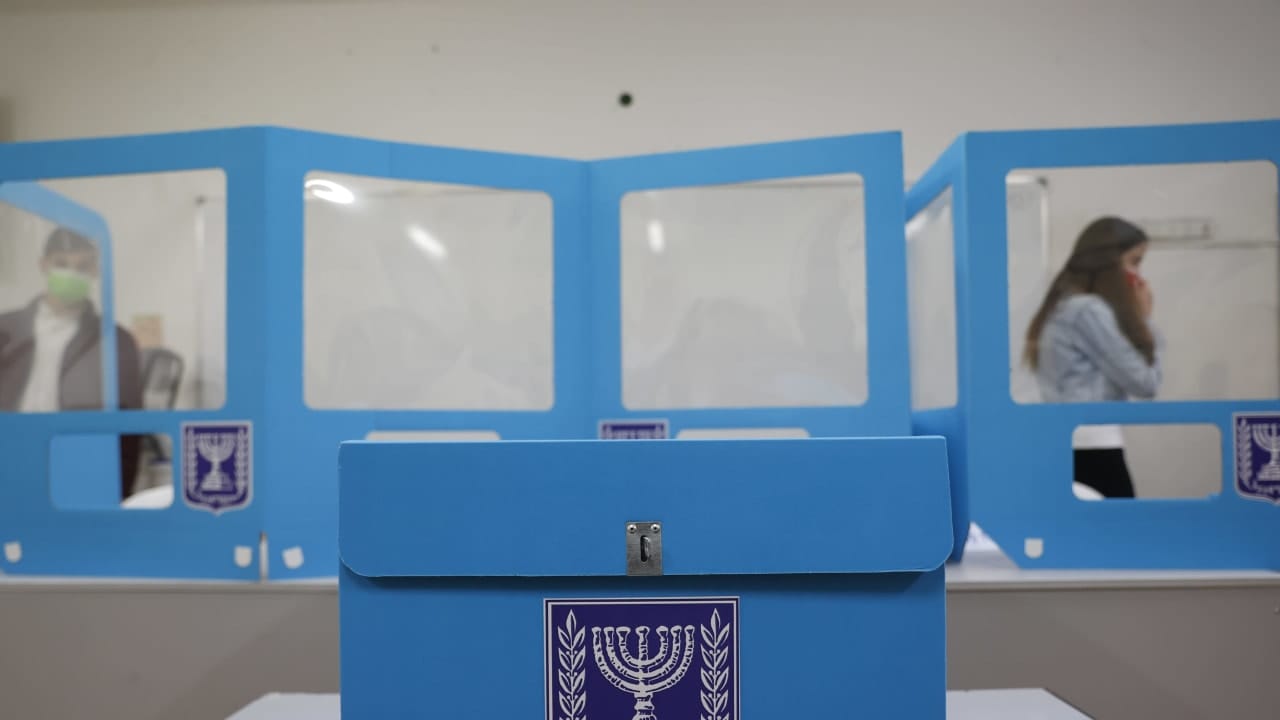
Israel’s next general election will take place on October 27.
It will present Israeli citizens with a decisive choice – not only about the political solutions to the country’s challenges but also about the kind of society in which they wish to live, with consequences that will extend to the Jewish diaspora and, ultimately, to the Jewish people as a whole.
While Prime Minister Benjamin Netanyahu frequently speaks with great emphasis about the unity of both the country and the Jewish people, his record in office stands in stark contrast to that declared objective.
Throughout his political career, following the advice of Arthur Finkelstein, the Republican strategist who advised him during his successful 1996 campaign, he has relied on division and misinformation, pitting “leftists” against “patriots” and consistently placing his own political interests above those of the nation.
In recent days, he has chosen to defy a ruling by the Supreme Court, further weakening the rule of law, while allowing the passage of legislation suggesting that prayer in a yeshiva should be considered equivalent to military service and exempting haredi (ultra-Orthodox) Israelis who evade conscription from sanctions.

By making these decisions largely for the benefit of the ultra-Orthodox parties, Netanyahu is doing more than further eroding Israeli democracy – as he has done throughout this term with his judicial overhaul – and provoking outrage across much of Israeli society, including on the Right, in order to shore up his coalition ahead of the elections.
He is also sending yet another signal of contempt toward Diaspora Jews, particularly American Jews, the vast majority of whom do not identify with Orthodox Judaism and who continue to be marginalized by Israel’s rabbinical establishment, faithfully represented politically by the ultra-Orthodox parties.
Nor is Netanyahu concerned by the prospect of tens of thousands of Israelis leaving the country because of its increasingly illiberal trajectory, or by the deepening fractures within Israeli society over compulsory military service.
His overriding priority is preserving his alliance with the haredim in Israel, the religious Zionist far Right, and, to a lesser extent, evangelical Christians in the United States. An agnostic himself, Netanyahu has allied with both Jewish and Christian messianic movements out of political convenience – to remain in power – and for personal reasons, namely to avoid prison.
This alliance, which has enabled him to complete his term despite the massive protests against judicial reform and the catastrophe of October 7, has proven politically effective while simultaneously inflicting profound damage on the unity of the country.
The task facing Netanyahu’s potential successor therefore extends far beyond Israel’s security, diplomatic, or economic challenges. It will also require rebuilding the frayed bonds among Israelis themselves and between Israeli Jews and Diaspora Jews.
The goal must be to restore Israel as the democratic state of the entire Jewish people, in all its diversity and complexity, rather than the state of nationalist, far-right messianic, and ultra-Orthodox constituencies alone.
In that sense, the stakes of this election go far beyond Israel’s immediate political or diplomatic concerns. Its outcome will have profound consequences for the very nature of the Israeli state, the future of the Jewish people, and the relationship between Israel and Jewish communities around the world.
Born and raised in France, the writer is the correspondent of French Jewish radio, Radio J, and of the French paper librejournal.fr in the US, where he has been living for 16 years. He is also a contributor to the European review K and the French paper Tenoua. He also holds US and Israeli citizenship. His opinions are his only.