Israel’s next election will be fought over October 7, security, military service, the economy, leadership, and trust. The enduring question is Israel’s political end state between the Jordan River and the Mediterranean.
“No Palestinian state” is a veto, not a doctrine. It rejects one outcome without defining the political order that replaces it.
The alternatives are: annexation with full citizenship alters the Jewish state’s demography; annexation without political equality, its democracy; permanent Palestinian autonomy under overriding Israeli authority locks Israeli soldiers and Palestinian civilians into chronic friction and institutionalizes recurrent violence.
Indecision is not neutrality; it chooses the third.
Security is the condition; threat denial, not territorial ownership, the objective: Hamas disarmed, Palestine demilitarized, enforcement resilient to hostile governments, institutional collapse, and noncompliance.

On those terms, Palestinian statehood is the only coherent end state that preserves Israel as Jewish, democratic, secure, and sovereign without permanent rule over another people.
It is neither a gift to the Palestinians, a concession to Europe, nor a reward for terror; it defeats terrorism’s political logic by replacing perpetual war with a sovereign order terrorism cannot command.
Separation serves Israel because Zionism is self-determination, not territorial maximalism. Zionism achieved statehood before resolving the Palestinian frontier, and Israel’s own legal order still treats that frontier as unfinished.
No Israeli government, however right-wing, has annexed the West Bank or superseded Oslo’s interim order. Israeli law does not apply territorially there, while specific laws apply personally to Israelis.
Eroded but operative, Oslo still structures Israel’s administrative, security, and financial systems through Palestinian self-government and Areas A, B, and C, while leaving final status unresolved.
Permanent control over another people and defense of a dispersed settlement network divert military capacity from more consequential threats.
October 7 exposed the price: combat reserves assigned to Gaza were redeployed to the West Bank two days before the attack, thinning the force available when Hamas struck across the south. Combat power cannot be allocated twice.
Jerusalem’s professional system has already done the arithmetic: across defense, diplomacy, and national security, the center of gravity is a demilitarized Palestinian state, with conditions and execution still contested.
Politics preserves separation: Yair Lapid retains a two-state horizon, Naftali Bennett proposes Palestinian autonomy, Yair Golan advocates eventual demilitarized statehood, Gadi Eisenkot preserves room for Palestinian territorial contiguity, Prime Minister Benjamin Netanyahu supports Palestinian self-government under overriding Israeli security responsibility, and Avigdor Liberman advocates territorial separation.
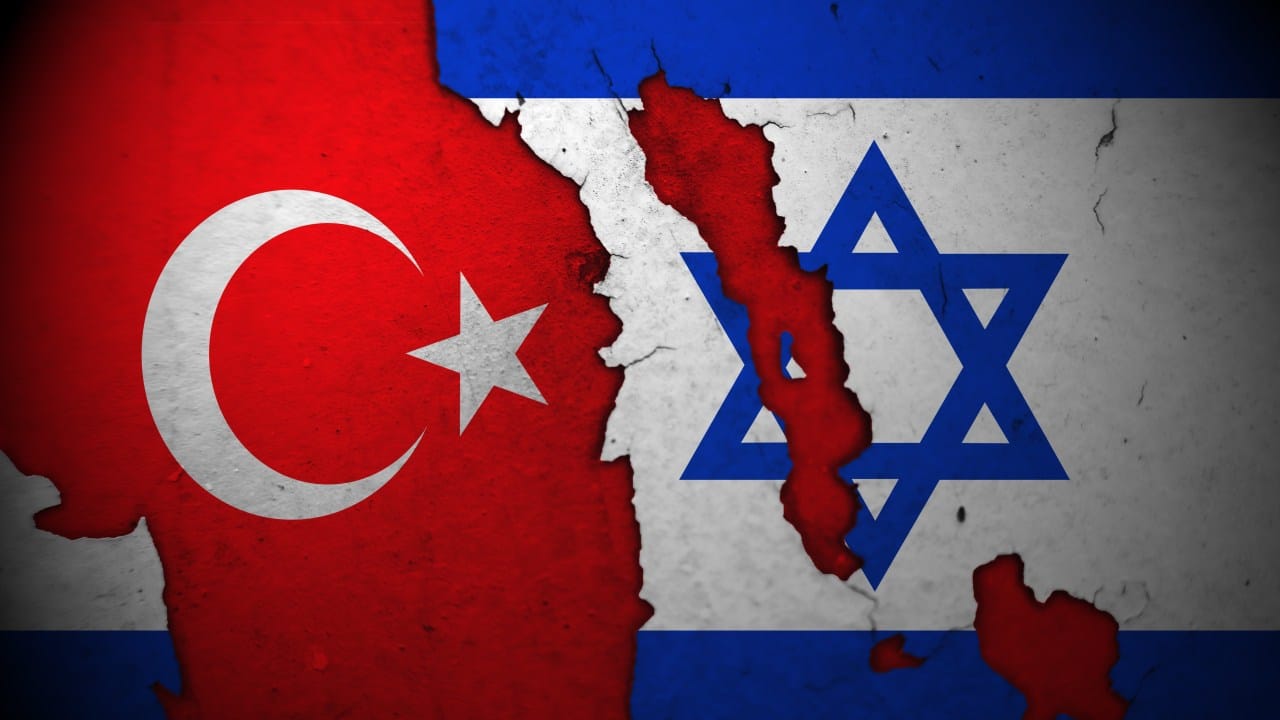
Jerusalem is not Ankara. Not yet.
Israel has not made permanent rule over the Palestinians its end state. The West Bank and occupied northern Cyprus differ in sovereign history and institutional structure: Oslo has no equivalent there, and Israel has neither created a separatist proxy state in the West Bank nor sought recognition for one.
Ankara’s Cyprus doctrine seeks the opposite: recognition of the partition consolidated since 1974 as two sovereign states. Military control, civilian settlement, and time cannot supply sovereign title in either case.
Preservation and application
The principle is not the number of states but the source of sovereignty.
Two states therefore solve one sovereignty problem and create another. In Israel and Palestine, a negotiated sovereign border would create a Palestinian state beside Israel and end indefinite Israeli military authority.
In Cyprus, the Republic already exists, with Greek Cypriots and Turkish Cypriots as its two constituent communities. A second sovereignty would ratify military partition rather than resolve it.
Both conflicts have a Green Line. In Israel and Palestine, the Green Line separates sovereign Israel from territory whose final status remains unresolved. In Cyprus, it is a ceasefire line within the existing Republic. One must yield to a negotiated border; the other must never harden into one.
The only legitimate end state in Cyprus is a reunited Republic of Cyprus with political equality, one sovereignty, one international personality, one citizenship, and no Turkish occupation forces.
Demography does not determine sovereign title. Arab citizens of Israel are native, not settlers; no Israeli-Palestinian agreement may transfer Umm el-Fahm or Sakhnin with their residents as demographic cargo. Turkish Cypriots are native to Cyprus; their equality, security, identity, and autonomy must be guaranteed within the Republic.
The distinction is political, not ethnic.
After 1974, Ankara reshaped the occupied north by settling and naturalizing mainly Anatolian Turks, who came to outnumber the indigenous community; after 1967, Israel built its civilian settlement project in the West Bank.
Jewish attachment to Judea and Samaria is ancient, but history establishes belonging, not title. Civilian presence cannot write a border or convert the military protection it requires into sovereignty.
Much of the West Bank settlement network functions as suburban Israel beyond the Green Line: in 2024, more than half of employed Israeli residents in the Judea and Samaria area worked outside it. The occupied north of Cyprus has developed deeper institutions, but its international access, security, and much of its economy remain dependent on Turkey.
Neither economic integration with Israel nor dependence on Turkey alters sovereign title.
State policy entails state responsibility; culpability remains individual. Neither a child born in Ariel nor one born in Kyrenia to Anatolian settlers inherits guilt for policies they did not choose. Time creates rights in people, not sovereignty in states.
A negotiated Israel-Palestine border can incorporate some Israeli communities into sovereign Israel through land swaps, evacuate others to Israel, and permit Israelis to remain in Palestine only with Palestinian consent and under Palestinian law, never as sovereign Israeli enclaves.
A Cypriot accord must likewise unwind post-1974 demographic engineering through substantial repatriation to Turkey and resettlement, with humanitarian and family exceptions and no collective punishment; individual rights endure because people are not the border.
Preserving the distinction between sovereign Israel and territory it has not annexed is pro-Israel statecraft. Europe should apply the same discipline in Cyprus, where it rejects partition but lets Ankara entrench it at low cost. In both theaters, Ankara profits from unresolved sovereignty.
In the Palestinian arena, Ankara legitimizes Hamas and sustains Palestinian division. That division gives Turkey influence over the Gaza and Jerusalem files, stature in the Muslim world, and leverage over Israel. It advocates two states in Palestine while backing the force that obstructs one, and entrenches in Cyprus the partition its army created.
Israel must do the reverse: secure Palestinian statehood where two sovereign states are required. In Cyprus, “Poseidon’s Wrath” defines an Israeli-led intervention with partners to neutralize Turkish military infrastructure in the occupied north, terminate Ankara’s operational hold, and restore the sovereignty of the Republic of Cyprus.
Enforceable separation removes the Palestinian question from the strategic repertoire of Hamas, Iran, and Turkey, deepens Israel’s integration with Arab states, advances the India-Gulf-Israel-Europe trade and connectivity corridor, and concentrates Israeli strategic capacity on the threats that demand it.
The writer is the founder and principal of Line of State, a strategic practice working with governments, institutions, and decision-makers on strategy, risk, access, and security decisions in high-stakes environments.