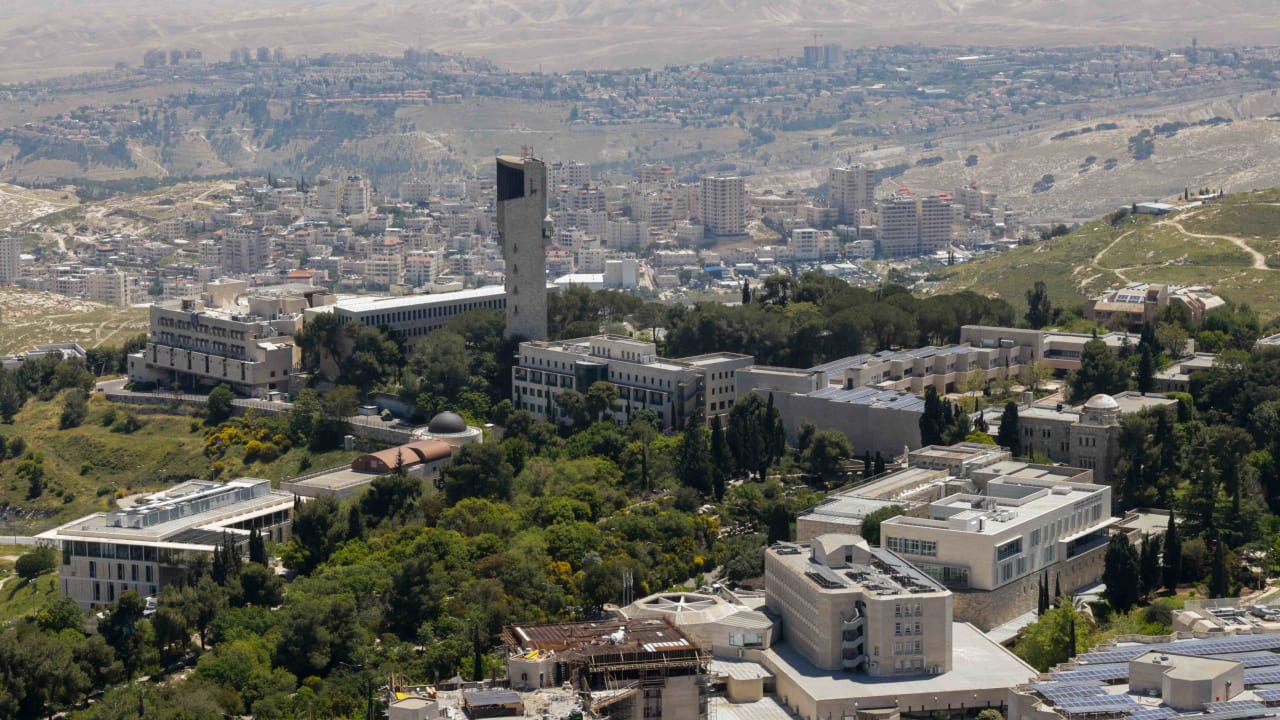
As Israel begins a new academic year, its universities are doing so in a country still shaped by the aftermath of October 7 and by the Israel-Hamas War, displacement, trauma, and uncertainty that have followed. In such a moment, universities are being asked to do far more than teach and conduct research. They are being asked to help a wounded society recover, to prepare the professionals Israel urgently needs, and to ensure that the country remains scientifically, medically, and technologically competitive in a rapidly changing world.
Leadership requires seeing beyond the immediate moment: asking what institutions must do now to help the country recover, and what foundations must be laid so Israel can remain strong in the decades ahead.
For higher education, two questions are urgent: What must universities do to help Israel rebuild as a sound, resilient society? And what must the next government do to protect and strengthen the academic system, on which Israel’s future depends?
The answer to the first question is clear. A university’s role is to build knowledge, people, and infrastructure. But priorities must be guided by reality. The dramatic rise in demand for care and rehabilitation professions, including psychology, social work, occupational therapy, and medicine, tells a profound social story. Israeli society needs its universities not only to develop the next technological breakthrough, but also to help heal the wounds of war, trauma, and loss.
At the Hebrew University of Jerusalem, we have set strategic goals for the coming years with this responsibility in mind. Among them are doubling the size of the Faculty of Medicine, establishing a center for longevity, and expanding research into trauma. These are not abstract academic ambitions. They are directly connected to the physical and psychological needs of the country.
At the same time, Israel’s future also depends on its ability to remain at the forefront of science and technology. That is why we are advancing plans for an AI research center and academic program, as well as an innovative Faculty of Engineering. A serious higher education system must look beyond the immediate crisis. It must build today what future generations will depend on tomorrow.
Israel stuck in the past
This is also an international challenge. Around the world, governments are racing to strengthen their universities as engines of national resilience, technological leadership, medical innovation, and economic growth. Countries that understand this are investing heavily in research infrastructure, artificial intelligence, biotechnology, medicine, and advanced engineering. Israel cannot afford to assume that yesterday’s excellence will automatically carry it through tomorrow’s competition.
We are doing this while confronting growing attempts to boycott and isolate Israeli academia. Faculty members across Israel’s universities are waging a daily battle to preserve the standing, legitimacy, and functionality of the country’s higher education system. They do so through research excellence, international collaboration, and intellectual partnership.
Through their work, the world encounters Israel not only through headlines and conflict, but through science, medicine, innovation, culture, and contributions to humanity.
This brings us to the second question, and to a clear message for Israel’s next government: investment in higher education is a strategic investment in our national existence.
Israeli academia is currently performing something close to a miracle. The Hebrew University is ranked 89th in the world in the 2026 Shanghai Ranking, despite operating on a budget that is less than half that of many of its global peers. This is a remarkable achievement, but it should not lull us into complacency. Excellence cannot be sustained on fumes. National policy cannot be built on miracles.
Over time, the widening budgetary gap between Israeli universities and leading institutions abroad will have consequences. It will affect our ability to recruit and retain outstanding faculty, train the next generation of researchers and physicians, compete internationally, and provide the knowledge base on which Israel’s security, economy, health system, and democratic resilience all depend.
Higher education is not a luxury. It is not a favor granted to universities. It is the engine that cultivates the leaders, physicians, teachers, scientists, entrepreneurs, public servants, and intellectual life of tomorrow. For this engine to continue working, the next government must ensure a stable and adequate financial foundation for Israel’s higher education system.
It must also defend academic freedom. Universities cannot fulfill their national mission under political interference. They must remain places where evidence matters, where difficult questions can be asked, where disagreement is possible, and where knowledge is pursued freely. This is not a sectoral interest. It is a democratic necessity.
The human mind is the State of Israel’s most precious resource. Academia is where that resource is cultivated, challenged, and transformed into national strength.
Israel’s scientific and intellectual achievements are extraordinary. But they will not survive on past success alone. The next government must make higher education a national priority. Only a system that is free, well-funded, and protected can secure Israel’s future as an independent, prosperous, democratic, and leading society.
The writer is the president of the Hebrew University of Jerusalem.