European Parliament
Cypriot MEP claims Israel buying up island through real estate, land development
Israeli Ambassador to Cyprus Oren Anolik responded to Fidias Panayiotou's comments, calling them "deeply concerning."


Palestinian-French lawmaker arrested after praising 1972 bomber of Ben Gurion Airport
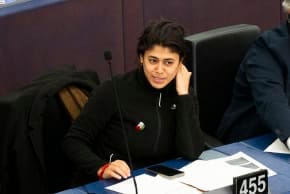
French far-left MEP Rima Hassan arrested over X post justifying attack on Israeli airport
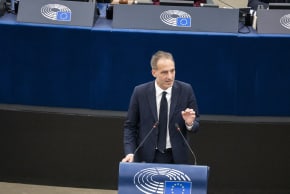
Trump's US is not an ally of France, says French presidential hopeful
EU warns Iranian regime's protest crackdowns may constitute crimes against humanity
The European Parliament adopted a resolution calling for an end to the violence and repression, “including arbitrary detention, enforced disappearances, and torture.”

Iran still deeply entrenched in Europe despite IRGC listing, experts warn
Experts stressed that Iran’s Islamic regime has spent decades covertly entrenching itself across the continent, often under the cover of diplomacy, making removal far from straightforward.

Italy's FM demands EU include IRGC in terror group list in response to Iran's protests crackdown
"The losses suffered by the civilian population during the protests demand a clear response," Italian FM Antonio Tajani wrote on X.

Military intervention may be unavoidable to change Iran leadership, MEP says - interview
PM Sebastian Tynkkynen told The Post that military intervention may be the final step needed to achieve regime change in Iran after sanctions and diplomacy.

European Parliament adopts resolution condemning Iran’s brutal treatment of protesters
The resolution came following a heated debate on Tuesday, where the motion’s proponents decried the recent human rights violations against protesters in Iran.

Majority of European MPs view Israel positively, call for cooperation, survey finds - exclusive
MPs from Romania, Italy, and Germany reported particularly favorable views of their countries’ relations with Israel. In contrast, markedly smaller shares of MPs from Ireland, Spain, and Turkey.

Denmark wishes for 'common way forward' with Trump, President undeterred in quest for Greenland
The Danish FM clarified that any “ideas that would not respect [the] territorial integrity of the Kingdom of Denmark and the right of self-determination of the Greenlandic people are unacceptable."

EU Parliament bans all Iranian diplomats, representatives from its premises
"I have taken the decision to ban all diplomatic staff and any other representatives of the Islamic Republic from all European Parliament premises," said Parliament President, Roberta Metsola.

EU leaders agree on joint borrowing to fund Ukraine, set aside plan to use Russian frozen assets
The leaders also gave the European Commission a mandate to continue work on a so-called reparations loan based on Russian immobilized assets, but that option proved unworkable for now.

EU Council and Parliament reach agreement to overhaul drug rules, speed patient access
The agreement grants companies launching new medicines eight years of data protection for trial results and one year of market protection.
