Hasmonean
IDF preparing to arrest haredi draft dodgers as early as next week - report
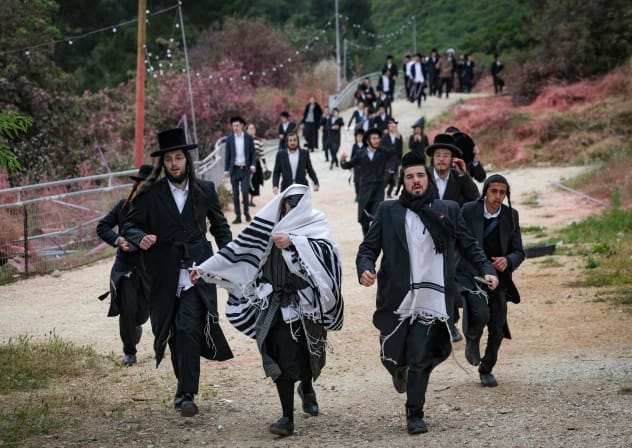
Meanwhile, Prime Minister Netanyahu commended the IDF's haredi Hasmonean Brigade for simultaneously learning Torah and serving, as the IDF prepares to arrest those avoiding military service.

US returns two rare, ancient coins to Israel following joint antiquities theft investigation
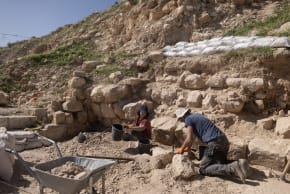
Israel digs up the West Bank – and reignites a battle over history

Israeli flag raised on historic Jordan Valley peak in the biblical heartland
Hanukkah: The Maccabees weren’t symbols; they were fighters - opinion
The Maccabees prevailed because they refused erasure – militarily, culturally, and spiritually. Contemporary Jewish survival requires the same multi-front refusal.

Hanukkah miracle: Israel discovers evidence of Judah Maccabee’s battlefield near Jerusalem
The site is widely identified with the ancient village of Bet Zecharia, where the Seleucid army and the forces of Judah Maccabee clashed in what is known as the fifth Maccabean battle.

Hasmonean era 'first wall' section revealed at Tower of David museum excavation - interview
Israel’s Heritage Minister, Rabbi Amichai Eliyahu, called the discovery: “tangible and moving evidence of Jerusalem’s might and stature during the Hasmonean period.”

Netanyahu, Smotrich visit IDF haredi brigade, praises soldiers' willingness to serve
Netanyahu, Smotrich, and senior defense officials, met with soldiers and commanders at the training facility and received a briefing on the brigade's operations.

Who is holy in the Jewish faith? - opinion
The best place to examine Jewish holiness would be to look at the path blazed by Avraham, the first Jew and founding father of the Jewish people.

West Bank's Maccabee palaces must be Israeli national park, settlers say
The remnants of the palaces, with their ritual baths and the ancient Hashmonaim synagogue, which King Herod converted into his winter palace, are located in Area C of the West Bank.

2,200-year-old coins proving Hanukkah story of Maccabees found in Israel
The coins, dating back to the period leading up to the Maccabean revolt, were discovered in the Wadi Muraabat Caves in Nahal Darga.

Greek sling bullet from Hellenistic Period discovered in Israel
Bullet engraved with message: "Victory of Heracles and Hauronas" • Projectile may have been used during war against Hasmoneans

Israeli, German archeologists reconstruct Hasmonean destruction of Greek city
The year and exact season of the destruction of the Greek town Tel Iẓṭabba occurred has been determined by Israeli/German researchers.

Galilee fort part of string of forts made to fortify Hasmonean territory
Finds at Horvat Tefen also shed light on the little-known material culture of the Hasmonean period in the Galilee.
